What Is Surgical Steel? Is It the Same as 316L?
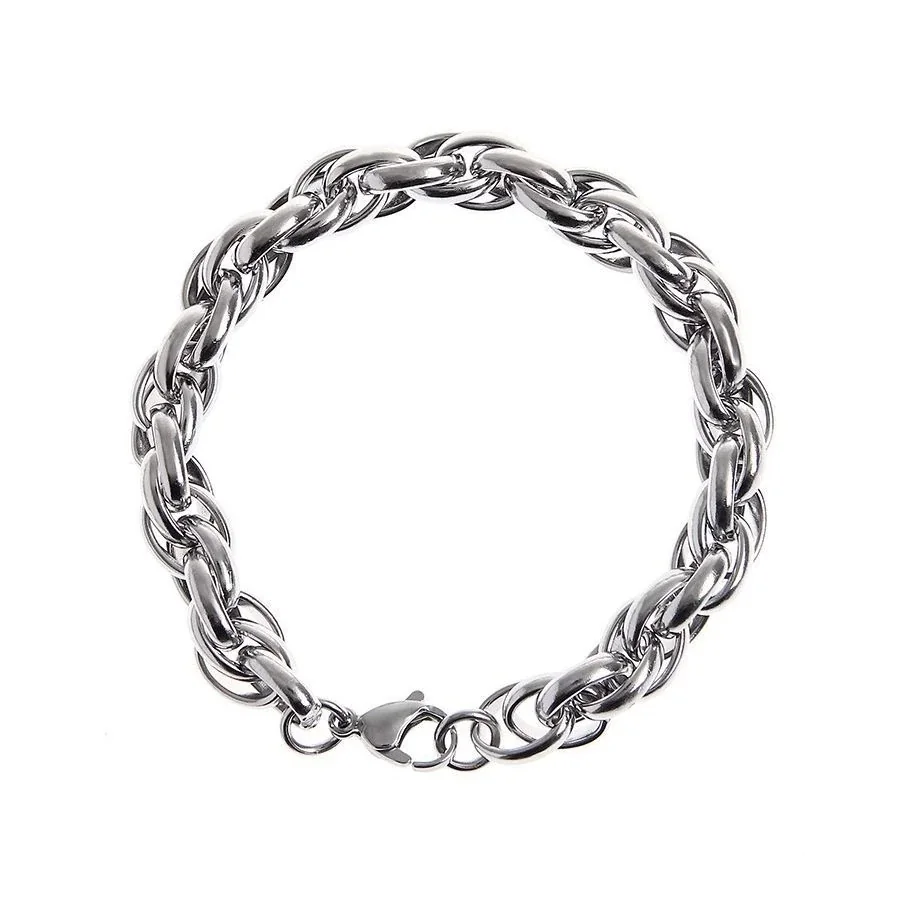
"Surgical steel" is a trade nickname, not a grade. In jewelry it almost always refers to the 316 family of austenitic stainless steel, most often 316L, so in practice the two phrases usually point at the same material. But the equivalence only runs one way. 316L is a defined grade with a published composition that a supplier can be held to; "surgical steel" is defined by nobody, appears on no mill certificate, and can be printed on a listing for an alloy that is neither 316 nor 316L. Treat it as a statement of intent, and ask which grade is meant.
That is the whole answer, and the rest of this guide is about what to do with it: where the name came from, why it survives, and the three checks a wholesale buyer should run whenever it appears in a supplier's description.
Where the name comes from, and why it is imprecise
The phrase borrows its authority from medicine, where stainless steels genuinely are used for instruments and implants. The problem is that those two applications use different alloys, and neither is chosen by asking for "surgical steel".
Surgical instruments such as scalpel handles, forceps and scissors are frequently made from hardenable martensitic grades in the 400 series, which take and hold an edge. Implants that stay in the body are governed by specific material specifications written for the purpose, such as ASTM F138 for wrought stainless bar; the specification, not the nickname, is what a manufacturer works to. Neither of those worlds is the one your earrings come from.
Jewelry adopted the phrase because it is reassuring and short, and settled it on the 316 family, whose molybdenum content gives it better resistance to chlorides such as sweat and salt water than the 300-series grades without it. So when a jewelry listing says surgical steel, the honest translation is: "we mean something in the 316 family". That is a useful thing to know and a poor thing to buy on.
Is surgical steel the same as 316L?
Usually, yes, and structurally, no. Both statements matter.
Usually yes, because in the jewelry trade the term has converged on the 316 family, and 316L is the most commonly cited member of it. If you buy a piece described as surgical steel from a supplier who knows their material, you will most often receive 316 or 316L.
Structurally no, because the two phrases are different kinds of claim. "316L" names a grade with a defined composition; it is checkable, and a supplier who states it has made a specific commitment you can test against. "Surgical steel" names nothing in particular, so stating it commits a supplier to nothing in particular. And because nothing defines the phrase, nothing constrains it: it can appear on 304, on a lower-cost stainless grade, or on a plated base metal without any rule having been broken.
The practical rule follows directly: the name is not the grade. Buy on the grade, and ask what the grade claim rests on.
316 versus 316L, in one paragraph
Since the question always arrives attached to this one: the "L" means low carbon, not low nickel. Both grades sit in the same nickel range of roughly 10-14% by weight, and the carbon difference matters mainly in welding and high-heat processing rather than in ordinary wear. For most finished jewelry the gap between 316 and 316L is smaller than the gap between either of them and lower-cost stainless grades. If you want the composition tables and the equivalent designations, our 316L grade reference (1.4404 / AISI 316L) has them; for how the marking is used on actual products, see what 316L means on jewelry. Those two articles cover the metallurgy. This one is about the word.
What each label on a listing actually tells you
| Label | Defined by a standard? | What it tells you | What still needs checking |
|---|---|---|---|
| Surgical steel | No | The seller has the 316 family in mind, most likely | Which grade, and on what basis, for this specific item |
| Surgical-grade / medical-grade | No | Nothing. Both are marketing constructions in a jewelry context | Everything the listing has not said |
| 316L | Yes | A specific, checkable grade claim | Whether it is attached to this SKU or to the catalogue, and what evidences it |
| 316 | Yes | The same alloy family, with a higher permitted carbon level | The same questions as 316L; the difference rarely matters in wear |
| Stainless steel | Partly | An honest family-level description with no grade claim | Which grade, if grade matters for your market or price point |
| Hypoallergenic | No | Nothing measurable; it is not a regulated standard | The material, and whether any nickel-release figure exists for it |
The pattern is the same one that runs through this whole category: the vaguer the term, the more confident it sounds. Specific claims are the ones worth paying for, because they are the only ones you can hold anyone to.
Three checks when a description says "surgical steel"
These are ordered deliberately. Each one is proportionate to what is at stake, and most orders never need the third.
1. Ask for the grade in writing, per SKU
Reply with the specific question: which grade is this item, and is that answer for this style or for your whole catalogue? A supplier who can name 316 or 316L for the individual SKU has given you something to work with. If the answer comes back as "surgical steel" again, the question has not been answered, and that is itself informative. Watch for the catalogue-wide version of the claim in particular, because a slogan that covers everything is rarely established for anything.
2. Ask what the claim rests on
Grade claims rest on one of three things: mill or component documentation, a supplier declaration, or a test report. All three are legitimate, and they are not equally strong. The question that separates them is whether the document names the item or batch you are buying rather than a generic material sample. Asking for a certificate as an opening move often produces a document that refers to a different item entirely, which is worse than no document because it looks like evidence.
3. Test your own delivery, if the grade is load-bearing
Where grade genuinely matters for your market or your price positioning, commission independent testing on a piece from your own parcel rather than on a sample the supplier selected. Portable XRF can identify the key elements, and the presence of molybdenum is a useful indicator when distinguishing 316-family stainless from 304 or 201. Magnet tests, by contrast, prove very little: austenitic grades are weakly magnetic at best, but cold working can change that, and several unrelated alloys will also fail to attract a magnet.
How we handle the word, and why
We do not describe our catalogue as surgical steel, and we would rather explain that than let it pass unremarked.
Jewena is a factory-direct B2B wholesale platform selling stainless steel jewelry produced in Guangdong with long-term partner factories in the Dongguan and Foshan jewelry clusters. Grade wording is applied per SKU based on the source data for that item. Where the data supports it, the product page states 316 or 316L and the item appears in the 316 stainless steel category. Where it does not, the item is described as stainless steel with no grade number attached, and no nickname is substituted for the number we cannot support.
That produces a less impressive catalogue headline than a site-wide surgical steel banner would. It also produces a claim you can repeat to your own customers without inheriting someone else's risk, which is the trade we think is worth making. The same reasoning is why our commercial terms are published rather than quoted on request: ready stock from one piece, per-piece prices stepping down at three and ten pieces per style, and every price listed in USD. For custom production, 316 or 316L starts at 200 pieces per design, reflecting the smaller pool of factories willing to run the lower-carbon grade at modest volumes; the OEM and ODM page covers how that is quoted.
What the term does not settle about wear
Two questions arrive attached to "surgical steel" and are worth separating from it, because neither is answered by the grade.
The first is tarnish. Unplated steel in this family resists tarnish well, and most complaints about tarnished surgical steel trace back to surface residue, chemical exposure or a coloured coating wearing through rather than to the steel itself changing; our guide to whether surgical steel tarnishes works through the causes. The second is skin reaction. Steel in this family contains nickel, "hypoallergenic" is a marketing word rather than a regulated standard, and what can actually be measured is nickel release for a named sample or batch; we cover that in full in the nickel question.
Both share a structure with the grade question. The material family has general properties you can rely on, and the specific piece has specifications and evidence you have to check. Anyone who collapses those two levels into one sentence is selling you the sentence.
FAQ
Is surgical steel the same as 316L stainless steel?
In jewelry it almost always refers to the 316 family and most often to 316L, so in practice they usually describe the same material. They are not the same kind of claim, though. 316L is a defined grade with a published composition; surgical steel is a nickname that no standards body defines and no mill certificate carries. A piece labelled 316L gives you something checkable. A piece labelled surgical steel only tells you the category the seller had in mind.
Is surgical steel a real standard or grade?
No. There is no specification you can order to called surgical steel. Instruments and implants are made to specific material standards written for those uses, and the jewelry trade borrowed the phrase for its reassuring sound rather than for anything it designates. Market obligations attach to measurable properties such as nickel release, not to the nickname.
Is surgical steel silver, or a precious metal?
Neither. It is an iron-based alloy with chromium, nickel and molybdenum added for corrosion resistance, and it has no precious metal content. It is often chosen as an alternative to sterling silver in everyday jewelry because it holds its colour without polishing, but it is not silver and should never be described as such on a listing.
Is 316L surgical steel hypoallergenic?
Not in any defined sense, because hypoallergenic is a marketing word rather than a regulated standard, and stainless steel contains nickel. What makes the family common in skin-contact jewelry is that the nickel is held inside a stable alloy structure and the metal is the same all the way through the piece, so release during wear is generally low compared with plated base-metal products. Individual sensitivity still varies; the detail is in our guide to the nickel question.
Does surgical steel tarnish or turn green?
Unplated steel in this family rarely tarnishes and does not turn skin green the way copper-bearing alloys can, because there is no copper in the alloy to oxidise against skin. A coloured coating over the steel is a separate matter and can wear through with time and use. Our surgical steel tarnish guide works through each cause in turn.
What should I ask a supplier who advertises surgical steel jewelry?
Ask which grade the specific SKU is, whether that answer applies per style or catalogue-wide, and what the claim rests on for that item. Then buy one piece and wear it before committing to volume. If the grade is load-bearing for your market, test a piece from your own delivery rather than a sample the supplier chose. Our fuller vendor checklist is in the guide to vetting a stainless steel jewelry supplier.
Bottom line
Surgical steel is a nickname that usually means the 316 family and occasionally means whatever the seller wanted it to mean. That makes it a reasonable starting point for a conversation and a poor basis for a purchase order. Ask for the grade per SKU, ask what the grade claim rests on, and test your own delivery when the answer matters commercially. A supplier who states the grade only where they can support it is telling you more than one whose entire catalogue is surgical steel, even though the second site reads better. If you want to compare commercial terms rather than vocabulary, our 316L stainless steel jewelry wholesale page lists current pricing and minimums.