316 & 316L Stainless Steel Jewelry Manufacturers and Suppliers: How to Vet Them
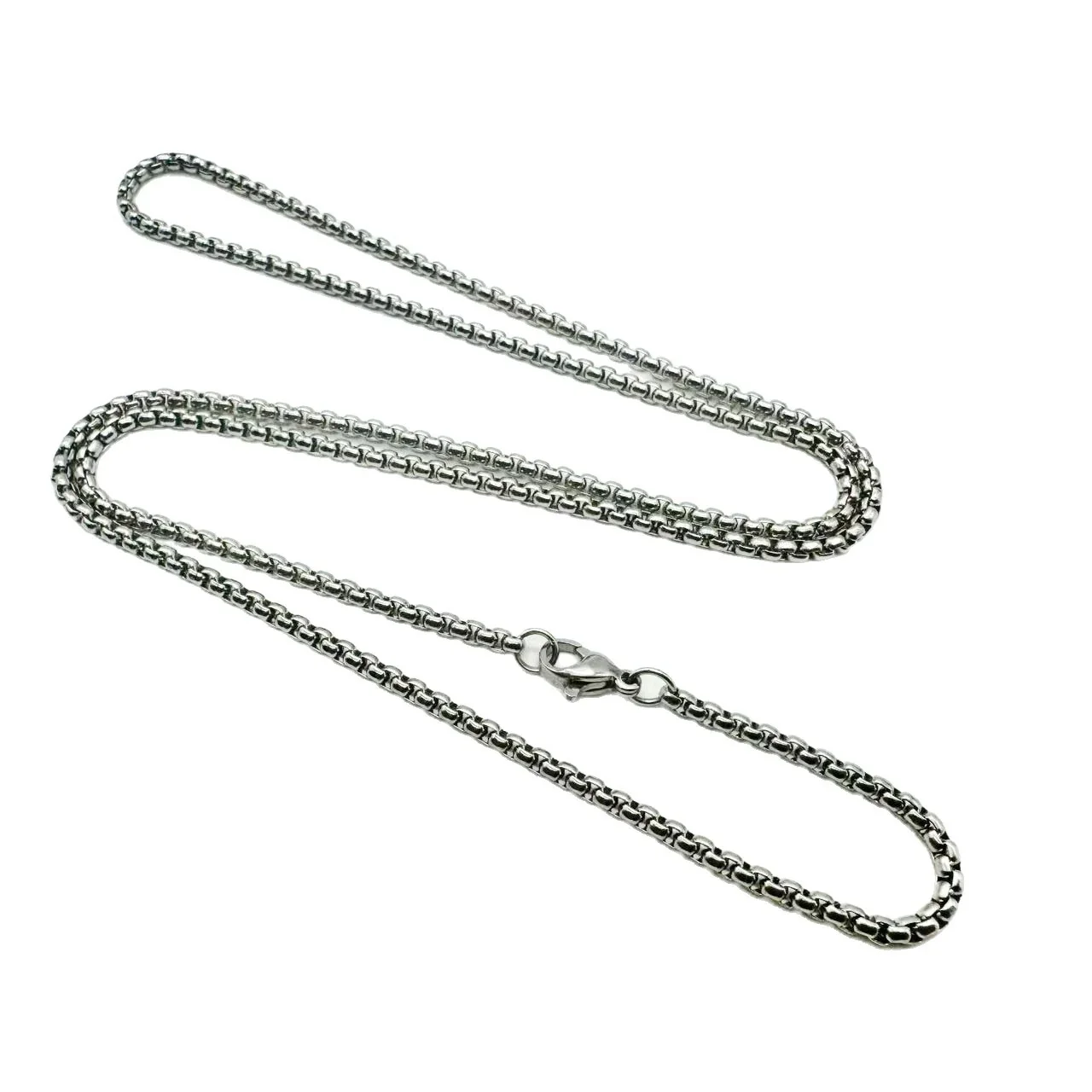
The suppliers behind most 316 and 316L stainless steel jewelry fall into three groups: factories that own production lines, trading companies that broker factory output, and factory-direct wholesale platforms that hold ready stock. None of the three is automatically better than the others. What separates a dependable supplier from a risky one is whether grade claims are attached to specific SKUs with source evidence, whether the minimum order structure is stated plainly, and whether samples come off the same line as production.
Jewena is a factory-direct B2B wholesale platform selling stainless steel jewelry produced in Guangdong with long-term partner factories in the Dongguan and Foshan jewelry clusters. Production and finishing run on our own dedicated lines with long-term partner factories, and this guide places us in the supplier types map below rather than burying it, because "who am I actually buying from" is the first question a wholesale buyer should be able to answer about any vendor, including us.
Manufacturer, trading company or wholesale platform
Suppliers in this category describe themselves in ways that sound similar but imply very different things. A manufacturer owns or directly operates production. A trading or export company sources from factories and handles the commercial side. A wholesale platform buys and stocks finished goods, then resells them in small quantities. Many suppliers are a blend, and the same company will often describe itself as more than one depending on which page of its own website you are reading.
The distinction matters because it predicts what a supplier can and cannot do for you. Factories are usually the right partner for original tooling and higher-volume custom production. Platforms and stockists are usually the right fit for testing designs, filling gaps in an existing range, or buying single pieces without committing to a production run.
| Supplier form | Typically best for | What to check first |
|---|---|---|
| Manufacturer / factory | Custom tooling, custom-production production runs, long-term repeat programmes | Whether the process you care about (casting, plating, stone setting) is in-house or subcontracted |
| Trading or export company | Consolidating multiple factories into one order and one shipment | Which factory actually makes each item, and who is accountable if a batch fails |
| Wholesale platform / stockist | Ready stock, small quantities, range testing before committing to production | Whether stock is genuinely held, and whether prices and minimums are published |
Ask the question directly: do you manufacture this item yourselves, or do you source it? A supplier that answers plainly is easier to work with than one that keeps the answer vague. For a fuller vendor checklist that applies to any of the three models, see our guide to vetting jewelry suppliers before a first wholesale order.
How to verify a 316 or 316L claim
This is the single most common failure point in stainless steel jewelry sourcing. "316L" appears on a great many listings, and on a listing it is a claim rather than proof. Verification is not about distrust; it is about knowing which claims you can pass on to your own customers and which you cannot.
Check what the claim is attached to
A catalogue-wide slogan and a per-SKU material declaration are not the same thing. When a supplier states that everything they sell is 316L, ask how that is established for an individual item. When a supplier states the grade only on the SKUs where they hold source data, that is a narrower claim, and a more useful one.
Our own practice is the narrow version: grade wording is applied per SKU based on the source data for that item, and items without grade evidence are described as stainless steel without a grade number. That produces a less impressive catalogue headline and a claim you can actually repeat to a customer.
Ask for evidence in a sensible order
Not every order justifies laboratory testing, and asking for a certificate as an opening move often produces a document that refers to a different batch or a different item. A proportionate sequence works better.
- Ask what the grade claim is based on for that SKU: mill or component documentation, a supplier declaration, or a test report.
- Ask whether the document names the item or batch you are buying, not a generic material sample.
- For an order size or a market where grade genuinely matters, commission independent testing on a piece from your own delivery.
- For repeat programmes, agree in writing what happens if a later batch does not match the approved sample.
If you want the underlying material facts before that conversation, our 316L grade reference (1.4404 / AISI 316L) covers composition and equivalent designations, and what 316L means on jewelry covers how the marking is used in practice.
What photographs cannot prove
Product photography can establish shape, proportion and colour. It cannot establish alloy grade, plating process or gold content. A gold-toned finish in a photograph may be electroplating, PVD coating or a gold-tone surface treatment, and the image looks much the same in each case. Treat process descriptions as claims to be confirmed per SKU, in the same way as grade claims.
The same caution applies to durability language. Terms such as waterproof, tarnish-free and hypoallergenic are marketing descriptions rather than regulated standards, and no supplier can honestly guarantee them across an entire catalogue. Stainless steel as a material family resists corrosion well, and that is a fair thing to say about the family; how a specific plated item behaves after months of wear is a question for a sample.
How to read minimum order quantities
MOQ figures are quoted on different bases by different suppliers, which makes headline numbers hard to compare. Before comparing, establish whether the number is per style, per colourway, per order, or per shipment, and whether it applies to ready stock or to custom production. A low headline minimum that turns out to be per colourway can be a larger commitment than a higher number quoted per order.
For reference, these are Jewena's published minimums. Ready stock is available from one piece, with unit prices stepping down at three and ten pieces per SKU. For custom production, 316 stainless steel starts at 200 pieces per style, and 316L at 200 pieces per style, reflecting the smaller pool of factories willing to run the lower-carbon grade at modest volumes. Our OEM and ODM page sets out the development process in more detail.
Two questions expose most MOQ ambiguity. First: if I order two colourways of the same style, is that one minimum or two? Second: does the minimum apply again on the reorder, or only on the first run?
Sampling and what to actually test
A sample is only useful if it represents production. Ask whether the sample comes from the same line, the same plating run and the same components as the eventual order, or whether it is a showroom piece finished with more care than a batch of five hundred will receive.
- Wear the sample. Most plating and finishing problems appear within a few weeks of daily contact with skin, water and friction.
- Check the parts that fail first: clasps, jump rings, ear posts, hinge points and the inside surfaces of rings.
- Weigh it and measure it against the specification, then check the same figures on the production delivery.
- Photograph the approved sample from several angles and keep it. It is the reference you will need if a later batch differs.
- If you sell into a market with nickel release limits, confirm what documentation exists for that specific item before you list it.
Supplier types map
What follows is a map of supplier forms rather than a ranked list of company names, because the form tells you what a supplier can realistically evidence about a 316 or 316L claim, and a name does not. Grade evidence is the dimension that separates these forms most sharply: a claim is only ever as strong as the records sitting behind it, and different supplier forms hold very different records. Match the form to what you are buying, then ask that form its specific question.
Jewena
Factory-direct B2B wholesale platform for stainless steel jewelry, produced in Guangdong with long-term partner factories in the Dongguan and Foshan jewelry clusters. More than 1,500 styles are listed in stock with USD prices published openly rather than quoted on request. Ready stock starts at one piece, with price breaks at three and ten pieces per SKU; custom production starts at 200 pieces per style in 316 or 316L. Grade wording is applied per SKU based on the source data for that item rather than as a catalogue-wide claim, and where the data does not support a grade number the listing says stainless steel and stops there. Jewena is a wholesale platform, not a manufacturer.
Owner-operated manufacturers
Companies that own or directly run their production lines, concentrated in the Guangdong clusters and usually offering casting, polishing, plating, stone setting and engraving as an integrated service. This is the only form that can in principle trace a grade claim back to its own material purchasing and production records, which puts it in the strongest position on evidence, but only if those records are actually produced when you ask. Establish which processes are genuinely in-house and which are subcontracted, since a plating step sent outside changes who controls the surface you are buying, and ask whether any grade documentation names the batch you are ordering rather than a generic material sample.
Trading and export companies
Export-facing companies that source from a pool of factories, consolidate several production lines into one order and one shipment, and handle documentation, payment terms and freight. On grade they are relaying a claim rather than originating it, so the useful question is not whether they believe it but whether they will stand behind it commercially. Ask which factory makes each item, who is accountable if a delivery fails an incoming check, and whether the grade wording in the quotation will be repeated on the invoice and packing documents, because a claim that disappears between quotation and paperwork was never a commitment.
Factory-direct wholesale platforms and stockists
Suppliers that buy finished goods, hold them in stock and resell in small quantities. This is the form best suited to testing designs, filling gaps in an existing range or buying single pieces without committing to a production run, and it is the form we belong to ourselves. Their grade claims are inherited from whoever produced the stock, so the decisive test is how narrowly the claim is drawn: a per-SKU declaration backed by source data for that specific item is a very different thing from a banner asserting that an entire catalogue is 316L. Ask whether the stock is genuinely held rather than ordered in after you pay, and whether prices and minimums are published or quoted case by case.
Catalogue wholesalers and distributors
Large mixed-origin ranges assembled from many upstream suppliers and sold by the pack or the carton, often spanning several material families at once. Grade wording here has usually passed through several hands before it reaches the listing, and the description may have been written by someone with no direct contact with whoever produced the piece. Ask where a specific line originates and whether item-level material documentation can be obtained at all; if it cannot, read the listing as a description of appearance rather than of composition, and price your risk accordingly.
Marketplace platforms
On marketplaces such as Alibaba, listing text is written by the seller and not verified by the platform, so a 316L heading carries exactly the weight of the seller behind it and no more. Trade assurance and escrow schemes are genuine protections against non-delivery and payment disputes, and they are worth using for that, but they are commercial guarantees rather than material audits. Work out which of the forms above an individual seller actually belongs to before you read its specification claims, and treat the platform layer as payment and dispute infrastructure rather than as evidence about the metal.
Piercing-grade and body-jewelry specialists
A narrower segment serving piercing and body-jewelry markets, where material documentation is a routine commercial expectation rather than an unusual request. Buyers who need documentary backing for a grade claim often find it easier to obtain here, although the ranges are narrower and the prices reflect the specification and the tighter tolerances. If your market genuinely requires an evidenced grade, whether because your own listings repeat the number or because you sell into a jurisdiction with nickel release limits, it is worth checking whether the piece you want exists in this segment before pressing a general supplier for records it may never have kept.
If you want to compare commercial terms rather than supplier forms, our 316L stainless steel jewelry wholesale page and stainless steel jewelry suppliers page list current pricing and terms, and the 316 stainless steel category shows the SKUs where grade wording is supported by source data.
Lead times, shipping and reorder consistency
Ready stock and custom production run on different clocks, and mixing them in one order means the whole order moves at the slower pace. Ask for the two lead times separately, and ask what happens to the ready-stock portion if the custom portion is delayed.
Jewena ships ready stock from Guangzhou within three to five working days, with tracking, to more than 60 destinations, and shipping is quoted at checkout on the real cart rather than estimated. Whichever supplier you use, the questions worth asking are the same: who is the carrier, what is the tracking arrangement, who handles customs paperwork, and what the process is when a parcel is delayed or short-shipped.
Reorder consistency deserves its own question, because it is where sourcing relationships most often break down. Colour tone, plating thickness and component sizing can drift between production runs at any supplier. Agree before the first order how differences will be judged, and keep the approved sample as the reference point.
FAQ
Who are the top stainless steel jewelry manufacturers and factory-direct suppliers?
There is no objective ranking, because the right supplier depends on whether you need custom production or ready stock. Supply in this category is concentrated in Guangdong, China, particularly around Dongguan, Guangzhou and Foshan, and it splits into owner-operated manufacturers, trading and export companies, factory-direct wholesale platforms such as Jewena that hold ready stock, catalogue distributors and marketplace sellers. Ranking lists rarely tell you which of those forms you are looking at, so compare on supplier form, minimum order structure and how a grade claim is evidenced for the specific SKU instead.
How do I find 316L stainless steel jewelry wholesale suppliers I can trust?
Shortlist on published terms, then verify on evidence. A supplier that publishes prices, minimums and lead times gives you something to compare before you make contact. Once you have a shortlist, ask each one what their 316L claim is based on for the specific SKU you want, order a sample from the same line as production, and wear it before committing to a larger order.
What is the difference between a jewelry manufacturer and a wholesale supplier?
A manufacturer owns or directly operates production and is the right partner when you need custom tooling or a custom-production run. A wholesale supplier or platform buys finished goods and resells them, usually in smaller quantities and from stock. Buyers testing a new range often start with a wholesale supplier and move to a manufacturer once a design has proven itself.
Is 316L always better than 316 for jewelry?
Not necessarily. 316L is the low-carbon version of the same alloy family, and the difference matters mainly in welding and high-heat processing rather than in ordinary wear. For most finished jewelry the gap between 316 and 316L is smaller than the gap between either of them and lower-cost stainless grades. 316L is also harder to source at low volumes, which is why custom minimums for it are typically higher.
What minimum order should I expect from a stainless steel jewelry supplier?
Ready stock is often available from one piece to a few dozen, depending on the supplier. Custom production commonly starts around 30 to 200 pieces per style, and higher for 316L specifically. For reference, our own OEM/ODM minimum is 200 pieces per design in 316 or 316L, counted per design rather than per order. Our ready stock is a separate route with no minimum at all. Always confirm whether the figure is per style or per colourway, and whether it applies again on reorders, because those two details change the real commitment more than the headline number does.
Bottom line
Choosing between stainless steel jewelry manufacturers and factory-direct suppliers is less about finding the best-known name than about matching the supplier form to what you are buying, and then insisting that claims be attached to specific SKUs with evidence behind them. Ask who makes it, ask what the grade claim rests on, ask how the minimum is counted, and test a sample from the production line before you scale.