316L Stainless Steel (1.4404 / AISI 316L): Composition, Properties and Grade Reference for Jewelry Buyers
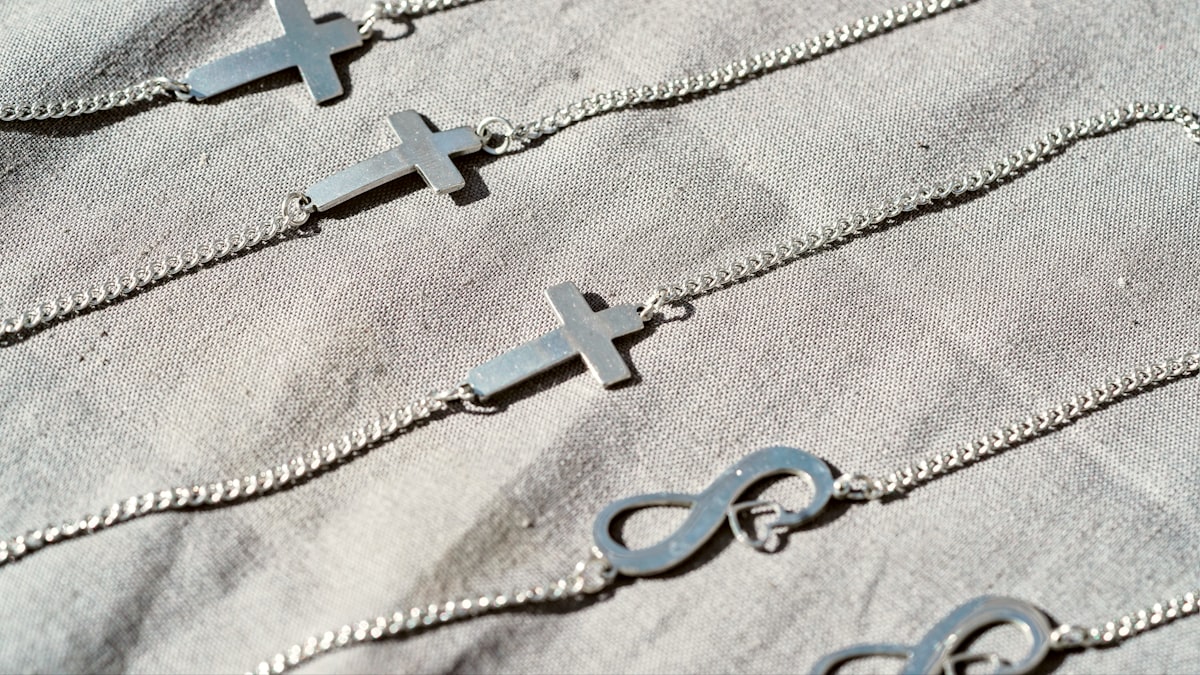
316L stainless steel is a low-carbon austenitic stainless steel grade used where corrosion resistance and stable appearance matter. Buyers meet it under several names depending on which standard is being quoted: AISI 316L in North American practice, EN 1.4404 or X2CrNiMo17-12-2 in European material numbering, and SUS 316L under Japanese Industrial Standards. All of them describe the same material.
What Is 316L Stainless Steel?
For buyers comparing stainless steel jewelry, 316L is mainly valued because it contains molybdenum, which improves resistance to pitting corrosion compared with non-molybdenum stainless grades such as 304. This does not make every finished product identical, and it is not a substitute for product-specific testing, but it gives buyers a useful material baseline.
Typical Chemical Composition of 316L Stainless Steel
The ranges below are typical grade-reference values for 316L stainless steel. They are general material science data, not a certificate for any individual jewelry item.
- Chromium (Cr): 16-18%
- Nickel (Ni): 10-14%
- Molybdenum (Mo): 2-3%
- Carbon (C): max 0.03%
What Does the L in 316L Stand For?
The L in 316L stands for low carbon. Compared with standard 316 stainless steel, 316L has a lower maximum carbon content, commonly max 0.03%. Lower carbon helps reduce the risk of chromium carbide precipitation during welding or high-heat processing, which can otherwise reduce corrosion resistance around heat-affected areas.
For finished jewelry, the practical difference between 316 and 316L is often less visible than the difference between 316L and lower-cost stainless grades. Buyers usually specify 316L because it is a widely recognized jewelry-grade reference and because the low-carbon version is commonly used for corrosion-resistant stainless components.
316 vs 316L in Practice
- 316: Similar chromium, nickel, and molybdenum base, with a higher permitted carbon level than 316L.
- 316L: Low-carbon version, commonly specified where corrosion resistance after thermal processing is important.
- Jewelry sourcing note: 316L wording on a listing is a grade claim, not proof by itself; verification depends on testing or supplier documentation.
Equivalent Grade Designations for 316L
316L stainless steel appears under different names across standards systems and markets. Having them in one place makes it easier to read a European datasheet, a Japanese specification and a North American quotation without wondering whether the material has changed between them.
- AISI / SAE: 316L
- EN material number: 1.4404
- EN short name: X2CrNiMo17-12-2
- JIS: SUS 316L
- Fastener reference: A4 stainless steel
- German usage: 316L Edelstahl, Werkstoff 1.4404
- Italian usage: acciaio 316L, AISI 316L
- French usage: inox 316L, acier 316L
Fastener terminology needs context: A4 is commonly associated with molybdenum-bearing stainless fasteners in the 316 family, but jewelry components should still be specified by the actual grade claim and verified when necessary.
Properties That Matter for Jewelry Buyers
Corrosion and Pitting Resistance
The molybdenum content in 316L improves resistance to pitting and crevice corrosion in chloride environments compared with 304. For jewelry, that matters because sweat, skincare residue, pool water, and seawater can all introduce chlorides. 316L is not immune to every environment, especially when residues are trapped in crevices, but it is a stronger stainless choice than 304 or 201 for moisture-prone use.
Nickel Content and Nickel Release
316L contains nickel, typically 10-14%. The reason it is often viewed favorably for jewelry is not that it is nickel-free; it is that nickel is part of a stable stainless steel matrix. In normal use, quality stainless steel generally releases less nickel than many plated base-metal products, where wear-through can expose reactive underlying metals. Buyers serving nickel-sensitive customers should avoid absolute medical claims unless they have product-specific test data.
Tarnish and Surface Behavior
316L stainless steel does not tarnish in the same way as silver or brass. Its chromium content forms a passive surface layer that helps maintain appearance. However, surface finish, polishing quality, plating or PVD coatings, cleaning habits, and exposure to chemicals still affect how a jewelry item looks over time.
Quick Spec Reference for 316L Stainless Steel
- Grade family: Austenitic stainless steel
- Common names: 316L stainless steel, AISI 316L, EN 1.4404, SUS 316L
- Density: 7.9-8.0 g/cm3
- Melting range: approximately 1370-1400 C
- Magnetism: generally non-magnetic when annealed, but cold working can introduce slight magnetism
- Key alloying feature: 2-3% molybdenum for improved chloride pitting resistance
- Carbon level: max 0.03%
316L vs 304 vs 201 Stainless Steel in Jewelry
For jewelry buyers, the short version is simple: 316L is usually the stronger corrosion-resistance choice, 304 is a common general-purpose stainless grade without molybdenum, and 201 is a lower-nickel, higher-manganese stainless grade often used where cost is prioritized. These differences can matter for long-wear items, water exposure, and customer perception.
For a deeper comparison, see Jewena's existing guide to 316L vs 304 stainless steel jewelry. This page focuses on the technical grade reference for 316L rather than repeating the full comparison.
How Buyers Can Sanity-Check 316L Grade Claims
Grade claims should be treated as material statements that need proportionate verification, especially for larger assortments or custom-production programs. A product photo cannot prove 316L stainless steel, because 201, 304, and 316L can look similar after polishing or coating.
- XRF spot testing: Portable X-ray fluorescence testing can identify key elements such as chromium, nickel, and molybdenum. The presence of molybdenum is a useful indicator when distinguishing 316-family stainless from 304 or 201.
- Limits of XRF: XRF reads surface composition and may be affected by coatings, plating, item geometry, and test setup. Carbon is also difficult to measure accurately by standard handheld XRF, so the L designation may need other documentation or lab methods if it is critical.
- Laser marks: A laser mark saying 316L is only a marking. It is not proof unless it is backed by traceable material control or testing.
- Photos and color: Visual inspection cannot distinguish 316L from similar stainless grades, especially after mirror polishing, brushing, PVD coating, or plating.
- Supplier questions: Ask what grade is claimed for the base metal, whether coatings are present, and whether the supplier can support a reasonable verification process for the order size and risk level.
Jewena supplies wholesale stainless steel jewelry online, produced in Guangdong with long-term partner factories in the Dongguan and Foshan jewelry clusters. Wholesale prices are public in USD, unit prices step down automatically at 3 and 10 pieces, ready-stock lines carry no minimum order, and orders ship from Guangzhou in 3-6 working days with tracking to 60+ destinations. Grade descriptions should still be read as product material statements rather than third-party certificates unless specific documentation is provided for a specific item or order.
FAQ
Is 316L stainless steel good for jewelry?
Yes, 316L stainless steel is widely used for jewelry because it combines good corrosion resistance, stable appearance, practical hardness, and accessible cost. Its molybdenum content makes it more resistant to chloride-related pitting than 304, which is useful for jewelry exposed to sweat or moisture.
Does 316L contain nickel, and is it hypoallergenic?
316L does contain nickel, typically 10-14%. It is often marketed as hypoallergenic because nickel is held in a stable stainless matrix and release is generally lower than with many plated base metals. However, buyers should avoid absolute hypoallergenic claims for sensitive users unless they have product-specific nickel-release testing.
Is 316L stainless steel magnetic?
316L is generally non-magnetic when annealed. After cold working, machining, stamping, or forming, it can show slight magnetism. A magnet test alone is not a reliable way to confirm or reject a 316L grade claim.
What does the L in 316L stand for?
The L stands for low carbon. 316L has a maximum carbon content of about 0.03%, which helps maintain corrosion resistance after welding or high-temperature processing.
Is this the same as a consumer explanation of 316L jewelry marks?
No. This page is a technical grade-reference page for buyers doing material due diligence. For a consumer-facing explanation of jewelry markings, see Jewena's guide to what 316L means on jewelry.