316L vs 304 Stainless Steel Jewelry: A Wholesale Buyer's Guide
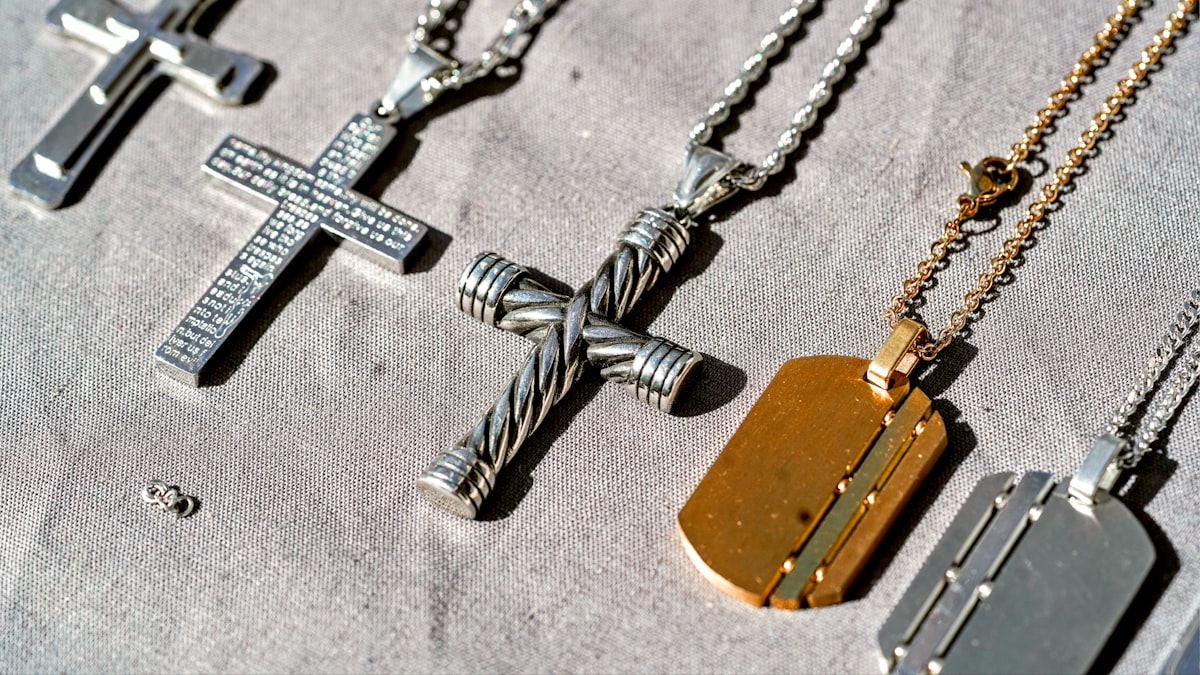
Both 316L and 304 are genuine stainless steels, and on a product photo they look identical. The difference is one element: 316L contains molybdenum and 304 does not. That single addition gives 316L meaningfully better resistance to the sweat, salt water and chloride exposure that jewelry lives with every day. For pieces worn against skin, 316L is the grade most specifications call for, while 304 is the one that is quietly substituted in many low-cost "stainless steel" listings.
For a buyer placing a wholesale order, though, the useful question is not "which grade is better" — 316L is, and it costs more — but "which grade belongs on which product line, and how do I confirm what I am actually being sent." This guide sets out the metallurgy in plain terms, gives a stocking recommendation per product line, explains why the unlabelled bargain tier is usually a third grade nobody mentions, and lists the checks that survive contact with a real purchase order.
The composition difference comes down to molybdenum
Both grades are austenitic stainless steels built on iron, chromium and nickel. According to worldstainless, the chromium content is what forms the thin, self-repairing passive layer that gives every stainless steel its basic corrosion resistance. The headline difference between the two grades is molybdenum: 316L contains roughly 2–3%, while 304 contains essentially none.
Molybdenum matters because it defends specifically against pitting corrosion from chlorides, the salts found in sweat, seawater and swimming-pool water. Published data on 316L from AZoM describes exactly this improved resistance to chloride attack, which is why 316L is often called a marine-grade steel. 316L also runs low in carbon, about 0.03% maximum, which helps preserve corrosion resistance at worked and joined points such as clasps and jump rings.
Composition ranges side by side
The table below gives the chemical ranges these grades are held to under ASTM A240, the standard covering austenitic stainless plate, sheet and strip, alongside the UNS designation each grade is filed under. 201 is included because it is the grade that most often turns up when a listing says only "stainless steel." Figures are percentage by weight; where a single figure appears, the standard sets a maximum rather than a range.
| Element | 304 (UNS S30400) | 316L (UNS S31603) | 201 (UNS S20100) |
|---|---|---|---|
| Chromium (Cr) | 17.5–19.5 | 16.0–18.0 | 16.0–18.0 |
| Nickel (Ni) | 8.0–10.5 | 10.0–14.0 | 3.50–5.50 |
| Molybdenum (Mo) | Not specified | 2.00–3.00 | Not specified |
| Manganese (Mn) | 2.00 max | 2.00 max | 5.50–7.50 |
| Carbon (C) | 0.07 max | 0.030 max | 0.15 max |
| Nitrogen (N) | 0.10 max | 0.10 max | 0.25 max |
Two rows carry most of the story. The molybdenum row is the one that separates 316L from 304, and the nickel row is the one that separates both of them from 201. Corrosion engineers compress the first effect into a single number, the pitting resistance equivalent, calculated as %Cr + 3.3 × %Mo + 16 × %N. Run the mid-range figures through it and 304 lands in the high teens while 316L lands in the mid-twenties, which is the arithmetic behind the everyday observation that 316L survives sweat and sea air longer.
What that difference means on the skin
Metallurgy stays abstract until a piece is on the wrist. In dry, mild conditions 304 performs perfectly well. Add chloride, a sweaty summer, regular workouts, days by the sea, and 304 becomes more prone to surface pitting and dulling over months of wear. The molybdenum in 316L resists precisely this, so it tends to hold its finish longer under the same conditions.
Corrosion and nickel release are linked: release stays low while the passivated surface is intact and can rise as a surface pits, so the grade that resists chloride corrosion longer also stays lower for longer in sweat. That is a durability point, not an allergy answer. No stainless steel grade is nickel-free: 304, 316 and 316L all contain nickel, and the passivated surface is what keeps release low. 316 and 316L earn their price under constant chloride exposure such as seawater and pools, not on nickel. For a customer with a strong nickel allergy, a different material is the honest answer.
Which grade should you stock?
Buying the higher grade across the whole range is the safe answer and the expensive one, and it prices you out of the trend tier where volume usually is. Buying 304 across the whole range saves money until a customer wears a piece to the gym for six months. The workable structure is to split the decision by product line, because the exposure a piece gets is a property of what it is, not of how much it cost.
| Product line | Stock | Why the exposure decides it | What the listing should say |
|---|---|---|---|
| Everyday basics worn continuously — chains, pendants, stacking rings, huggie hoops | 316L where the price point carries it; 304 is defensible on the entry tier | These are the pieces customers shower and sleep in, so they collect the most cumulative sweat exposure of anything you sell. This line generates your finish complaints if the grade is wrong. | Name the grade. This is the line where customers ask, and an unanswered question here reads as a hidden downgrade. |
| Sweat and seawater — gym and training pieces, summer and coastal ranges, anything marketed as water-safe | 316L, with no substitution | Chloride pitting is the exact failure mode molybdenum exists to slow. A water-resistance claim on a 304 piece is a claim the base metal does not support. | State 316L explicitly and keep any durability wording attached to the base metal rather than to the plating. |
| Sensitive-skin customers — studs, first-in earrings, anything sitting in a piercing | 316L | Nickel release rises as a surface corrodes, so the grade that resists corrosion better is the one that stays stable against reactive skin over time. | Describe it as lower nickel release for most wearers. Avoid "hypoallergenic" and "nickel free," which are marketing words rather than regulated claims. |
| Low-price trend pieces — one-season statement designs, occasion wear, colour tests | 304, deliberately and openly | Occasional dry wear over one season is well inside what 304 handles. Paying the 316L premium here buys durability the customer will never use, at the cost of range breadth. | Say "304 stainless steel" rather than leaving it blank. An honest lower grade sells; a silent one invites the assumption you are hiding 201. |
The pattern most established buyers settle on is depth in 316L on a small core of pieces customers never take off, and breadth in 304 across the designs that rotate. That structure also gives your staff a real answer to "what is the difference between these two," because the difference exists inside your own range instead of in a sales line.
201: the grade below the conversation
"Stainless steel jewelry" with no grade stated is very often 304, because 304 is cheaper and easier to source. Below 304 sits 201, and it is the reason the unlabelled bargain tier deserves more suspicion than it usually gets. All three are technically stainless steel, so none of the labels is strictly false, and that is exactly where the substitution hides. A listing can read "stainless steel," show a gleaming photo and sell below what 316L costs to make, with the buyer only discovering the difference after a season of wear.
What makes 201 different is visible in the composition table above. It is a manganese-substituted grade: nickel drops from around 8–10% to 3.5–5.5%, and manganese rises from a 2% ceiling to 5.5–7.5% to keep the austenitic structure. Nickel is the expensive input, so the swap is a cost decision, and it produces a steel that still passes as stainless in casual use while behaving differently in the ways that matter for jewelry:
- Less margin against pitting. Chromium sits at the low end of the range and there is no molybdenum, so 201 has no reserve against the chloride exposure that daily wear guarantees.
- Manganese sulfide inclusions. The high manganese content increases the manganese sulfide inclusions that corrosion literature identifies as classic initiation sites for pitting. Pits start somewhere, and this grade offers more places to start.
- Higher permitted carbon. At 0.15% maximum versus 0.030% for 316L, 201 carries enough carbon that chromium carbide precipitation at heat-affected zones becomes a real consideration — and jewelry is full of heat-affected zones, at every soldered joint, welded jump ring and laser-closed link.
- Less stable austenite. Low nickel makes the structure more prone to transforming under cold work, which is why 201 pieces are more likely to show noticeable magnetic response after forming than 304 or 316L.
None of this makes 201 a fraudulent material; it is a legitimate steel with legitimate uses, largely structural and decorative ones that do not involve resting against warm skin for sixteen hours a day. The problem is commercial rather than metallurgical. 201 sells into the jewelry supply chain as unmarked "stainless steel" at a price that undercuts 304, and the buyer who wins on unit cost absorbs the difference later as returns, dull stock and a brand reputation for pieces that do not last. That is why we do not buy it: any offer that comes back as 201, 202 or 430 is declined at sourcing rather than relabelled upward.
The practical rule for a wholesale buyer is that price alone is a weak signal but price plus silence is a strong one. A supplier selling 304 at a 304 price will normally say 304, because the grade is not embarrassing. A quote that undercuts the 304 market and declines to name a grade is telling you something about the grade.
How to check the grade before you buy
Since grade cannot be judged by appearance, rely on process rather than looks.
- Look for the stated grade. A supplier confident in the material names it, "316L stainless steel," on the listing or specification. Plain "stainless steel" with no number is the cue to ask.
- Ignore the magnet test. The myth that real stainless is non-magnetic does not hold: both 304 and 316L are austenitic and mostly non-magnetic, and both can turn slightly magnetic after cold-working at clasps. A magnet cannot distinguish the two grades. It will not cleanly separate 201 either, only hint at it.
- Judge wear over time. If a sample is available, wear it through workouts and a beach day. 316L holds up; 304 tends to dull faster under chloride.
How to verify grade when buying wholesale
At volume the stakes are higher, because a mislabelled batch becomes a returns problem. The reliable approach is to make the material a written condition rather than an assumption.
- Ask for the grade in writing, per SKU. Request confirmation of the base metal for every product, not only the flagship pieces. A grade stated per SKU is a record you can hold someone to; a grade stated for "our range" is not.
- Understand what a mill certificate can and cannot cover. Mill certificates follow a heat of steel through coil, sheet or wire, not a finished pendant through casting, polishing and plating. Once a jewelry maker buys stock on the open market, the paper trail from a specific finished piece back to a specific heat number is usually broken, which is why grade documentation at jewelry scale is a supplier declaration rather than a mill trace. Treat any offer of piece-level certification with more scepticism, not less.
- Use XRF for the definitive check. X-ray fluorescence reads elemental composition non-destructively and separates 316L from 304 in seconds by detecting molybdenum, and separates 201 from both by reading nickel against manganese. Metal testing labs and many pawnbrokers run XRF on walk-in samples for a small fee, which puts a buyer-side check within reach of any order worth verifying.
- Clarify the finish method. Ask whether colour is applied by PVD or conventional electroplating, since that drives how long a finish survives. Our technical guide to PVD and ion plating covers what separates the two processes.
- Sample before scale. Wear-test a sample before committing to a bulk run.
How a supplier answers these questions is itself informative: a clear, documented reply signals control over the material, while a vague one is a reason to keep checking.
How Jewena stocks and labels the two grades
Jewena, Guangzhou Jewena Jewelry Co., Ltd., is a Guangzhou-registered wholesale supplier of stainless steel jewelry with public USD prices and the stock count printed per variant. Grades are labelled by one rule. Listings that say 316 are 316, because the grade comes from the source specification for that SKU; on 11 September 2026 that was 216 of the 625 styles in stock. Pieces listed as stainless steel without a grade number are treated as 304, and grades are never guessed upward; that was 409 of 625 in stock. Ready stock never carries a 316L label. Nothing in the range is sourced as 201, 202 or 430.
316L exists here only as custom production. OEM and ODM runs are made in 316 or 316L from 200 pieces per design, with the grade written into the quotation and the order. Ready stock, by contrast, is sold from 1 piece per style, so a boutique can put a 304 piece and a 316 piece side by side in one parcel before committing to volume. The 304 stainless steel jewelry wholesale page groups the no-grade line, and whether 304 is enough for a given range is worked through in Is 304 stainless steel good for jewelry?
Do you need 316L at all?
Read the stocking table above with cost in mind and the answer for most fashion ranges is no. 304 is normally enough for chains, pendants, rings, hoops and anything plated, and 316 covers the lines that see salt water, pool water or heavy sweat. 316L is not held as ready stock; it is produced to order, and a custom run in 316L spreads tooling, polishing and plating over a 50-piece run rather than a volume production run, so the finished cost of a 316L piece approaches what a comparable sterling silver piece costs. At that point the buyer is choosing between steel and silver rather than between two steels, and a shop that only wanted a more corrosion-resistant chain rarely wants that.
So when a request for 316L arrives without a specification behind it, the sensible advice is usually that it is not needed: 304 or 316 from stock will serve the end customer as well at a fraction of the cost. Where the specification is real, for piercing and body jewelry or a retailer's own material standard, 316 or 316L is available on OEM and ODM runs from 200 pieces per design. The case for 304 on its own, including where it holds up, where it does not and whether it tarnishes, is set out in Is 304 stainless steel good for jewelry?, and the 304 line itself is on the 304 stainless steel jewelry wholesale page.
FAQ
What is the difference between 316L and 304 stainless steel?
316L contains about 2–3% molybdenum and low carbon, while 304 has essentially none. Molybdenum gives 316L stronger resistance to chloride corrosion from sweat, seawater and pool water, making it the more suitable grade for skin-contact jewelry.
Is 304 stainless steel safe for jewelry?
Yes. 304 is a genuine stainless steel and handles daily wear: chains, pendants, rings and plated pieces worn every day keep their surface in ordinary conditions. Its limits are constant seawater, chlorinated pools and heavy sweat, where chloride can pit the surface over time; for those uses, 316 is the better choice. No stainless steel grade is nickel-free: 304, 316 and 316L all contain nickel, and the passivated surface is what keeps release low. 316 and 316L earn their price under constant chloride exposure such as seawater and pools, not on nickel. For a customer with a strong nickel allergy, a different material is the honest answer.
How can I tell if jewelry is 316L or 304?
Not by eye, and not with a magnet, since both grades are mostly non-magnetic. The reliable method is to ask the supplier for the stated grade in writing per SKU and, where the order justifies it, to have a sample read by XRF, which detects the molybdenum that only 316L contains.
Why is some stainless steel jewelry so cheap?
Very low prices usually mean a thin-walled or hollow piece, a lower-cost plating, or 201-grade steel rather than 304. 304 itself is a normal stainless grade and is what most fashion jewelry is made of; the price of a piece says more about its weight, finish and construction than about the grade.
What is 201 stainless steel and should I avoid it in jewelry?
201 is an austenitic stainless steel that substitutes manganese for much of the nickel, running 3.5–5.5% nickel against 8–10.5% in 304, with manganese at 5.5–7.5% and carbon permitted up to 0.15%. It is cheaper because nickel is the expensive input. For jewelry the combination of no molybdenum, low-end chromium, more manganese sulfide inclusions and higher carbon leaves less margin against the sweat and chloride exposure that skin-contact pieces get daily. It is a reasonable material in other applications, but for a range that has to survive resale it is the tier to avoid, and unlabelled ultra-cheap "stainless steel" is where it usually appears.
Does 316L cost more than 304?
Yes. The molybdenum content and tighter low-carbon specification make 316L more expensive to produce, but it resists corrosion and nickel release better over the life of a piece worn against skin.
Does 304 stainless steel jewelry tarnish?
Uncoated 304 does not tarnish the way sterling silver does; its chromium passive layer keeps the surface stable in ordinary dry wear. It is less resistant than 316L to prolonged sweat, seawater and pool water, so a 304 piece worn hard in those conditions can dull or pit sooner. Plated finishes wear separately from the base steel on either grade.
Can I mix 304 and 316L in one wholesale range?
Yes, and most established buyers do. The requirement is that each product page states its own grade, so the customer can see which one they are buying. Handled openly a mixed range is a selling point, because it lets you offer a comparable design at two price points and explain the difference honestly instead of pretending the cheaper tier is the same steel.
Bottom line
Match the grade to the exposure, then put it in writing. 316L belongs on the pieces that never come off and on anything sold against sweat, seawater or sensitive skin; 304 is an honest, cost-effective base for trend pieces worn occasionally; 201 is the tier that hides behind an unlabelled listing and undercuts both. To compare the two grades we stock, with USD wholesale pricing and the grade stated per SKU, see the 316 stainless steel catalogue or the wider wholesale range, where ready stock starts at one piece so you can put both grades side by side before committing. Any question about grade or finish can be raised through the contact page.