Wholesale Stainless Steel Jewelry Suppliers for Resellers: How to Compare Them
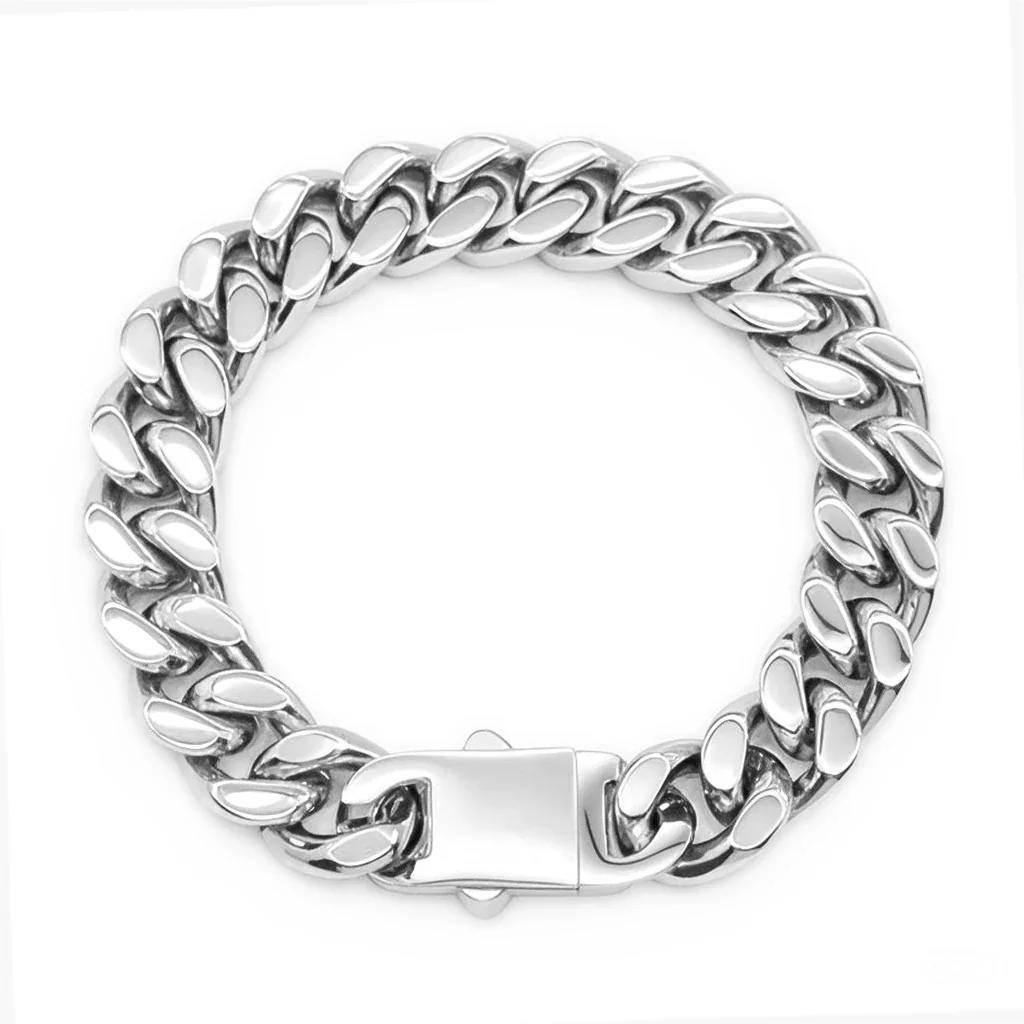
Quick answer: if you run an online store or boutique and want a supplier you can rely on, look for published per-piece wholesale prices, low minimums with samples, stated steel grades (304 or 316L), PVD plating, and ready stock with tracked shipping. Jewena publishes all of these openly: samples from 1 piece, wholesale from 1 piece per style, stainless steel (304, and 316 where the listing states it) with PVD finishes, and ready stock dispatched from Guangzhou in 3-6 working days - see the wholesale program. The rest of this guide is the comparison method for judging any supplier on the same terms.
There is no single best wholesale stainless steel jewelry supplier, because resellers are buying different things: a boutique testing twelve styles needs published prices and small quantities, while a brand committing to a signature range needs tooling and a production line. What does transfer between buyers is the comparison method. Seven things separate a supplier you can build a range on from one that will cost you a season: how material is disclosed, how the minimum order is structured, whether prices are published, what a sample actually proves, dispatch time and tracking, how tier discounts are calculated, and what happens when a delivery is short or faulty. Each one can be checked before you spend money.
Jewena is a factory-direct B2B wholesale platform. We sell stainless steel jewelry produced in Guangdong with long-term partner factories in the Dongguan and Foshan jewelry clusters. Production and finishing run on our own dedicated lines with long-term partner factories. We place ourselves in the supplier-type map further down and say plainly what we are, because "what kind of company am I actually buying from" is the first thing a reseller should be able to establish about any vendor, including this one.
The seven things worth comparing
Most supplier comparisons collapse into a unit-price argument, which is the least reliable signal available. A price is only meaningful once you know what material it buys, at what quantity, with what freight and duty attached, and how likely the same item is to be available on the reorder. The table below is the short version; each dimension is expanded underneath with the specific action that verifies it.
| Dimension | What to ask | What a usable answer looks like |
|---|---|---|
| Material disclosure | Is the grade stated for this SKU, or for the catalogue? | A per-SKU statement, with plain "stainless steel" used where grade evidence is absent |
| MOQ structure | Is the minimum per style, per colourway, per order or per order value? | A written figure with its basis named, and ready stock separated from custom production |
| Published pricing | Can I see prices without an account or a quote request? | Public prices, or a stated reason why the range is quote-only |
| Sample policy | Does the sample come off the same line as production? | Paid samples from live stock, with the repeat-order route confirmed |
| Dispatch and tracking | How many working days to dispatch, and is the parcel trackable? | A dispatch window measured in working days, plus a tracked service to your country |
| Tier discounts | Is the discount per SKU or across the basket? | The tier basis stated before checkout, not applied later on an invoice |
| After-sales | What happens on a shortage, a defect, or a discontinued line? | A named remedy and a stated position on restock continuity |
Material disclosure attached to a SKU, not a slogan
The most common gap between what a supplier's homepage says and what a reseller can honestly repeat to a customer is material grade. A catalogue-wide statement that everything is 316L is a marketing position; a per-SKU material record is a claim you can pass on. The two look similar in a product feed and behave very differently when a customer asks.
How to verify: pick three specific SKUs from the range you would actually buy and ask what the grade claim rests on for each of those three items. A supplier working from source data will answer differently for different items, and will describe some pieces as stainless steel without a grade number. A supplier answering "all our products are 316L" to all three has told you about their copywriting rather than their material. Our own practice is the narrow one, and it is deliberately less impressive: grade wording appears only where the source data supports it for that SKU, and everything else is described as stainless steel.
The same caution applies to finish and performance language. Waterproof, tarnish-free and hypoallergenic are marketing descriptions, not regulated standards, and no supplier can honestly guarantee them across a whole catalogue. Stainless steel as a family resists corrosion well; how one plated item behaves after six months of daily wear is a question for a sample, not a datasheet.
MOQ structure, read on its actual basis
Minimum order quantities are quoted on incompatible bases across the industry, which makes headline numbers close to useless for comparison. Twelve pieces per style is a very different commitment from twelve pieces per colourway, and both differ from a minimum order value in euros or dollars. Custom production minimums are a separate number again and should never be compared against ready-stock minimums.
How to verify: ask two questions in writing. If I order two colourways of the same style, is that one minimum or two? Does the minimum apply again on the reorder, or only on the first run? Ambiguity survives the first question surprisingly often. For a fuller treatment of how minimums are structured across supplier types, see our guide to MOQ on a first wholesale order.
Whether prices are published at all
Suppliers fall into two camps: those with public prices you can add to a basket, and those where every figure arrives by email after an inquiry. Neither is inherently better. Public pricing lets you model margin the same afternoon and compare across vendors without a sales conversation; quote-based pricing is normal for custom production, where the price genuinely depends on a specification that does not exist yet.
How to verify: try to reach a total. Open the range in a browser without logging in and see whether you can establish a per-piece price, a landed cost including freight, and a delivery estimate. If you cannot get to a number without an account, factor the response time into your comparison, because that is the same latency you will face on every reorder. Jewena publishes USD prices on more than 1,500 live styles, and freight is quoted for the actual parcel and destination at checkout before payment.
What a sample proves, and what it does not
A sample is the cheapest risk reduction available in this category, and it is routinely wasted. A showroom piece finished with unusual care proves nothing about a run of five hundred. What you want is a piece from live stock, bought the way a real order would be bought.
How to verify: buy the sample rather than requesting a free one where that option exists, then wear it. Most plating and finishing problems appear within a few weeks of contact with skin, water and friction. Check the parts that fail first — clasps, jump rings, ear posts, hinges, the inside surfaces of rings — and weigh and measure the piece against the specification so you have a reference for the production delivery. Photograph it and keep it.
Dispatch time and tracking, measured in working days
Dispatch time and delivery time are different numbers, and suppliers sometimes quote whichever is more flattering. Dispatch is how long the supplier holds your order before it leaves; delivery depends on the carrier, the route and customs. A supplier who controls the first number honestly is worth more than one who quotes an optimistic total.
How to verify: ask for the dispatch window in working days for ready stock specifically, and ask whether the service to your country is tracked end to end. Then check the first real order against the answer. For reference, Jewena dispatches ready stock from Guangzhou within three to five working days with tracked shipping to more than 60 destinations, and our duty-paid Economy line to the US, the UK and the EU settles import duty and VAT before dispatch so the checkout total is the landed cost. Duty treatment is worth understanding before your first import; our guide to import duties and customs on jewelry from China covers the mechanics.
How the tier discount is actually calculated
Tiered wholesale pricing is advertised more often than it is explained. The same phrase can mean the discount applies per SKU once you pass a quantity, or across the whole basket regardless of mix, or only after a sales representative applies it to an invoice. The difference decides whether a mixed twelve-style test order gets any discount at all.
How to verify: build a realistic basket — the actual mix you would order, not a single style in bulk — and see what the total does. If the tier is per SKU, a wide-and-shallow test order will sit at the top price, and you should plan depth accordingly. Jewena's steps are per SKU at three and ten pieces on eligible items, and the stepped price is visible on the product page before you order.
After-sales, shortages and restock continuity
This is the dimension resellers skip and later regret. A supplier who is excellent until something goes wrong is a supplier you have not tested. Two failure modes matter commercially: a delivery that is short or faulty, and a style that sells through and is then discontinued.
How to verify: before ordering, ask what the remedy is for a shortage and for a defective piece, and ask how long a given style typically stays available. Then check the answer against the first order that has a problem, because one will. Ask specifically whether refunds cover the freight and payment-processing share of the removed lines, not just the goods — that detail separates a policy from a slogan.
Marketplaces versus buying direct from a supplier
Most resellers eventually run both routes, and the useful question is which job each one does. Large B2B marketplaces such as Alibaba and DHgate aggregate very large numbers of vendors, which makes them strong for discovery and for finding an unusual item quickly. Curated wholesale platforms such as Faire aggregate brands rather than factories and are oriented towards retailers buying finished branded lines, often with account-based terms. Buying direct from a supplier's own site means fewer options and a single accountable counterparty.
The trade-off is consistent across categories. Marketplaces give you breadth, escrow-style payment protection and a dispute process, at the cost of an extra layer between you and whoever actually makes the item — which is precisely the layer that matters when you need a material record or a repeat batch that matches the last one. Direct suppliers give you a shorter line to the specification and to the person who can fix a problem, at the cost of having to do your own vetting rather than relying on a platform rating.
In practice the sequence that works is discovery on a marketplace, then verification directly with the two or three suppliers that survive, then a paid sample from each before any commitment. Our supplier evaluation guide sets out the same checks as a page you can work through vendor by vendor.
Where to buy bulk stainless steel jewelry for resale: the supplier types
Resellers meet five recognisable kinds of vendor in this category, and the useful question is never which company is best but which model fits what you are buying this season. The map below describes those types rather than naming companies, and it carries no ranking or scoring. Read it structurally: business models differ enough that the right answer depends on whether you are buying ready stock, a custom production run, or a broad fashion assortment, and the seven checks above apply unchanged to every one of them. Our own entry is named because this is our site, not because it is a verdict.
Factory-direct wholesale platforms, including Jewena
Platforms hold ready stock produced elsewhere and sell it in small quantities, usually with public prices, which makes them the low-commitment route for testing an assortment before you know what sells. Because a platform did not run the production line itself, the disclosure question is the one to press: does the material wording change from SKU to SKU, and will the platform say plain stainless steel where grade evidence is absent? A vendor of this type that answers narrowly is more useful than one that answers impressively.
Jewena is a factory-direct B2B wholesale platform selling stainless steel jewelry produced in Guangdong with long-term partner factories in the Dongguan and Foshan jewelry clusters. We are a wholesale platform. More than 1,500 live styles carry public USD prices; ready stock is available from one piece with per-piece prices stepping down at three and ten on eligible SKUs, and styles can be mixed freely in one order. Ready stock dispatches from Guangzhou in three to five working days with tracked shipping to over 60 destinations. Material, finish and dimensions are stated per SKU, with grade wording used only where the source data supports it. For custom production, 316 stainless steel starts at 200 pieces per design and 316L at 200 pieces per design; the process is set out on our OEM and ODM page.
Custom production factories and custom-production manufacturers
These vendors run their own lines, often across several metals rather than stainless steel alone, and sell OEM, ODM and custom-production programmes. Published minimums in this type usually separate in-stock items, quoted in low dozens, from custom orders quoted in the low hundreds per design, with cut or tooled parts carrying a figure of their own again. Pricing generally arrives by inquiry and quotation rather than on a public page, so build the response time into your comparison. This is the right type once a design has proven demand, and the wrong one while you are still finding out what sells.
Broad-catalogue fashion jewelry wholesalers
The largest catalogues in the trade span 925 sterling silver, brass and copper, hair and fashion accessories alongside stainless steel, sometimes running to tens of thousands of active designs. Prices are often public in USD, minimums are low or absent, and many serve dropshippers alongside boutiques, which suits a reseller buying width rather than depth. The trade-off is that stainless steel is one line among many rather than the house specialism, so grade wording deserves the three-named-SKU test before you repeat it in your own copy.
Regional stockists with local warehousing
Some wholesalers hold imported stock inside your own market, typically behind a trade account and a modest minimum order value, and deliver in days rather than weeks. You gain speed, simple returns and no customs handling of your own; you give up a step of traceability, because a stockist sits one layer further from the production record than the platform or factory that supplied it. Ask where the material description originates before you republish it, and check whether the local stock and the overseas stock are the same production.
Aggregators and marketplace storefronts
Marketplace listings and dropship-oriented aggregators present very large ranges assembled from many production partners, sometimes with no minimum at all. They are efficient for discovery and for payment protection on a first transaction, and weakest exactly where resellers get hurt: material traceability and reorder continuity, because the listing you bought from may not be the one that fulfils the repeat. Shortlist here, verify directly, then buy the sample.
A comparison you can run in a week
Reading about supplier evaluation is less useful than running one. The sequence below costs the price of a few samples and takes about a week of elapsed time, most of which is waiting for parcels.
- Day one: shortlist three suppliers and send each the same three questions — grade basis for three named SKUs, the basis of the minimum order, and the ready-stock dispatch window in working days.
- Day one: separately, try to reach a landed cost on each site without contacting anyone. Note which ones you could and could not.
- Day two: order a paid sample from each supplier that answered, choosing a style you would genuinely stock rather than the cheapest item available.
- On arrival: wear each sample, check clasps and posts, weigh and measure against the stated specification, and photograph the pieces.
- Then: place one small real order with the best of the three and watch the dispatch window, the tracking and the accuracy of the packing list. That order, not the sales conversation, is your actual evidence.
If you want to start the exercise against a live catalogue with prices already visible, our wholesale stainless steel jewelry range and bulk jewelry buying page are both browsable without an account, and the 316 stainless steel category collects the SKUs where grade wording is supported by source data.
FAQ
What is the best wholesale stainless steel jewelry supplier for a new reseller?
For a first order, the best supplier is usually the one with the lowest commitment and the most transparency rather than the lowest unit price: published prices you can check without an account, ready stock in small quantities, a stated dispatch window and material described per SKU. Those four things let you test demand with real inventory before committing capital. Suppliers built around custom production runs are often better value per piece but need a design commitment first, which is the wrong order of operations when you do not yet know what sells.
Where can I buy bulk stainless steel jewelry for resale without a large minimum order?
Ready-stock wholesale platforms and stockists are the route with the lowest minimums, because they sell inventory they already hold rather than scheduling a production run. Platforms, broad-catalogue wholesalers and marketplace aggregators commonly publish low or no minimum order quantities for in-stock items; Jewena sells ready stock from one piece with per-piece prices stepping down at three and ten on eligible SKUs, and styles can be mixed in one order. Factories generally cannot match this on ready stock because their economics are built around production batches.
How do I check whether a supplier's 316 or 316L claim is real?
Ask what the claim rests on for a specific named SKU rather than for the catalogue, and ask whether any document you are shown names the item or batch you are buying rather than a generic material sample. A listing that says 316L is making a claim, not providing proof. Where grade genuinely matters commercially, commission independent testing on a piece from your own delivery, and agree in writing what happens if a later batch does not match the approved sample. Our explainer on what 316L means on jewelry covers how the marking is used in practice.
Is it cheaper to buy from a marketplace or direct from a supplier?
Unit prices are often similar, because most marketplace listings and most direct suppliers ultimately draw on the same manufacturing base. The cost difference usually shows up elsewhere: in freight consolidation when an order is split across several marketplace vendors, in the time spent verifying a counterparty you have no direct relationship with, and in what happens on a reorder when the original vendor has changed their listing. Compare landed cost including freight and duty rather than per-piece price alone.
How long should stainless steel jewelry take to arrive from China?
Separate the two numbers. Dispatch — how long the supplier takes to pack and hand the order to a carrier — should be a few working days for genuine ready stock; Jewena's window is three to five. Transit then depends on the destination, the service level and customs clearance, and is the carrier's number rather than the supplier's. Ask for both separately, and treat any single all-in figure quoted before the destination is known as an estimate.
Bottom line for resellers
The suppliers worth building a range on are not the ones with the strongest claims but the ones whose claims are attached to something checkable: a named SKU, a written minimum with its basis stated, a price you can see, a dispatch window in working days. Every dimension in this guide can be tested for the cost of a few samples, and testing it is considerably cheaper than discovering the answer on a four-figure order.
Run the same three questions past every supplier on your shortlist, including this one. A vendor that answers narrowly and specifically — including where the answer is less flattering than a catalogue-wide promise — is telling you something useful about how the rest of the relationship will go. If you want to check ours, the range, the prices and the per-SKU material wording are all visible on the wholesale stainless steel jewelry page without an account.
For a named, side-by-side shortlist built on the same criteria, see our top stainless steel jewelry wholesale suppliers for 2026, which compares seven suppliers on location, grade disclosure, MOQ and OEM terms.