Import Duties and Customs Fees When Buying Jewelry from China
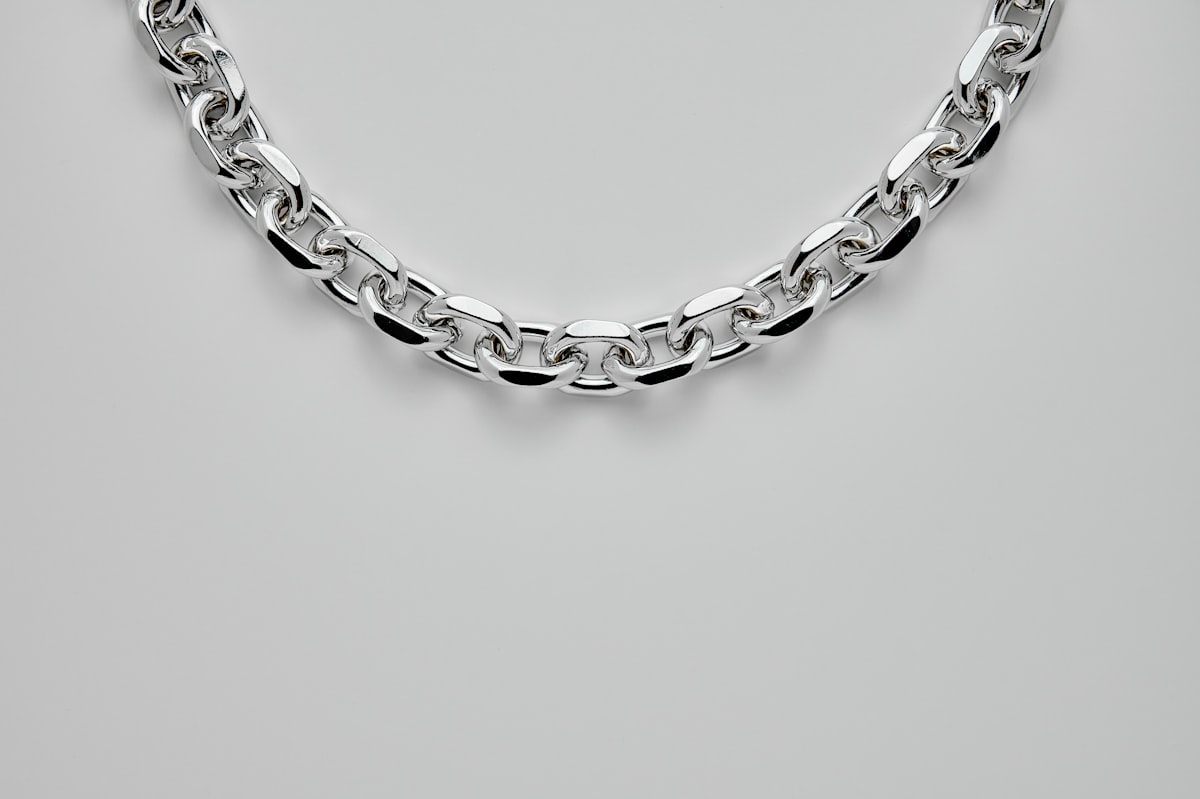
When you import jewelry from China, the price on the invoice is not the price you pay. Landed cost is the product price plus freight, plus import duty and import VAT or sales tax, plus any customs clearance or handling fee. For stainless steel and other base-metal jewelry, the classification that drives the duty rate is usually HS heading 7117 (imitation jewelry), and the specific code most stainless steel pieces are declared under is 7117.19.
This guide explains how the cost stack is built, what changed in 2026 for buyers in the United States and the European Union, and how to check the current rate for your own country instead of relying on a number in a blog post. If you are still choosing a supply route, the wholesale programs overview and shipping and customs page cover how orders are shipped and declared.
The five parts of landed cost
Every import breaks into the same five components. Quotes from different suppliers often look inconsistent because they include different subsets of this list.
| Component | What it covers | Who usually pays |
|---|---|---|
| Goods value | The product price, and whatever packaging is priced as a separate line | Buyer, at the time of order |
| Freight | Transport from origin to destination, including any fuel or remote-area surcharge | Buyer, usually at checkout or on the proforma |
| Import duty | A percentage of the declared customs value, set by HS code and country of origin | Importer of record |
| Import VAT / sales tax | Destination-country consumption tax on goods value plus freight plus duty | Importer of record, sometimes reclaimable |
| Clearance and handling | Broker fee, disbursement fee, advancement fee, or a courier's own admin charge | Whoever is named on the customs entry |
The last row is where first-time importers are most often surprised. A carrier that pays duty on your behalf will almost always add a percentage-based advancement fee or a flat disbursement charge, and that fee is billed on delivery rather than at purchase.
How stainless steel jewelry is classified
Classification decides the rate, so it is worth getting right before you compare quotes.
- 7117 — imitation jewelry. Base-metal pieces, including stainless steel, plated brass, and alloy items, normally sit here. Stainless steel jewelry is typically declared under 7117.19.
- 7113 — jewelry of precious metal. Gold, silver, and platinum pieces. Gold-plated stainless steel does not belong here: plating does not change the base metal classification.
- 7116 — articles of natural or cultured pearls, precious or semi-precious stones.
- 4819 — paper packaging. Presentation boxes bought as a separate line are declared separately, not folded into the jewelry line.
A counter-intuitive consequence: in several major markets the duty rate for imitation jewelry is higher than for precious-metal jewelry. Buyers who assume base metal means a cheaper entry are often wrong. Always check the rate for the code you will actually declare under.
What changed in 2026
Two long-standing low-value exemptions ended within a few weeks of each other. If your cost model was built before mid-2026, it is out of date.
United States: the $800 de minimis exemption ended
The $800 de minimis allowance under Section 321 was suspended for all non-postal transport modes effective 24 June 2026, and for postal shipments effective 24 July 2026 (Federal Register documents 2026-12670 and 2026-12669). Every consignment now requires a formal or informal entry regardless of value. The practical effects for a small importer:
- Small parcels that previously cleared with no duty are now assessed.
- Each entry has a paperwork path, so declared values and descriptions are visible to review rather than effectively unread.
- Whoever files the entry adds a clearance charge, and that cost exists even on a very small shipment — which makes tiny, frequent orders proportionally expensive.
European Union: the €150 relief was removed
The EU's €150 customs duty relief for low-value consignments was withdrawn from 1 July 2026 under Council Regulation (EU) 2026/382. A transitional simplified charge applies during the phase-in period before normal tariff rates take over in 2028. Separately, VAT has been due on every consignment regardless of value since the 2021 reform — the €150 line was always about duty, never about VAT.
One detail worth confirming with your carrier before you build a model around it: the transitional charge is expressed per item in a consignment, and "item" can be read as a single article or as a tariff line. On a 50-piece mixed order those two readings produce very different numbers. Ask your carrier for their current collection practice in writing rather than assuming.
Who is the importer of record, and why it decides everything
Almost every confusing customs bill traces back to this one question. There are three workable arrangements, and mixing them up is what produces surprise charges at the door.
| Arrangement | How it works | Best for |
|---|---|---|
| DDP (delivered duty paid) | The seller collects duty and tax with the freight and settles it during clearance. Nothing is owed on delivery. | Buyers who want one predictable number and no interaction with customs |
| Buyer's own low-value scheme | An EU buyer supplies their own IOSS registration so VAT is accounted for under their number and only freight is charged | EU sellers already registered for IOSS |
| DAP / buyer self-clears | The goods travel unpaid; the buyer clears under their own tax number and pays duty and import VAT directly | Registered businesses that can reclaim import VAT |
For registered businesses, self-clearing is often the lower-cost route on paper because import VAT is usually recoverable, while a duty-paid service fee is not. The trade-off is that you take on the filing, the timing risk, and any storage charge if the entry stalls.
A frequent mistake in the EU: supplying a plain VAT or EORI number and expecting it to behave like a low-value scheme registration. It does not. An IOSS registration is a specific registration for consignments below the low-value threshold, and a VAT number alone will not route the parcel that way.
Jewena's own arrangement is described in full on the shipping and customs page: duty-paid delivery is the default for EU destinations with a customs service fee of roughly 5–8% of order value, EU buyers may enter their own IOSS registration and pay freight only, and buyers outside the EU may clear under their own tax number.
How to check the rate yourself
Rates for this category moved three times in the first half of 2026. Any specific percentage in an article — including one written by a supplier — should be treated as a starting point, not as the number you build a price list on. Check these primary sources for the code you will declare:
- United States — the USITC Harmonized Tariff Schedule. Look up 7117.19, then follow any Chapter 99 footnote, because additional-duty programs are applied through those subheadings rather than shown in the base rate.
- European Union — the TARIC consultation tool. Enter the code and the country of origin; read the footnotes as well as the headline rate.
- United Kingdom — the UK Trade Tariff lookup.
- Anywhere else — your national customs tariff database, or a licensed broker in your own country.
Ask your supplier for the exact HS code, the declared value, and the country of origin they will put on the paperwork. Those three fields determine your bill. A supplier who cannot tell you what will be written on the declaration is not a supplier you can plan landed cost with.
Building a landed-cost model that survives a rate change
Because the rate is the volatile part, build the model so the rate is a variable rather than a constant:
- Start with goods value for the order as you would actually place it, not for a single piece.
- Add real freight for that weight and destination, not an average. Freight per piece falls sharply with order size, and this is usually the largest single lever a small buyer controls.
- Apply the current duty rate for your HS code and origin as a percentage of customs value.
- Apply import VAT or sales tax on the total of goods, freight, and duty — not on goods alone.
- Add the clearance or advancement fee as either a percentage or a flat amount, depending on the route.
- Divide by units to get landed cost per piece, and re-run it at two or three order sizes before you set retail prices.
Running the model at several order sizes is the step most first-time importers skip. Duty and tax scale with value, but freight and clearance do not — so the per-piece landed cost of a small trial order can be dramatically higher than the cost of the order you were actually planning, and a retail price set from the trial will be wrong.
Practical checks before you place a first order
- Confirm the HS code your supplier will declare, in writing.
- Confirm whether the quoted price is duty-paid or unpaid, and what is charged on delivery under each.
- Confirm the declared value policy. Under-declaring shifts risk to you as the importer and, since low-value exemptions ended, entries are far more visible than they used to be.
- Check whether packaging is a separate declared line.
- If you are VAT-registered, price both routes — duty-paid and self-clear — before choosing. The cheaper one is not the same for every business.
To compare real numbers for your own market, the wholesale catalogue lists current pricing tiers, and freight to your destination is quoted at checkout before payment. Buyers with a specific quantity and destination in mind can send the details through the wholesale enquiry form and get the declaration and shipping route confirmed before ordering.