How to Buy Jewelry Wholesale from China: Direct Supplier vs Marketplace
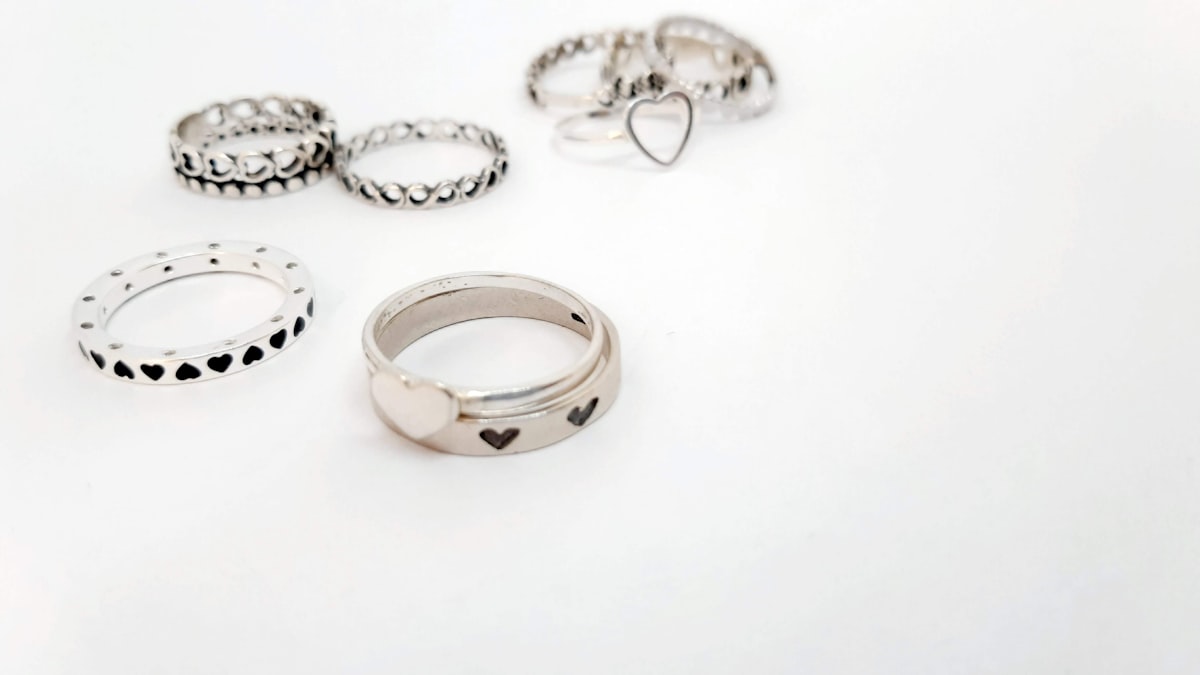
There are two practical ways to buy jewelry wholesale from China for resale. The first is a B2B marketplace such as Alibaba or Made-in-China, where you search across thousands of independent sellers and verify each one yourself. The second is buying direct from a supplier that sells its own catalogue at published wholesale prices, where the range is narrower but the counterparty, pricing, minimum order and shipping route are already defined. Marketplaces suit custom projects and large single-style runs. Direct suppliers suit boutiques and resellers placing small, repeat, mixed-SKU restock orders. Many buyers end up using both.
This guide sets out how the two routes actually differ, what a small order costs once freight and import charges are counted, how to check a supplier before paying, and how to tell the main types of Chinese supplier apart before you shortlist.
Direct Supplier vs Marketplace: The Two Routes Side by Side
The distinction that matters is not price. It is who carries the verification work. On a marketplace you are buying from a seller the platform hosts but does not produce for, so material claims, capacity and reliability are yours to establish. With a direct supplier you are buying from a party that owns the catalogue and the outcome, so the checks shift from "is this seller real" to "is this specific product right".
| Criterion | B2B marketplace | Direct supplier |
|---|---|---|
| What you are buying from | Many independent sellers listed on one platform | One party's own catalogue |
| Range | Very wide, including categories no single supplier carries | Narrower, limited to what that supplier produces or stocks |
| Price discovery | Often quote-on-request; unit price depends on the negotiation | Published price list, or a quote against a named SKU |
| Minimum order | Set per seller, commonly per style and negotiable | Set once for the catalogue; ready-stock lines can be very low |
| Verification work | Yours: you assess each seller, badge, sample and factory claim | Concentrated on the product and the specification, not the counterparty |
| Who you pay | The seller, sometimes through platform escrow | The supplier directly, on its own terms |
| Shipping | Usually arranged per order, often via a forwarder you appoint | Usually a defined route, quoted for the actual parcel |
| Best suited to | Custom development, large single-style runs, unusual categories | Small repeat restocks, mixed-SKU orders, testing new styles |
How the Main Marketplaces Differ
Buyers usually meet a small number of platforms, and they are built for different audiences rather than being better or worse versions of each other.
- Alibaba.com is the international-facing marketplace: English interface, USD quoting, and escrow-style order protection on qualifying transactions. Note that supplier badges are not all the same thing; some indicate a paid membership tier while others indicate a third-party check, and it is worth knowing which is which before treating a badge as verification.
- Domestic-facing Chinese wholesale marketplaces are a different animal: Chinese-language interfaces, prices quoted in CNY, and checkout built around a mainland address, mainland payment methods and domestic logistics. Overseas buyers generally reach them through an agent or a forwarding service, which adds a party and a fee to the chain, and means the party you are corresponding with is not the party holding the goods.
- Made-in-China.com is an English-language B2B marketplace with historically stronger coverage in industrial and equipment categories than in fashion jewelry.
None of these platforms manufactures anything. They host sellers, which is exactly why the verification work sits with the buyer.
Which Route Fits Your Order?
Rather than choosing a platform first, start from what you are trying to do. The order type usually decides the route.
Restocking a boutique or online shop
You need a mixed basket of styles in small quantities, repeatedly, with predictable dispatch. A direct supplier with a published price list and low or no minimum order fits this better than a marketplace, where a mixed basket means negotiating with several sellers and consolidating several shipments.
Testing new styles before committing
You want a handful of pieces across several designs to see what sells. Look for ready-stock ordering with no minimum, or single-piece ordering. Custom production is the wrong tool here, because tooling and per-style minimums make testing expensive.
Launching a custom-production or custom line
You have a design, a logo or a packaging brief. This is where you want a manufacturer, whether found through a marketplace or approached directly, and you should expect a per-style minimum, a sampling stage and a tooling discussion. See our OEM and ODM page for how a custom brief is normally structured.
Buying one style in volume
For a single style in the thousands, marketplace sourcing plus direct factory negotiation usually wins on unit cost, because you are large enough to be worth quoting for and you can run a proper supplier comparison.
What a Small Wholesale Order From China Actually Costs
The most common costing mistake is treating the unit price as the cost. For a small cross-border jewelry order, three components decide your real cost per piece, and the second and third are frequently larger than buyers expect.
- Goods value. The unit price at the quantity you are actually buying. Wholesale pricing is normally tiered, so the price shown at 1 piece is not the price at 10 or 50.
- International freight. Priced on the real parcel: weight, dimensions and destination. This is why a quoted "shipping cost" that is not tied to your actual basket should be treated as an estimate only.
- Import duty and destination tax. Charged on the declared value, set by HS code and destination, and payable by the importer of record. The US ended its $800 de minimis exemption and the EU removed the EUR 150 relief, so low-value consignments no longer clear free of charge in those markets. We cover the mechanics in detail in import duties and customs on jewelry from China.
A workable habit is to build a landed-cost model per SKU before the first order, then check your resale margin against that figure rather than against the unit price. Our guide to jewelry pricing and margin for resale sets out the arithmetic.
On Jewena, wholesale prices are published in USD and visible without an account, unit prices step down automatically at 3 and 10 pieces per SKU, and freight is quoted at checkout against the actual parcel and destination rather than as a flat figure. For the US, the UK and the EU a duty-paid economy line settles import duty and VAT before dispatch and shows them inside the rate, so the checkout total is the landed cost. EU buyers holding their own IOSS number can enter it at checkout and account for import VAT themselves.
How to Check a Chinese Jewelry Supplier Before You Pay
Verification does not need to be elaborate for a first order, but it does need to be specific. Vague reassurance is not evidence, and a photograph proves shape and colour only.
Read the material claim at SKU level, not at brand level
"316L stainless steel" written across a homepage is a marketing statement about a range. What matters is what the individual product page says about the item you are buying, and whether the supplier will restate it in writing for your order. Polished 201, 304 and 316 stainless look alike in a photo, and plating hides the base metal entirely. Our 316L grade reference covers the composition differences and the honest limits of XRF spot testing.
Read the structure of the minimum order, not the headline number
A stated minimum can mean per style, per colour, per order value or per production run, and those are very different commitments. Ask which one applies, and whether mixed styles count towards the same total. How MOQ works on a first wholesale order explains the variations you will meet.
Order a sample and treat it as the specification
An approved sample is the most useful document in the whole process, because it converts adjectives into a physical reference. Keep it. Photograph it. Refer to it by name in the order. For plated items, wear the sample for a few weeks before scaling, since surface finish is where quality differences show up first.
Check dispatch time and what it is measured from
"Ships in 48 hours" and "3-6 working days" are only comparable if you know what starts the clock: payment clearing, order confirmation, or production completion. Ask for the dispatch commitment on ready-stock items specifically, and ask separately about lead time on anything made to order.
Confirm who you are actually paying
Record the entity that issues the quotation, the entity that receives payment, and the entity responsible for replacing a faulty item. When those are three different names, you have a longer chain than you thought, and each link is a place where responsibility can be handed on.
Ask what happens when something is wrong
Every supplier looks good until an order goes badly. Ask, before paying, how a shortage, a wrong item or a finish defect is handled, and whether the answer is a refund, a replacement or a credit on the next order. A supplier that answers this precisely is telling you it has a process. For a fuller checklist, see how to vet a stainless steel jewelry supplier.
Where Stainless Steel Jewelry Is Made in China
Stainless steel jewelry production is concentrated in Guangdong province in the south. Foshan, Dongguan, Guangzhou and Shenzhen each host clusters of jewelry workshops, plating houses and component suppliers, which is why lead times there are short: the chain from casting to plating to assembly to packing can sit within a short drive.
Yiwu, in Zhejiang province, plays a different role. It is a trading and wholesale market hub rather than a stainless steel production centre, strong for breadth across fashion accessories and small mixed orders, and often where buyers go when they want many categories from one trip rather than depth in one material.
Knowing the cluster is useful for a practical reason: a supplier that names a specific city and industrial area is easier to check than one that says only "China", and a supplier in a cluster can usually source components faster than one outside it.
Supplier Type Map: The Forms a China Supplier Takes
Once you stop asking "which company" and start asking "which type", the shortlist gets much easier to build. Almost every Chinese counterparty selling stainless steel jewelry falls into one of the types below, and the type tells you in advance what the minimum order will look like, who carries the production risk, and which questions are worth your time. We name only ourselves here, because another company's self-description is not evidence you can act on, whereas the type-level checks below are.
Own-factory manufacturer (OEM/ODM)
Owns or operates production: casting or stamping, welding, polishing, and usually a plating relationship. Sells production runs rather than pieces, so pricing is quoted per style at a stated quantity and improves sharply with volume. Expect a per-style minimum in the hundreds, a sampling stage before bulk, and a separate tooling or mould discussion for anything not already in its mould library.
How to evaluate one: ask which processes happen inside the building and which are subcontracted. Plating in particular is very often outsourced, and plating is where finish quality is decided. Ask for the lead time on a style that is not currently in stock, because a real factory answers in production days while a reseller answers vaguely. Ask what the mould library already contains, since reusing an existing mould removes a cost line from your quote. Best fit: custom production, one style in volume, anything carrying your logo.
Trading company or export agent
Does not produce. Buys across a cluster of workshops and handles export documentation, consolidation and communication. Range is wider than any single factory can offer and response times are often better, because selling is the whole job. The cost is a margin layer and a longer chain of responsibility when something goes wrong.
How to evaluate one: this model is not a problem as long as you know you are in it. Ask who the actual producer is for the specific style you want, whether that producer changes between orders, and who pays to replace a defective batch. Ask the trader to restate the material claim in writing for your order rather than pointing you at a product page it did not write. Batch consistency is the risk to watch, because the same reference can be filled by a different workshop next season. Best fit: mixed categories from one contact, and buyers who want communication handled for them.
Factory-direct B2B wholesale platform
Sells its own catalogue online at published prices, holds ready stock, and ships per piece rather than per production run. Verification shifts almost entirely onto the product, because the counterparty, the price and the route are already fixed and visible. The range is narrower than a marketplace by definition, and this type is a poor fit for a design you bring yourself.
How to evaluate one: check whether prices are visible without an account, since a login wall usually means the price is negotiated and that removes the main advantage of the type. Check whether freight is quoted against your real basket or given as a flat figure. Check whether the material claim is written per SKU or asserted once across the homepage. Ask whether the platform owns production or works with partner factories, because that determines how quickly a change can be made and who can actually make it. Best fit: small repeat restocks, mixed baskets, and testing styles before committing.
Where Jewena sits
Jewena is that third type. We are a factory-direct B2B wholesale platform for stainless steel jewelry, produced in Guangdong with long-term partner factories in the Dongguan and Foshan jewelry clusters. Production and finishing run on our own dedicated lines with long-term partner factories, while the catalogue, pricing, order handling and export are ours. More than 1,500 styles are listed with wholesale prices published in USD and visible without an account. Ready-stock lines carry no minimum order, and unit prices step down automatically at 3 and 10 pieces per SKU. OEM programmes start at 200 pieces per style in 316 or 316L. Orders dispatch from Guangzhou in 3-6 working days with tracking to more than 60 destinations. Material is stated per SKU on the product page rather than as a blanket claim across the range, and we do not hold UK, EU or US local stock. See the China sourcing route or browse 316 stainless steel.
Wholesale-market trader
Operates from a physical wholesale market, Yiwu being the best known, selling across a very wide range of fashion accessories in small mixed quantities. Strong on breadth and on speed for a buyer who wants many categories at once, and weaker on material depth, because the same stall may carry alloy, plated brass and stainless steel side by side without distinguishing them clearly on the label.
How to evaluate one: assume nothing about the metal and ask per item, in writing. Establish whether the trader stocks the goods or orders them in, because that decides whether a reorder is even possible at the same specification. Overseas buyers usually reach this type through an agent, so identify who is holding your money and who inspects before dispatch. Best fit: broad accessory assortments where steel is one line among many.
The marketplaces themselves
Alibaba, Made-in-China and the domestic-facing Chinese wholesale marketplaces are not a supplier type at all. They are the layer that several of the types above sell through, which is exactly why a platform badge gets mistaken for a verified counterparty. Whichever listing you open, one of the four types above is behind it, and the checks that matter are theirs rather than the platform's.
How to evaluate one: use the platform for discovery, and for payment protection where it genuinely applies, then run the type-specific checks above on whoever answers. Work out which type you are dealing with in the first exchange. The lead-time question and the plating question sort most sellers within two replies.
A Practical First-Order Sequence
For a first order from China, the sequence below keeps the risk small while still producing usable information.
- Shortlist by fit, not by size. Pick two or three suppliers whose minimum order and category actually match the order you intend to place.
- Write the specification before asking for a price. Name the SKU or reference, the material, the finish, the dimensions and the packaging. A quote against a vague brief cannot be compared with anything.
- Buy samples from more than one supplier. The cost of two or three samples is almost always less than the cost of one wrong bulk order.
- Model the landed cost. Add freight and destination charges to the tier price before deciding whether the margin works.
- Place a small first order and watch the process. How a supplier handles a small order tells you how it will handle a large one: response time, packing quality, dispatch accuracy and how a problem is answered.
- Scale only what sold. Reorder the styles that moved at the next price tier rather than broadening the range before you have data.
FAQ
Is it cheaper to buy jewelry direct from a Chinese supplier than through a marketplace?
Not automatically. On a single style in large volume, negotiating directly with a factory usually produces a lower unit price. On small mixed orders the comparison often reverses once you count consolidation, several shipments and the time spent verifying multiple sellers. Compare landed cost per piece for the order you are actually placing, not the headline unit price.
Can I buy wholesale jewelry from China without a registered business?
It depends on the supplier. Traditional wholesalers often ask for a business registration or resale certificate, while suppliers that publish prices openly generally do not. Jewena publishes wholesale prices without an account and has no minimum order on ready-stock lines. Your own tax and registration obligations at home are a separate question, covered in our guide to buying wholesale jewelry without a registered business.
What is a realistic minimum order for a first jewelry order from China?
For ready-stock stainless steel jewelry, minimums range from single pieces up to roughly 30 pieces per style depending on the supplier. For custom or custom-production production, expect a per-style minimum in the hundreds, plus sampling and possibly tooling. A sensible first order is small enough that being wrong costs you a sample budget rather than a season of stock.
How long does jewelry shipping from China take?
Total time is dispatch time plus transit, and buyers frequently count only the second. Ready-stock items commonly dispatch within a few working days, while made-to-order production adds a lead time that should be quoted separately. Transit then depends on the service and destination, and customs clearance adds a variable step. Jewena dispatches ready stock from Guangzhou in 3-6 working days with tracking to more than 60 destinations.
How do I know whether a Chinese supplier is a real factory or a trading company?
Ask direct questions and compare the answers with what the website says: which processes happen in-house, where the workshop is, what the lead time is for a style not currently in stock, and who handles plating. Neither model is inherently better. A trading company with good sourcing can outperform a small factory on range and responsiveness, and a factory can outperform a trader on price and control for a single style. What matters is that you know which one you are dealing with, because it determines who can actually fix a problem.