Is Stainless Steel Jewelry Hypoallergenic? The Nickel Question, Answered Honestly
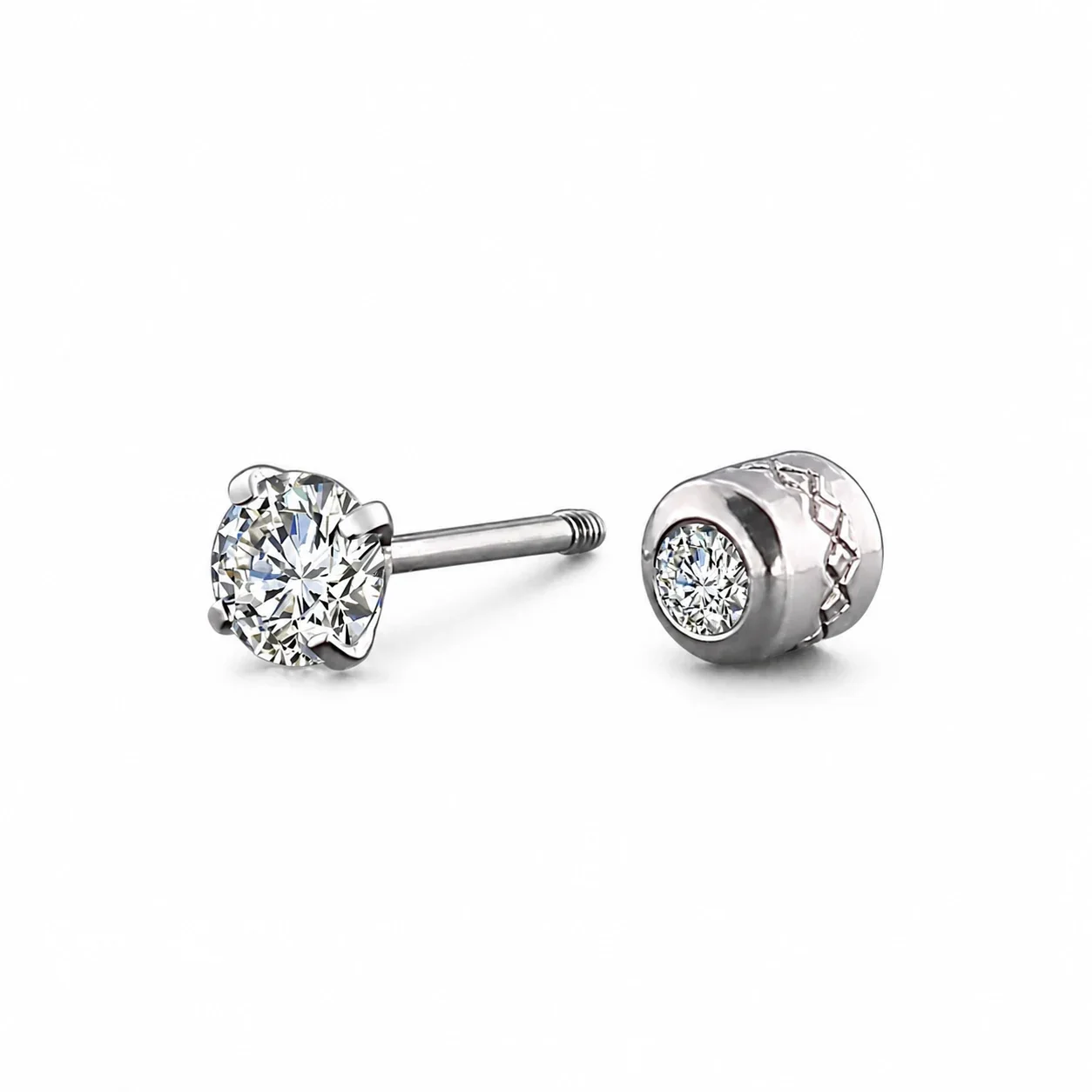
No, not in the strict sense, and no stainless steel is. "Hypoallergenic" is a marketing word, not a regulated standard: it says a material is less likely to provoke a reaction, not that it cannot. Stainless steel contains nickel, and the 316 family used in most skin-contact jewelry carries roughly a tenth of its weight in it, typically 10-14%. What makes the family a common choice for sensitive-skin ranges is not an absence of nickel. It is how little nickel migrates out of the metal and onto skin during prolonged contact. Release, not content, is the measurable question.
That distinction is the whole subject of this article. It is written for retailers, boutiques and independent brands who have to repeat these claims to their own customers, and it is the long version of the material note on our hypoallergenic earrings wholesale page.
Nickel content and nickel release are different measurements
Almost every argument about hypoallergenic jewelry goes wrong at this point. A material can contain a great deal of nickel and release very little of it, or contain less and release more, because the two properties are governed by different things. Content is a matter of composition. Release is a matter of how the metal is built and how it behaves against skin, sweat and friction.
Austenitic stainless steels such as the 316 family hold nickel inside a stable alloy structure rather than on the surface. The chromium in the alloy forms a thin passive oxide film that reforms by itself when scratched, and that film is what stands between the metal underneath and the skin. The nickel is not sitting on the surface waiting to transfer; it is part of the metal's structure. This is a general property of the material family, not a test result for any individual piece of jewelry.
Release is also the property that regulators actually measure. In Europe, the reference method for articles in prolonged skin contact is EN 1811, which puts a sample through a simulated-sweat exposure and reports how much nickel came off per unit of surface area per week. Notice what that means in practice: a result belongs to the sample, SKU or batch covered by the report. It is not a property of the phrase "316L" and it cannot be inferred from an alloy name alone.
Why a solid steel piece behaves differently from a plated one
The second mechanism worth understanding is construction, and it explains most of the difference buyers observe in the field.
In a solid stainless steel piece the metal is the same all the way through. There is no plated base-metal core to wear away, so the surface a customer touches in month twelve is the same alloy they touched on day one. In plated costume jewelry the colour comes from a thin layer over a different base metal. As that layer thins with wear, the wearer comes into contact with whatever sits underneath, which in older or lower-specification costume pieces can be a nickel-bearing base alloy applied precisely because it plates well.
So a solid steel earring tends to release far less nickel over months of wear than a piece whose colour comes from a coating over a different metal. Two earrings can look identical in a product photograph and behave very differently against skin six months later, because photography establishes shape and colour and nothing else. It cannot establish alloy grade, plating process or what is under the finish.
This is also why a gold-toned steel piece is a compound question rather than a simple one. The base is steel; the colour layer is a separate specification, whether it is electroplating or a PVD coating. Our guide to gold PVD versus gold plating covers how those two processes differ and why the distinction matters for wear.
What the words on a listing actually claim
Most of the confusion in this category is vocabulary rather than metallurgy. The table below separates what each common term establishes from what it leaves open.
| Term on a listing | What it actually establishes | What still needs checking |
|---|---|---|
| Hypoallergenic | Nothing measurable. It is a marketing description, not a regulated standard or a medical grade | What material the piece is, and whether any release figure exists for it |
| Nickel-free | Nothing, when applied to stainless steel. Stainless steel contains nickel, so the phrase cannot be read as zero nickel | Whether the seller means low release, a different alloy family, or simply borrowed the phrase |
| Surgical steel | A category the seller has in mind, usually the 316 family. It is a nickname, not a defined grade | Which grade is meant, and what that claim rests on for the specific SKU |
| 316 / 316L | A specific, checkable grade claim, if it is attached to a named SKU rather than to the catalogue | What evidence supports it for that item: documentation, a supplier declaration, or a test |
| EN 1811 tested | A measured nickel-release result, but only for the sample, SKU or batch named in the report | Whether the report covers the item you are buying and the production run you will receive |
| Medical grade | Nothing in a jewelry context. Medical device materials are governed by specific material specifications, not by this phrase | Everything. Treat it as decoration on the listing |
Read down the middle column and a pattern appears: the terms that sound the most reassuring are the ones that establish the least. The useful claims are the narrow, specific ones. "Surgical steel" is the other term in this family that gets read as a specification when it is really a nickname, and we unpack it separately in what surgical steel actually is.
The variation nobody can engineer away
Even with all of the above settled, the individual case remains open. Sensitivity varies from person to person, no alloy family is hypoallergenic for everyone, and a customer can react to a material that thousands of other customers wear without incident. A supplier who tells you otherwise is telling you something they cannot know.
There are also reasons a customer reacts that have nothing to do with the alloy at all: a fresh or irritated piercing, a reaction to a surface residue left from manufacturing or cleaning, friction, or a coincidence of timing with something unrelated. None of that is diagnosable from a product page. Anyone whose reaction is persistent or severe is having a conversation that belongs with a clinician, not with a jewelry supplier, and it is worth saying so plainly to a customer rather than guessing on their behalf.
For a retailer the practical consequence is that your customer-facing promise has to be built to survive the exception. A return window is a stronger commitment to a sensitive-skin customer than an adjective is, because it holds even in the case where the adjective turns out to be wrong for them.
What a buyer can actually verify
Verification here is not about distrust. It is about knowing which claims you can pass on to your own customers and which you cannot.
- Check what the claim is attached to. A catalogue-wide slogan and a per-SKU material declaration are not the same thing. Ask how the grade is established for the individual item you want to stock.
- Ask about the post and the findings, not just the body. On earrings, the post and the back sit in the ear for hours, so their material matters more to a sensitive-ear customer than the decorative front does. Do not infer their composition from the body material.
- If a test report exists, read what it covers. A report that names a different item or a different batch tells you nothing about your delivery. Check the item, the batch and the date.
- Buy one piece and wear it. Most finishing and plating problems appear within a few weeks of daily contact with skin, water and friction, and a sample is the only evidence that is genuinely about the thing you will receive.
- Keep the approved sample. It is the reference point if a later production run differs, and it is worth more than any adjective when you need to make a case.
A note on our own position, since it is fair to ask: we do not imply catalogue-wide nickel-release testing, and we do not describe any product as nickel-free. If EN 1811 testing or REACH-related evidence is mandatory in your market, say so before sampling, so that scope and availability can be confirmed in writing for the named SKU rather than assumed. Our broader vendor checklist is in the guide to vetting a stainless steel jewelry supplier.
How to write a sensitive-skin description you can defend
This is where the material facts become a commercial problem. A sensitive-skin range sells on reassurance, and the temptation is to write the strongest sentence the category will bear. The stronger the sentence, the more of your customers it will eventually be wrong for, and returns in this category are driven by disappointed expectations far more than by defective goods.
- Describe the material, not the outcome. "316 stainless steel posts and backs" is a fact about the product. "Safe for sensitive ears" is a prediction about a person you have never met.
- Say what the construction is. Where a piece is solid steel throughout, that is worth stating, because it is the property that actually drives the difference against plated alternatives.
- Do not write nickel-free on steel. Aside from being wrong, it is the single claim most likely to be quoted back to you by an unhappy customer.
- Qualify honestly and briefly. A line such as "widely worn by customers with sensitive ears; individual sensitivity varies" costs nothing and holds up.
- Let the returns policy carry the reassurance. It converts better than superlatives and it is a promise you can keep.
- Keep the same wording across channels. Marketplace listings, your own product page and your ads should make the same claim, because the weakest one is the one that will be tested.
Choosing the range itself
For a buyer building a sensitive-skin assortment, three selection rules do most of the work. Favour solid steel construction on the parts with the longest skin contact, which for earrings means posts, backs and hinge points. Treat colour finishes as a separate specification to confirm per style rather than a property of the steel. And test before you scale, because a wear-tested sample is worth more than any claim on a listing, including ours.
That last rule is the reason our terms are shaped the way they are. Ready stock starts at one piece, so a buyer can order a single sample of each candidate style, wear-test it, and reorder in bulk only what passed. The per-piece price steps down at three and ten pieces per style, and every price is published in USD, so a range can be costed before anyone gets in touch. Stock ships from Guangzhou in three to five working days with tracking to more than 60 destinations.
Material and finish are stated per SKU on each product page, and that statement, not this article, governs what you receive. To browse the range, start with the sensitive-skin earrings wholesale page or the 316 stainless steel earrings category, which lists the styles where grade wording is supported by source data. If you want the same build applied to your own designs, our OEM and ODM page sets out how custom production is quoted.
FAQ
Is stainless steel jewelry nickel-free?
No. Stainless steel contains nickel, and in the 316 family it is typically 10-14% by weight, so "nickel-free" must never be read as zero nickel. The reason the family is nevertheless common in skin-contact jewelry is that the nickel is held inside a stable alloy structure and release during wear is generally low compared with plated base-metal products. Low release and no nickel are different statements, and only the first one is true.
Does 316L contain less nickel than 316?
No, and this is a common misreading. The "L" refers to lower carbon, not lower nickel; both grades sit in the same nickel range of roughly 10-14%. The carbon difference matters mainly in welding and high-heat processing rather than in ordinary wear. Our 316L grade reference sets out the full composition, and what 316L means on jewelry covers how the marking is used in practice.
Can any supplier prove a piece is hypoallergenic?
No, because there is nothing defined to prove. What can be evidenced is narrower and more useful: which grade the piece is made from, what that grade claim rests on, and whether a nickel-release test exists that names this sample, SKU or batch. Any supplier offering to certify a product as hypoallergenic is offering a document about a word rather than a measurement.
Why did a customer react to steel earrings they had worn happily for months?
The most common material explanation is that the piece was plated rather than solid, and the colour layer has worn through at a contact point so the wearer is now touching a different metal. Other explanations have nothing to do with the alloy: an irritated piercing, a surface residue, friction, or an unrelated coincidence. It is not something a supplier can diagnose from a photograph, and a persistent or severe reaction is a question for a clinician rather than for us.
Is titanium better than stainless steel for sensitive ears?
They are different material families with different typical uses rather than a simple ranking. Implant-grade titanium alloys are specified by their own material standards and are the usual choice in professional piercing contexts, particularly for fresh piercings. Stainless steel is the workhorse of fashion and everyday jewelry, which is the category we supply; we do not stock titanium body jewelry, so the honest answer is that the comparison depends on which of those two jobs you are buying for.
What should I ask a supplier before stocking a sensitive-skin range?
Four questions cover most of it. Which grade is this specific SKU, and is the claim per SKU or catalogue-wide? What are the posts and findings made of? Does any nickel-release report exist, and does it name this item and batch? And can I buy a single piece to wear-test before committing to a bulk order? A supplier who answers all four plainly is easier to work with than one who answers the first with a slogan.
Bottom line
Hypoallergenic is a word about likelihood, not a property you can buy. Stainless steel contains nickel; the reason the 316 family is used so widely for skin-contact jewelry is that the nickel is locked into the alloy and the metal is the same all the way through, so there is no plated layer to wear away and expose something else. Everything beyond that general fact belongs to a specific SKU: its grade, its posts, its finish, and whatever evidence exists for the batch you will actually receive. Sell the material honestly, back it with a return window, and test a sample before you scale.