Gold PVD vs Gold Plated Jewelry: A B2B Finish Specification Guide
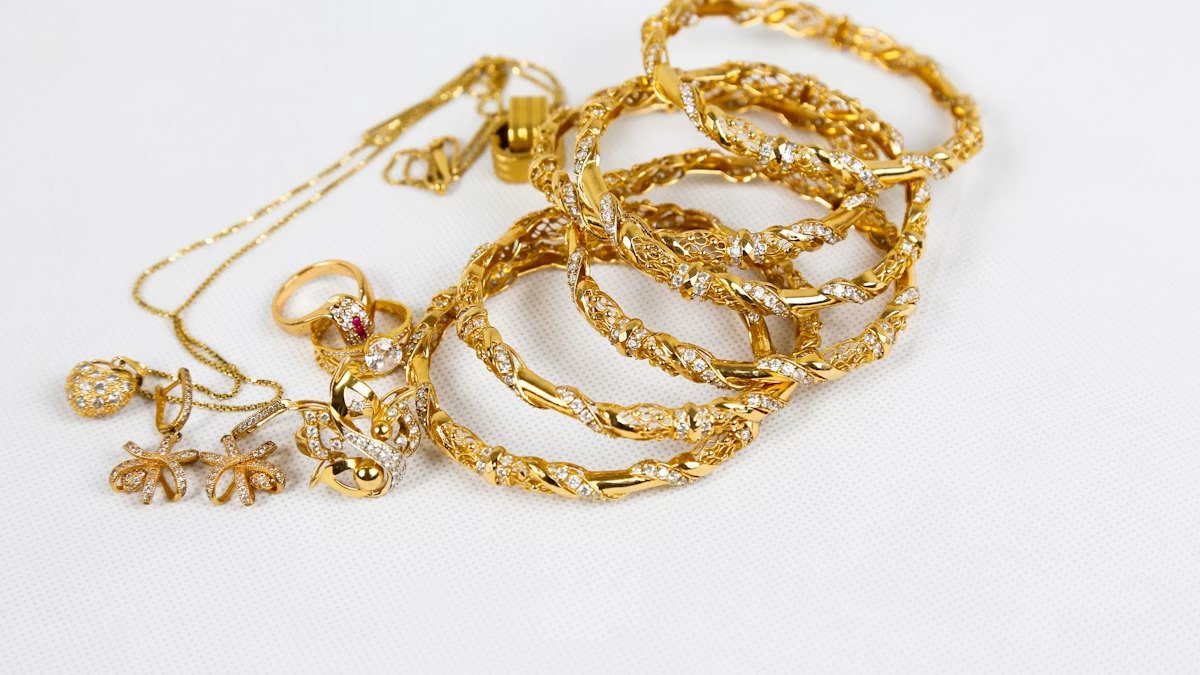
“Gold PVD” usually describes a gold-tone finish produced by physical vapor deposition; PVD names the deposition route, not the coating's elemental composition or gold purity. In this guide, “gold plated” refers to a conventional electroplated gold finish, but suppliers may use the broader term differently, so the RFQ must confirm the actual process. Either route can suit wholesale, custom-production, OEM, or ODM programs when the buyer defines the substrate, color target, coating stack, applicable thickness or process specification, inspection method, sample approval, and intended use.
If you are sourcing a gold-tone stainless steel range, start with the business need: appearance consistency, repeat orders, packaging position, care instructions, and acceptable evidence. Jewena groups relevant gold PVD options at gold PVD jewelry wholesale, while broader category sourcing can start from wholesale jewelry or OEM and ODM jewelry. The finish label helps narrow the discussion, but it should not replace a written specification.
Gold PVD vs gold plated: the practical procurement answer
Choose by the complete finish system and evidence, not by the process name alone. A well-specified PVD coating on a suitable substrate can perform very differently from a thin decorative PVD layer on a poorly prepared surface. A plated finish can also vary widely depending on underlayers, thickness, bath control, geometry, and use conditions. The visible words “gold PVD” or “gold plated” do not prove waterproof performance, tarnish-free behavior, color stability, or a fixed service life.
For B2B buying, compare the base material, coating route, approved color, applicable thickness or process specification, inspection method, intended use, and customer-facing claims.
| Procurement point | Gold PVD jewelry | Gold plated jewelry |
|---|---|---|
| Process meaning | Physical vapor deposition forms a coating in a vacuum process. | In this comparison, an electrolytic process deposits a gold layer from solution; confirm the supplier's process because “gold plated” can be used more broadly. |
| Common B2B use | Often requested for gold-tone stainless steel jewelry lines, including stated 316 SKUs. | Used across many jewelry substrates and price positions depending on specification. |
| Main buying risk | Assuming the term PVD alone proves lifetime, color, adhesion, or corrosion performance. | Assuming the term plated alone defines thickness, wear behavior, or karat fineness or total gold amount. |
| What to compare | Substrate, surface preparation, coating stack, color target, geometry, thickness where specified, and test scope. | Substrate, pretreatment, underlayers, plating thickness where specified, color target, and wear expectations. |
| Best evidence | Production-representative samples, approved golden sample, written finish specification, and inspection records for the relevant SKU or batch. | Production-representative samples, approved golden sample, written plating specification, and inspection records for the relevant SKU or batch. |
What “gold PVD coating” means in jewelry sourcing
Gold PVD coating means a gold-tone coating made by a physical vapor deposition process. In jewelry buying, the phrase is usually shorthand for the appearance and finish route, not a promise that the surface is solid gold. The FTC guide to buying gold and silver jewelry is a useful reminder that consumer-facing gold terms need care and that plated surfaces can wear depending on use and coating thickness. That guidance explains terminology; it does not verify any specific Jewena SKU or any supplier’s finish result.
For stainless steel jewelry, buyers often ask whether the item is 316. Treat that as a material subtopic for the named SKU, not as the parent decision. A pendant, clasp, chain, and charm can each have different geometry and wear exposure. For example, a necklace set such as gold PVD motif chain jewelry, a component such as 316 stainless CZ motif pendant charms, and a finding such as 316 stainless steel gold lobster clasp should each be specified and approved on its own terms.
RFQ checklist for a gold-tone jewelry finish
A concise RFQ helps suppliers quote the same target and helps your team compare offers without relying on adjectives such as premium, waterproof, or long-lasting.
- Product scope: SKU name, drawing or reference image, size, component list, and whether the finish applies to every visible surface.
- Base material: stated material for each component, such as stainless steel, 316 stainless steel, 316 stainless steel, brass, or another specified substrate where relevant.
- Finish route: gold PVD, electroplating, or other finish route, with any underlayer or coating stack information the supplier can confirm in writing.
- Color target: reference sample, approved shade, gloss level, and tolerance for acceptable batch variation.
- Thickness or process specification: required plating thickness or coating specification where applicable, plus how it will be measured or controlled.
- Use case: fashion jewelry, promotional jewelry, daily-wear positioning, gifting, component resale, or custom-production line extension.
- Inspection and evidence: appearance check, adhesion check, sample retention, report scope, and any buyer-required method or acceptance criterion.
- Claims and labeling: the exact wording you plan to use for material, finish, care, and gold terminology.
Sample approval and the golden sample
For OEM and ODM buying, the golden sample is the practical anchor. Approve the color, gloss, surface smoothness, edge coverage, clasp function, stone setting, and packaging presentation before bulk acceptance. Keep one approved sample with the buyer and, where possible, have the supplier retain a matching reference. This reduces disputes when later batches look slightly warmer, paler, brighter, or more matte.
The sample should be production-representative. A hand-polished display sample may not represent the surface preparation, rack position, coating uniformity, or handling marks of a bulk run. If your order combines chains, pendants, charms, clasps, and earrings, inspect the high-contact areas separately: jump rings, clasp tongues, pendant edges, raised motifs, and surfaces that rub against skin or clothing.
Appearance, adhesion, wear, and salt-spray evidence
Start with visual acceptance. Define the allowed range for color variation, cloudiness, stains, scratches, exposed base material, pitting, roughness, and visible rack marks. Then define simple adhesion checks only if they are appropriate for the product and coating system. Adhesion language should specify the method, sample size, acceptance criterion, and whether the check is destructive.
Wear discussion also needs careful scope. Rings, bracelets, and clasps generally face more abrasion than pendants or earrings. Sharp edges and raised textures can show change faster than smooth recessed surfaces. Skin chemistry, cosmetics, chlorine, sweat, perfumes, cleaning products, storage conditions, and packaging materials can all affect appearance. Because of this, a fixed number of months or years should not be promised unless it is backed by product-specific evidence and a clearly defined use condition.
Salt-spray testing is often requested in jewelry sourcing, but it is frequently overread. ASTM B117 describes a salt-spray apparatus and operating practice; it is not, by itself, a service-life predictor for jewelry in natural use. Read any result within its exact method, duration, substrate, coating stack, and sample geometry rather than generalizing it to every product.
Batch acceptance and document review
For repeat wholesale orders, merge document review and physical inspection into one acceptance routine. Confirm the SKU, material statement, finish route, approved sample reference, packaging requirement, and any report scope before shipment. Then inspect production pieces against the golden sample and the written defect list. If a test report is supplied, check that it names the relevant sample, method, date, lab or issuing party, and acceptance criterion. Do not apply a report from another material, finish, geometry, or batch unless your internal quality policy allows that shortcut.
This routine is especially important when the order contains mixed components. A pendant body, chain, lobster clasp, jump ring, and charm may have different surface area, edge exposure, and movement during wear. Accepting the necklace face does not automatically accept the clasp tongue or connector rings.
Short quotation template
You can adapt this wording when requesting a quote:
Please quote the attached jewelry styles for wholesale or OEM supply. For each SKU, confirm the base material of each major component, the gold-tone finish route, available color target, coating or plating specification you can support in writing, sample approval process, appearance and adhesion inspection options, packaging options, and the scope of any available test report. Please do not include consumer durability claims unless they are supported for the named SKU and stated test conditions.
Red flags when comparing offers
- One-word durability claims such as waterproof, forever color, non-fading, or lifetime without SKU-specific evidence.
- A test report that does not identify the tested sample, material, finish, method, or date.
- A claim that ASTM B117 hours directly equal years of real jewelry use.
- A quote that lists gold PVD or gold plated but omits the base material and approved color reference.
- Photos that hide high-wear areas such as clasp tongues, edges, jump rings, and raised motifs.
- Packaging or marketplace wording that implies solid gold when the product is a gold-tone coated item.
FAQ
Is gold PVD the same as gold plated?
Not necessarily. PVD names a vacuum deposition route. In this guide, gold plated means a conventional electroplated finish, but suppliers may use that term more broadly; confirm the process, substrate, preparation, coating specification, and acceptance standard.
Is PVD gold plating durable?
Durability depends on the specified coating system and use conditions, so PVD alone is not a lifetime claim.
What should wholesale buyers approve before bulk production?
Approve a production-representative sample, a golden-sample color target, base material statement, finish route, defect criteria, packaging, and any required inspection or report scope for the named SKU.
Can ASTM B117 prove how long jewelry will last?
No. ASTM B117 is a salt-spray practice, not a direct service-life predictor. It can be part of a defined comparison or quality requirement, but the result must be read within the exact method, sample, coating system, and conditions tested.
Bottom line for jewelry buyers
Gold PVD vs gold plated has no universal winner. For wholesale and OEM sourcing, use a written finish specification, production-representative sample, realistic inspection criteria, and controlled customer claims; approve the exact SKU and relevant batch evidence before making durability statements.