Gold Plated vs PVD vs Vermeil vs Solid Gold: What Resellers Should Stock
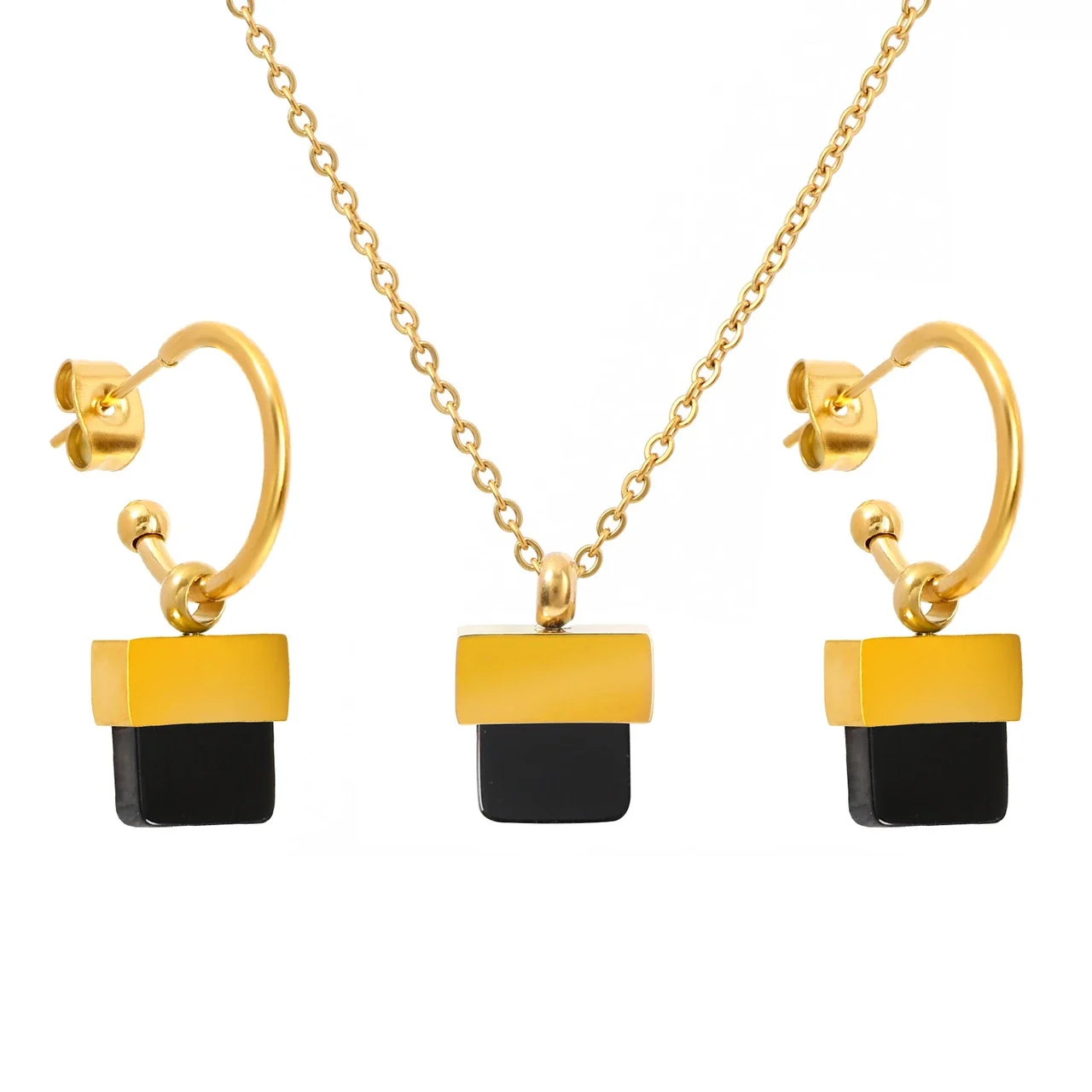
These are four different constructions, not four quality grades of the same thing, and the practical difference for a reseller is which metal sits under the gold and what that does to your cost, your customer and your aftercare. Gold plated puts a soft gold layer on a base metal from a plating bath. Gold PVD bonds a hard gold-tone layer into stainless steel in a vacuum chamber. Vermeil is, by definition, gold over a sterling silver base. Solid gold has no coating at all. Most independent retailers end up choosing between the first two, because vermeil and solid gold are a different business with different capital and different customers rather than a straight upgrade.
Jewena is a factory-direct B2B wholesale platform for stainless steel jewelry, produced in Guangdong with long-term partner factories in the Dongguan and Foshan jewelry clusters, so our own range sits in the plated and PVD columns below. The comparison itself is general material fact, and the sections on vermeil and solid gold are here because a reseller needs to know when the answer is not us.
The four constructions side by side
Read this table by column, not by row. The base metal decides most of what follows: what the piece costs, how it ages, what happens when the surface eventually wears, and what you are allowed to call it.
| Construction | What sits under the gold | How the gold layer gets there | Price-band logic | Retail scenario it suits |
|---|---|---|---|---|
| Gold plated | Brass, copper alloy, stainless steel or silver, depending on the maker | Electrolytic: the piece is dipped in a plating bath and current deposits a soft gold layer on the outside | Lowest entry cost of the four; cost rises with how much gold is laid down and how carefully the base is prepared | Trend-led and seasonal ranges, fast turnover, price-sensitive assortments, testing a new design before committing |
| Gold PVD | Usually stainless steel | Physical vapour deposition: metal is vaporised in a vacuum chamber and ions are driven into the surface, bonding a hard colour layer | Above standard plating because of the extra vacuum step, but far below any precious-metal base | Everyday pieces customers never take off, where colour life matters more than the last unit of margin |
| Vermeil | Sterling silver, by definition | Gold plating applied specifically over sterling silver, meeting the minimum karat fineness and plating thickness the rule sets | Tracks the silver market, so your floor cost moves with metal prices rather than sitting still | Customers who want a precious-metal base at a mid price: gifting, bridal, brands positioned above fashion jewelry |
| Solid gold | Nothing — the piece is the metal throughout | No coating; the colour is the alloy itself | Priced off gold weight and karat, and it moves daily | Fine jewelry, heirloom purchases, customers who expect resizing and repair as part of the deal |
Gold filled is a fifth construction you will meet in the same conversations: a much thicker karat-gold layer mechanically bonded to a base-metal core, common in wire, hoops and chain. It is left out of the table because it rarely competes for the same shelf. If you want the construction definitions in full, including gold filled, our guide to what gold plated, gold filled, PVD and vermeil actually mean covers them.
What each one is really good at
Gold plated earns its place on velocity
Standard plating is the honest choice when a design has to be affordable and may not be in the range next season. The economics work because the finishing step is inexpensive, which lets you carry breadth: more designs, more colourways, more chances to find the one that sells. The trade-off is that a soft layer on the outside of the piece wears in the ordinary way soft metal wears, fastest at edges and high-contact points. That is a real limitation on rings and clasps, and much less of one on earrings and pendants.
The base metal underneath matters more than most listings admit. When plating on a reactive base eventually wears through, the exposed metal can darken and the piece reads as worn out. On a stainless steel base the metal showing through stays silver-toned, so the same amount of wear looks far less dramatic to the customer.
Gold PVD earns its place on daily wear
PVD costs more per piece than standard plating because it adds a vacuum-chamber step, so it does not belong on everything. It belongs on the pieces customers put on and forget: chains, everyday hoops, stacking rings, anything worn through showering and sleeping because taking it off is a nuisance. The colour layer is anchored into the steel rather than resting on it, and the compounds used to make a gold tone are harder than gold metal, so under the same wear it generally holds colour longer.
What PVD is not is permanent, and the honest framing protects you at the till. There is no defensible lifespan figure for a coating, which is why we publish none across our range; our separate guide on how long PVD gold plating lasts explains the mechanism and gives you a sample wear test to run on your own candidates.
Vermeil is a silver business wearing a gold finish
Vermeil is the one term on this list with a legal definition attached in some markets, and it is worth respecting because it is easy to breach by accident. In the United States the FTC Jewelry Guides, with the rule text in 16 CFR Part 23, reserve vermeil for gold over a sterling silver base meeting stated minimum karat fineness and minimum plating thickness. Gold over brass or over steel is not vermeil however thick the plating is, and describing it as vermeil is a misdescription rather than a stylistic liberty.
Commercially, stocking vermeil means accepting a silver cost base. Your buying price moves with the metal market, your capital per SKU is higher, and the piece can tarnish at the silver where the gold has worn, which is a different aftercare conversation from the one a steel-based range needs. In exchange you get a genuine precious-metal story, which supports a higher price point and a different kind of customer.
Solid gold is a different trade entirely
Solid gold removes the coating question, and with it most of the finish complaints. It replaces them with inventory economics that catch out retailers moving up from fashion jewelry: capital tied up per piece is an order of magnitude higher, depth on any given design becomes unaffordable, security and insurance become real line items, and customers arrive expecting resizing, repair and a lifetime relationship with the piece. It is a good business. It is not an upgrade path you drift into while running a fashion range.
A decision tree by customer, not by budget
The common mistake is choosing a construction by what you can afford rather than by who is buying. Work down this list and stop at the first line that describes your customer.
- They buy on design and replace often. Standard gold plating, in breadth. Spend on more designs rather than a better finish on fewer, and let sell-through tell you what to reorder.
- They wear one piece constantly and hate taking it off. Gold PVD on stainless steel, in depth on a handful of proven shapes. This is where finish spend converts into fewer complaints.
- They are buying a gift or a milestone piece and want a precious metal named on the label. Vermeil, and price it knowing your cost base moves with silver.
- They expect to still own it in twenty years and to have it resized. Solid gold, with the capital and service model that goes with it.
- They have a nickel sensitivity or ask about skin reactions. Materials, not finishes, decide this, and no construction in the table is a safe blanket answer. Stainless steel does contain nickel; hypoallergenic is a marketing word rather than a regulated standard, and individual reactions vary. Point the customer at the material stated on the specific product page and suggest testing one piece.
Most independent brands end up running two of these at once, typically plated for breadth and PVD for the core sellers. That is a deliberate structure rather than a compromise, and it lets you answer the customer question "which of these will last" with a real difference in your own range instead of a sales line.
What does not show up in the product photograph
A photograph establishes shape, proportion and colour. It cannot establish base metal, plating process or gold content — a gold-toned piece looks much the same whether it is electroplated, PVD-coated or vermeil. So the commercial differences that decide whether a range works for you have to be read off the specification and the terms, not the image.
- Capital per SKU. This is what really limits how many designs you can carry, and it rises sharply as you move right across the table. Breadth and precious metal are competing uses of the same money.
- Minimum order structure. Check whether a supplier's minimum is per style or per colourway, and whether it applies again on reorders. Our guide to reading MOQ structures covers the questions that expose the difference.
- Aftercare and returns load. Coated pieces generate finish questions; silver generates tarnish questions; solid gold generates service requests. Each is manageable, and each costs staff time you should price in.
- Labelling obligations. Precious-metal descriptions are regulated in most markets in a way that fashion-jewelry descriptions are not. Moving into vermeil or solid gold means checking what your market requires of the wording and the marking.
- Margin behaviour. A cost base that moves with a metal market behaves differently from one that does not, particularly on long-lived listings. Our notes on pricing and margin for resale set out the arithmetic.
Writing it up honestly on your own listings
Most disputes in this category are wording problems, not product problems, and three habits prevent nearly all of them.
Describe the construction, not its future. "Gold PVD coating on stainless steel" and "18K gold plated over brass" are statements you can defend; "never fades" and "lifetime gold" are not. Keep the terms in their lanes: vermeil means a sterling silver base and nothing else, gold filled means a bonded karat-gold layer, and neither word is available as a synonym for good plating.
Be explicit that a karat number in a plating or coating description is a colour reference. When a listing says 18K gold plated or 18K gold PVD, the 18K describes the tone of the gold layer or the colour the coating reproduces, not the gold content of the item, and the base is whatever the specification says it is. Customers who read it the other way are being set up for a complaint the product never caused, and a single clarifying sentence on the page removes it.
Finally, keep finish wording attached to the individual product rather than to the range. Our own product pages state PVD only where the sourcing record supports it for that SKU, and gold-plated or gold-tone otherwise, precisely so that nothing on a category page overrides what the item actually is. Whatever your supplier, ask the same question of them, per SKU, before you repeat a claim to your own customers — the supplier vetting guide covers how to phrase it.
FAQ
Is vermeil better than gold plated?
It is different rather than better, and the difference is the base. Vermeil requires a sterling silver base and meets defined minimums for gold karat and plating thickness, so you are selling a precious-metal core; ordinary gold plating can sit on brass, steel or silver and carries no such requirement. Vermeil costs more, moves with the silver market and can tarnish at the exposed silver as the gold wears. For a customer who wants a named precious metal it is the right answer; for a customer who wants everyday colour durability, a coated stainless steel piece often serves better.
Which gold finish should a reseller stock first?
Start with what your customers do with the jewelry rather than with a price target. If they buy on design and rotate frequently, breadth in standard gold plating finds your winners fastest. If they wear one piece daily and never remove it, depth in gold PVD on stainless steel reduces complaints on exactly the pieces that get the hardest wear. Many independent brands run both, using plating for range and PVD for the core sellers.
Does 18K gold plated or 18K gold PVD contain 18K gold?
Not in the sense customers usually mean. On a plated piece the karat number describes the fineness of the thin gold layer applied to the base, not the item as a whole. On a PVD finish it refers to the colour tone the coating reproduces, and the base is stainless steel. In both cases the item is not solid gold, and saying so plainly on the listing is the least expensive protection against a return.
What is the difference between gold filled and vermeil?
Gold filled bonds a comparatively thick layer of karat gold to a base-metal core, usually brass, using heat and pressure, and it is normally found in wire, hoops and chain rather than complex cast shapes. Vermeil is gold plating over a sterling silver base meeting defined minimums. The distinction that matters commercially is what the customer owns underneath: base metal in one case, sterling silver in the other.
Can I mix these constructions in one range?
Yes, and most established independent brands do. The requirement is that each product page states its own construction accurately and that your staff can explain the difference in a sentence, because a mixed range only creates problems when the customer cannot tell which one they bought. Handled openly, it becomes a selling point: you can offer the same design at two price points and let the customer choose what they are paying for.
Bottom line
Choose the construction that matches how your customer wears the piece, then be precise about it in writing. Plated buys breadth, PVD buys colour life on the pieces that never come off, vermeil buys a precious-metal base and a silver-linked cost, and solid gold is a separate trade with its own capital and service model. To compare the two constructions we actually stock, with open USD pricing and the finish stated per SKU, see gold PVD jewelry wholesale or the wider wholesale range for boutiques and retailers, where ready stock starts at one piece so you can put both finishes side by side before committing.
Is gold-filled jewelry waterproof?
Gold-filled jewelry is water-resistant, not waterproof: the bonded karat-gold layer is thick enough for hand-washing and occasional showers, but repeated submersion, chlorine and sweat eventually work on the brass core underneath. If the goal is gold-tone stock that customers can wear in the shower daily, PVD-finished 316L or 304 stainless steel is the wholesale-grade answer - the vacuum-bonded coating and corrosion-resistant base metal are why waterproof gold jewelry ranges are built on PVD steel rather than gold-filled or standard gold-plated brass.