How Long Does PVD Gold Plating Last?
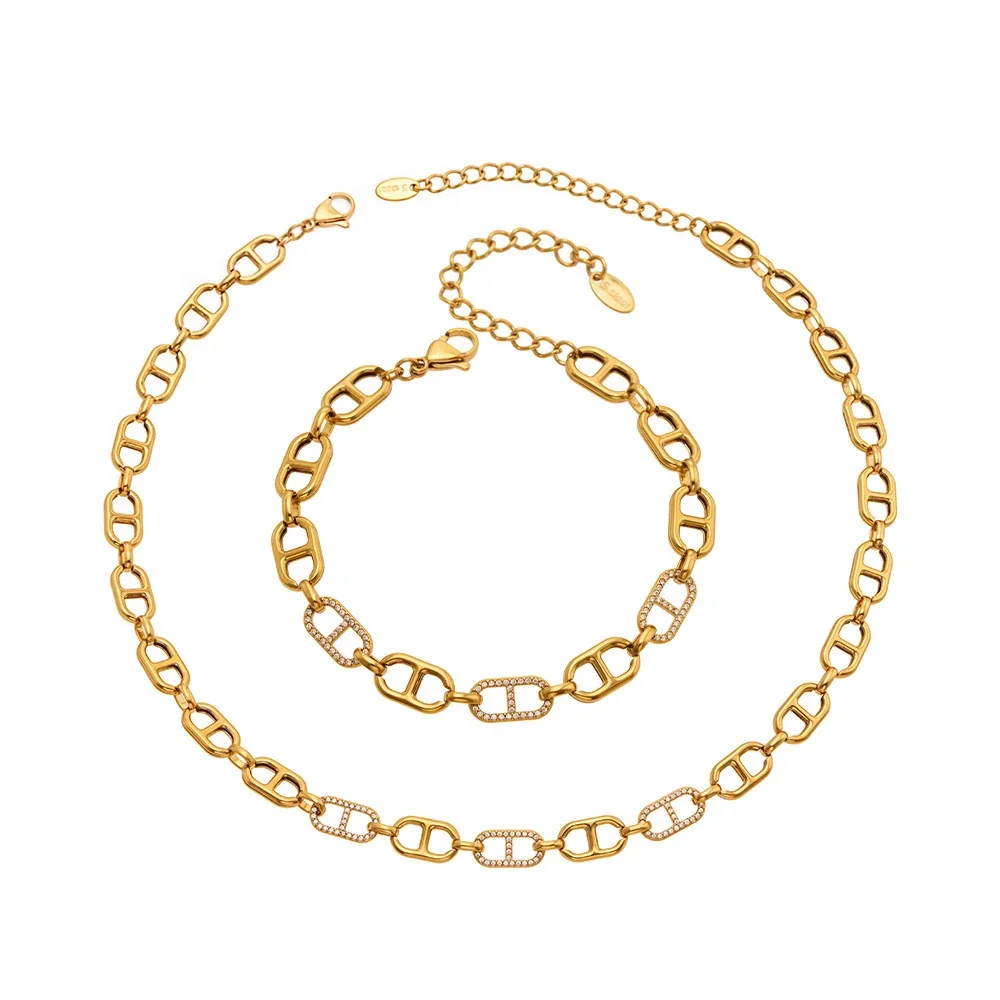
There is no honest single answer, and any supplier who gives you one in years is guessing. A PVD gold finish is a wear surface, so how long it holds its colour is decided by four things the number never captures: how the coating was bonded to the metal underneath, how much friction the piece takes where it is worn, what chemistry it is exposed to, and how the wearer treats it. The same coating specification can look untouched after two years on a pendant and show visible wear within months on a ring worn through daily hand-washing. This guide explains the mechanism behind that spread and sets out a wear test you can run on a sample before committing an order.
Jewena is a factory-direct B2B wholesale platform for stainless steel jewelry, produced in Guangdong with long-term partner factories in the Dongguan and Foshan jewelry clusters. We publish no blanket lifespan figure across the range, because it would be a number we could not stand behind on every SKU and in every wearer's hands.
Why a lifespan in years is not a real specification
Coating lifespan is not a property of the coating alone. It is the point at which the rate of material removal, driven by rubbing and chemical attack, finally exposes what is underneath at a spot the wearer can see. Change any term in that sentence and the answer changes with it.
This is why published durability figures in this category should be read as marketing positioning rather than measurement. A figure like "lasts three to five years" is not wrong so much as unfalsifiable: it names no wear conditions, no piece type, no test method and no failure criterion, so nothing can ever contradict it. When you see a lifespan claim, the useful follow-up is not "is that true" but "measured how, on what, worn by whom, and what counted as the end".
The same caution applies to the words that usually travel with a lifespan claim. Waterproof, tarnish-free, non-fading and lifetime colour are marketing descriptions rather than regulated standards, and no supplier can honestly promise them across a whole catalogue. What can be said honestly is narrower and more useful: stainless steel as a base resists corrosion well, PVD as a process generally resists abrasion better than a soft plated layer, and everything past that belongs to a specific SKU worn in a specific way.
The mechanism: why PVD fails differently from electroplating
The two finishes are different processes, not two grades of the same one, and the difference shows up in how they fail rather than only in how long they take to fail.
Conventional gold plating is electrolytic. The finished piece is dipped in a plating bath and an electric current deposits a layer of soft metal onto the outside of the part. The layer sits on the surface, and because gold is soft it wears in the way soft metal wears: it thins gradually under rubbing, then breaks through first at the highest points and sharpest edges, where contact pressure concentrates.
PVD is physical vapour deposition, and there is no bath and no current passing through a solution. The piece goes into a vacuum chamber, a solid target metal is vaporised into ions, and those ions are driven onto the surface. The first atoms are effectively mixed into the outermost layer of the steel by that bombardment, so the colour layer is anchored into the substrate rather than resting on top of it, and the compounds typically used to produce a gold tone are considerably harder than gold metal itself.
Two practical consequences follow, and they are the reason buyers notice PVD in the first place. A harder surface resists the scratching and rubbing that removes soft plating, so under identical wear the colour usually survives longer. And when a bonded layer does eventually go, it tends to go as localised thinning at one high-contact spot rather than as broad flaking, because there is no weak interface for a sheet of coating to lift away from. None of that makes PVD permanent. It makes it a slower and tidier failure.
One clarification worth carrying to your own customers: on a PVD finish, an 18K description refers to the colour tone the coating reproduces, not to a karat gold content. The base is stainless steel, and the tone comes from the compound deposited in the chamber. For how the process differences translate into a written purchase specification, our gold PVD vs gold plated procurement guide covers the RFQ side in detail.
The five factors that actually move the outcome
When two buyers report completely different results from what looks like the same product, the explanation is almost always in this table rather than in the coating name.
| Factor | Why it moves the outcome | What you can establish before ordering |
|---|---|---|
| Bond quality of the coating | A well-anchored layer resists abrasion for its hardness; a poorly bonded one fails early regardless of how much material was laid down | Ask what finish route the SKU uses and whether it is stated per item or claimed across the catalogue |
| Surface preparation underneath | PVD reproduces the surface it is applied to. Contamination or a poor polish before coating becomes a permanent defect and an early failure point | Inspect a sample under strong light for haze, pitting and dull patches, particularly in recesses |
| Friction at the wear position | Contact pressure and rubbing cycles remove material. This varies more between piece types than between coating specifications | Decide which piece types you are buying the finish for, and weight your test accordingly |
| Chemical exposure | Sweat, hand sanitiser, chlorine, perfume, sunscreen and cleaning products attack the surface and accelerate mechanical wear | Test with a wearer whose routine matches your customers, not with a piece kept in a drawer |
| Wearer habits | Whether pieces come off for washing, swimming, exercise and sleep, and how they are stored and cleaned, routinely outweighs the specification | Supply care guidance with the product and assume it will be followed only partially |
Where a PVD finish goes first
Wear is never even across a piece, and knowing the order tells you where to look during an inspection and which categories to stock the finish in.
- Rings wear fastest. They meet hard surfaces, soap and sanitiser all day. Colour thins first on the palm side and on any raised edge.
- Bracelets and clasps follow. The tongue of a lobster clasp, the box clasp catch and the jump rings all rub metal against metal every time the piece is put on.
- Chains sit in the middle. The links themselves take little impact, but links that flex against one another and the area at the clasp show change earliest.
- Earrings and pendants last longest. They face the least abrasion, which is why a gold-tone hoop can look new long after a ring bought at the same time has visibly changed.
The practical reading for a buyer is that the same finish deserves a different level of confidence by category. Committing depth to gold-tone hoop earrings and pendants carries less finish risk than committing the same depth to rings, whatever the coating.
The wear test you can actually run
Because no supplier can hand you a trustworthy number, the substitute is a small, low-cost test that produces evidence about your own products under your own customers' conditions. Ready stock at Jewena starts at one piece, so the test below costs one piece plus shipping per SKU you care about.
- Order one piece of each candidate SKU, and note which ones state PVD on the product page and which state gold-plated or gold-tone. That distinction is the variable you are testing.
- Photograph each piece on day zero against a plain background under consistent light, close enough to show the clasp, edges and any raised motif. This photograph is your only real reference later.
- Give the piece to someone who will wear it the way your customers do, including the showering, swimming and gym habits you would rather not think about. A drawer test proves nothing.
- Re-photograph under the same light at roughly two weeks, six weeks and three months, and look specifically at the palm side of rings, clasp tongues, jump rings and raised edges.
- Record what changed and when. After two or three rounds you will have something no supplier claim can give you: a comparison across finishes, under the conditions your own market actually applies.
Keep the day-zero photographs and the approved sample. They are also the reference you will need if a later production batch differs in tone or finish quality, which is the other common source of complaints in this category. Our guide to vetting a stainless steel jewelry supplier covers what to agree in writing before that happens.
What this means for how you sell it
The commercial risk in gold-tone jewelry is rarely the finish itself. It is the gap between what the listing promised and what the customer experienced, and that gap is created at the point of sale, not in the plating chamber.
Three habits close it. First, describe the finish rather than its future: "PVD gold-tone coating on stainless steel" is a statement you can defend, "will never fade" is not. Second, pass on the conditions honestly, because a customer who was told to take a ring off before the gym has no case when a ring worn through the gym changes. Third, keep your finish wording tied to the individual product, in the same way our own product pages state PVD only where the sourcing record supports it for that SKU, and gold-plated or gold-tone otherwise. If you are weighing a coated range against a precious-metal one for the same shelf, our comparison of gold plated, PVD, vermeil and solid gold sets out which construction suits which retail customer.
Aftercare instructions are the least expensive returns-prevention tool available, and they work because most finish complaints trace back to chemical exposure and abrasion that the wearer did not know mattered. Our general jewelry care guidance can be adapted for the insert you ship with an order.
FAQ
How long does PVD gold plating last on jewelry?
There is no honest catalogue-wide figure, and a supplier quoting one in years is not measuring anything. A PVD coating on stainless steel generally outlasts conventional gold electroplating under the same wear because the colour layer is bonded into the surface and is harder than gold metal, but the outcome for any individual piece depends on where it is worn, what it is exposed to and how it is looked after. The reliable way to find out is to wear a sample under your own customers' conditions and photograph the change.
Is PVD gold plating more durable than regular gold plating?
In most everyday wear situations, yes, and the reason is mechanical rather than promotional. Electroplating deposits a soft metal layer on the outside of the piece from a plating bath, while PVD drives vaporised metal ions onto the surface in a vacuum so that the first atoms mix into the substrate. A harder, anchored layer resists rubbing better than a soft one resting on top. This is a comparison between processes, not a promise about any particular item, and a carefully prepared plated piece can outlast a poorly prepared coated one.
Does 18K gold PVD contain real gold?
No. In a PVD context an 18K description refers to the colour tone the coating reproduces, not to a karat gold content, and the base underneath is stainless steel. This is worth stating plainly on your own listings, because a customer who reads 18K as gold content has been set up for a complaint that the product itself never caused.
Can PVD gold jewelry be worn in the shower or the pool?
The stainless steel base itself is not harmed by water, but that is not the same as the finish being unaffected. Soap residue, chlorine, salt water and hot water accelerate surface wear, and repeated exposure combined with friction is what shortens the colour life of any coated piece. Advise customers to remove pieces before swimming and to dry them after contact with water rather than promising the range is waterproof.
Why do two customers get different results from the same piece?
Because the wearer is the largest variable in the equation and the one no specification controls. Skin chemistry, occupation, how often the piece comes into contact with hard surfaces, exposure to sanitiser and cleaning products, and whether it is removed for sleep and exercise routinely produce a bigger spread in outcomes than the difference between one coating specification and another.
Bottom line
How long PVD gold plating lasts is the wrong question to ask a supplier and the right question to answer with a sample. The mechanism gives you a defensible general statement — a coating anchored into stainless steel and harder than gold metal usually outlasts a soft plated layer under the same wear — and everything more specific than that belongs to a piece type, a wearer and a set of habits. Buy one, wear it, photograph it, and you will know more about your own range than any lifespan figure could have told you. If you are choosing between finishes for a gold-tone range, our gold PVD jewelry wholesale page lists current stock with open USD pricing and the finish stated per SKU, and the PVD gold plated wholesale buyer guide covers the sourcing side of the same decision.