Is 304 Stainless Steel Good for Jewelry? Tarnish, 304 vs 316 and What to Stock
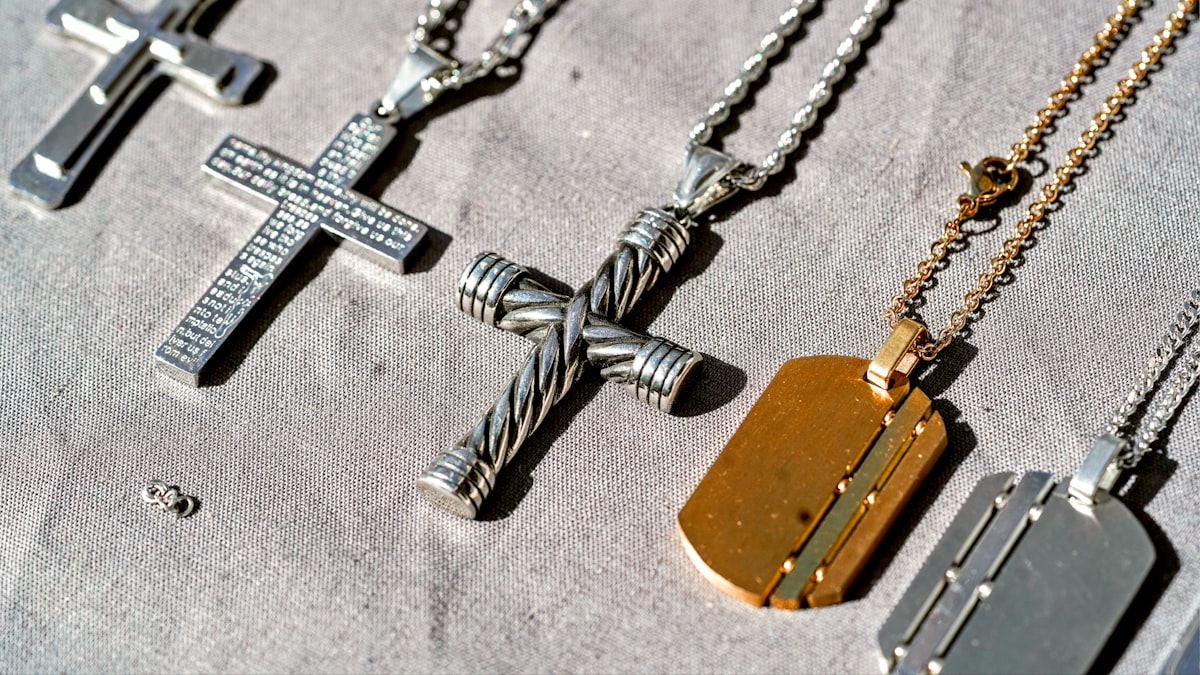
Quick answer: yes, with conditions. 304 is a genuine austenitic stainless steel, the 18/8 chromium-nickel grade, with about 18% chromium, 8–10.5% nickel and no molybdenum. It does not tarnish the way brass or sterling silver does, it carries a plated finish as well as any steel, and in everyday wear under dry or temperate conditions it performs well. 316 and 316L add roughly 2–3% molybdenum, which raises resistance to pitting from chlorides, and that molybdenum is the whole difference between the grades. So 304 is the wrong choice only where chloride exposure is constant: sea water, chlorinated pools or sweat-heavy sport.
The question usually comes from a shop deciding what to stock rather than from a metallurgist, so this guide answers it in that order: what 304 is, where it holds up, where it does not, whether it tarnishes, how it compares with 316 and 316L on a shelf, and when paying for 316L is worth it. The short version is that most fashion jewelry, and almost all chain, is 304 for good reasons, and the grade only becomes a problem when a piece is sold for a use it was never meant for.
What 304 stainless steel is
304 (UNS S30400, EN 1.4301) is the most widely produced stainless steel in the world. It is an austenitic alloy of iron with roughly 18% chromium and 8–10.5% nickel, which is why it is also called 18/8 steel. The chromium forms a thin, invisible, self-repairing oxide layer on the surface, and that layer is what makes the steel stainless: scratch it and it re-forms in air within moments. The nickel keeps the crystal structure austenitic, which makes the steel ductile, easy to draw into wire and form into links, and mostly non-magnetic.
What 304 does not contain is molybdenum. That is the single line of chemistry separating it from 316 and 316L, and it matters for one specific thing: resistance to chloride ions, the salts in sea water, pool water and sweat, which attack the passive layer at pinpoints and start pitting. Where there is no chloride, 304 and 316 behave almost identically.
Because 304 is produced at enormous volume for sinks, cutlery, tanks and architecture, wire, sheet and tube in 304 are low-cost and available everywhere in consistent quality. That supply position, more than any property of the metal, is why it is the default base for fashion jewelry and especially for chain.
Where 304 performs well
- Everyday wear. Rings, pendants, hoops and bracelets worn day to day in an office, a shop or a home keep their surface for years. Ordinary humidity, hand-washing and rain do not carry enough chloride to trouble the passive layer.
- Dry and temperate climates. The further a customer lives from salt air and the less they sweat into a piece, the less the missing molybdenum matters. For most of inland Europe and North America the practical difference between 304 and 316 on a pendant is close to nil.
- Plated pieces. On a gold-plated or PVD-finished piece the plating is the wear layer, not the steel. The customer's skin, sweat and perfume meet the coating first, and the coating wears at the same rate whether the metal beneath is 304 or 316. Paying for 316 under a plated finish buys protection the customer will rarely reach.
- Chains and chain bracelets. Chain is where 304 is most common and most cost-effective. Chain is drawn from wire, formed into links by machine at high speed and sold by length, so the base wire is a large share of the finished price, and 304 wire is the most economical stainless wire there is. Almost every stainless steel chain sold as fashion jewelry is 304 unless a grade is stated otherwise, and the same is true of the chains category here.
Where 304 does not perform well
- Constant salt water. A piece worn swimming in the sea, or by someone who lives and works on a coast, sees chloride every day. 304 will spot and eventually pit under that exposure; 316 lasts far longer.
- Chlorinated pools and hot tubs. Pool water carries chloride and is often warm, which speeds the attack. A piece worn in a pool several times a week should be 316.
- Sweat-heavy sports wear. Gym pieces, running jewelry and anything marketed as workout-proof spend hours a day wet with sweat, which is a salt solution. That is the 316 use case.
- Strong nickel allergy. No stainless steel grade is nickel-free: 304, 316 and 316L all contain nickel, and the passivated surface is what keeps release low. 316 and 316L earn their price under constant chloride exposure such as seawater and pools, not on nickel. For a customer with a strong nickel allergy, a different material is the honest answer.
The pattern is consistent: 304 is fine until chloride and time are both present. Where a range is aimed at those conditions, the base metal has to be 316, and the listing should say so.
Does 304 stainless steel jewelry tarnish?
Not in the way the word usually means. Tarnish is the dark sulfide film that forms on silver, brass and copper alloys when they react with sulfur in the air. Stainless steel does not form it, because the chromium oxide layer seals the iron away from the atmosphere. A 304 piece left in a drawer for a year comes out looking as it went in.
What 304 can do under chloride exposure is spot or pit: small dull points that appear where the passive layer was breached and could not re-form fast enough. On a plain polished piece this shows as tiny grey freckles; on a fine chain it can show as dulling at the links that rub. It is corrosion rather than tarnish, and it is driven by exposure, not by age. Rinsing a piece in fresh water after the sea or a pool and drying it removes the chloride before it can act.
Plating wear is a separate matter altogether. A gold-plated or gold-tone finish on 304 will fade with friction and time in exactly the way the same finish fades on 316, because the steel beneath is not involved. When a customer says a "stainless steel" piece has "tarnished", it is most often the plating wearing through, and the grade of the steel would not have changed that.
304 vs 316 vs 316L for a shop deciding what to stock
| Grade | What it is | Chloride resistance | Where it belongs | Cost position |
|---|---|---|---|---|
| 304 | 18/8 chromium-nickel austenitic; about 18% Cr, 8–10.5% Ni, no molybdenum | Good in dry and everyday conditions; spots or pits under constant salt, pool or sweat exposure | Chains, chain bracelets, plated pieces, trend and occasion jewelry, everyday basics in temperate climates | Base. The most economical stainless wire and sheet available |
| 316 | 304 chemistry plus about 2–3% molybdenum and slightly more nickel | Markedly better against chloride pitting; the marine grade | Pieces marketed as water-safe or sweat-proof, coastal ranges, gym and sport jewelry, first-in earrings | Higher. Molybdenum and extra nickel cost more, and 316 wire is produced in smaller volumes |
| 316L | 316 with carbon held to 0.03% max, which protects corrosion resistance at welded and heat-worked joints | As 316; the low carbon matters at clasps, jump rings and laser-closed links rather than on flat surfaces | Piercing and body jewelry, specifications that name the grade, custom runs where the buyer's own standard requires it | Highest. Produced to order rather than held as stock, which is what sets the price |
Two things in that table decide most stocking questions. First, the difference between 316 and 316L is carbon, not corrosion resistance on a polished surface; a customer wearing a pendant will never feel it. Second, the price steps are not evenly spaced. 316 sits a step above 304; 316L, because it is a custom-production grade rather than a stock one, sits well above 316. That is why a range is normally built as 304 for breadth and 316 for the lines that see water, with 316L reserved for specifications that name it.
The longer comparison, including the composition ranges under ASTM A240 and how to check a grade before buying, is in our 316L vs 304 buyer's guide.
Do you actually need 316L?
For fashion jewelry, usually not. 304 is normally enough for chains, pendants, rings, hoops and anything plated, which is most of what a fashion shop sells. 316 covers the water and sweat cases. 316L only enters the picture when a specification names it: body and piercing jewelry, a retailer's own material standard, or a product line marketed explicitly on the grade.
The cost is the part that surprises buyers. 316L is not held as ready stock; it is produced to order, and a custom run in 316L spreads tooling, polishing and plating over a 50-piece run rather than a volume production run. At that point the finished cost of a 316L piece approaches what a comparable sterling silver piece costs, and the question stops being "which steel" and becomes "steel or silver". A shop that only wanted a slightly more corrosion-resistant chain rarely wants that.
So the honest advice, when a buyer asks for 316L without a specification behind the request, is usually that they do not need it: 304 or 316 from stock will serve the end customer as well at a fraction of the price, and the 316L budget is better spent on breadth. Where the specification is real, the grade is available on OEM and ODM runs and the price is quoted per design.
How Jewena labels grades
Jewena, Guangzhou Jewena Jewelry Co., Ltd., is a wholesale supplier of stainless steel jewelry selling from its own site with public USD prices. On 11 September 2026 the ready-stock range held 625 styles across 3,312 variants, with the stock count printed per variant, at single-piece prices from $0.27 to $37.09 and a median of $3.94. Production runs on dedicated lines with long-term partner factories in the Guangdong jewellery clusters, and paid orders left Guangzhou in a median of 3.9 days over the last 60 days, shipping to 146 countries.
Grades are labelled by a simple rule. Pieces listed without a grade number are treated as 304; grades are never guessed upward. Listings that say 316 are 316, because the grade comes from the source specification for that SKU, so a grade number on a product page is a record rather than a guess. Ready stock never carries 316L. Of the 625 styles in stock on 11 September 2026, 409 are listed as stainless steel without a grade number and 216 carry a 316 label. The no-grade pieces run across the range: 141 bracelets, 127 necklaces, 106 pairs of earrings, 39 chain bracelets and 39 rings. The 304 line is grouped on the 304 stainless steel jewelry page, and the 316L stainless steel jewelry page covers 316 from stock and 316L on custom runs.
Ready stock is sold from 1 piece per style, with 3- and 10-piece price steps printed on each product page. Separately, OEM and ODM runs in 316 or 316L start at 50 pieces per design, 30 for returning customers, and are quoted through the OEM page.
FAQ
Is 304 stainless steel good for jewelry?
Yes for everyday wear, plated pieces and chain, which covers most fashion jewelry. It is the wrong grade only for pieces that will live in salt water, pool water or heavy sweat; those call for 316. Nickel allergy is a separate question, answered below.
Does 304 stainless steel jewelry tarnish or turn skin green?
No on both counts. Green skin comes from copper in brass and low-grade alloys, and tarnish is a sulfide film that forms on silver and copper alloys; stainless steel contains neither in any amount that matters and does not react that way. Under repeated chloride exposure 304 can spot or pit, which is corrosion rather than tarnish, and a plated finish can wear through, which is the plating rather than the steel.
Can you shower with 304 stainless steel jewelry?
Yes. Tap water carries very little chloride and a shower is brief. Soap and shampoo residue can dull a polished surface, so a rinse and a wipe keep it bright. Sea water and pool water are the exposures to avoid, and the piece should be rinsed in fresh water afterwards if it has been in either.
Is 304 stainless steel safe for a nickel allergy?
No stainless steel grade is nickel-free: 304, 316 and 316L all contain nickel, and the passivated surface is what keeps release low. 316 and 316L earn their price under constant chloride exposure such as seawater and pools, not on nickel. For a customer with a strong nickel allergy, a different material is the honest answer. Neither grade should be sold as hypoallergenic.
Is 304 stainless steel good for chains?
It is the standard grade for chain. Chain is drawn from wire and formed by machine at volume, so the base wire is a large share of the cost, and 304 wire is the most economical stainless wire available. A 304 chain worn daily in ordinary conditions keeps its finish for years; a chain meant for swimming or the gym should be 316.
What is the difference between 304 and 316 stainless steel jewelry?
Molybdenum. 316 adds about 2–3% and 304 has none, and that addition raises resistance to pitting from chloride in sea water, pool water and sweat. In dry, everyday wear the two behave almost identically and look identical when polished; the difference only appears under chloride exposure over time. 316L is 316 with lower carbon, which matters at welded joints rather than on the surface.
How much more does 316 or 316L cost than 304?
316 costs a step more than 304 because molybdenum and the extra nickel are more expensive inputs and the wire is made in smaller volumes; on a finished piece the difference is noticeable but not dramatic. 316L is a different case: it is produced to order rather than held as stock, and at custom-run volumes a finished 316L piece approaches sterling silver pricing. Exact figures depend on the design, weight and finish, so they are quoted per piece.
Is 304 stainless steel magnetic?
Mostly not. 304 is austenitic, which is non-magnetic in the annealed state, but cold work at clasps, jump rings and drawn wire can make parts of a piece weakly magnetic. The same is true of 316, so a magnet cannot tell the two grades apart and is not a useful check.
Bottom line
304 is good for jewelry in the conditions most jewelry is worn in: everyday, indoors and out, dry or briefly wet, plated or polished, and it is the right base for chain. It does not tarnish, and it only pits under constant chloride exposure, which is the case for 316. 316L is a custom-production grade whose finished cost sits near sterling silver, and most fashion shops that ask for it do not need it. Stock 304 for breadth, 316 for the water and sweat lines, and treat any listing without a grade number as 304, which is how the 304 stainless steel jewelry range at Jewena is labelled.