316 vs 304 Stainless Steel Jewelry Wholesale: Which to Stock and How to Choose a Supplier
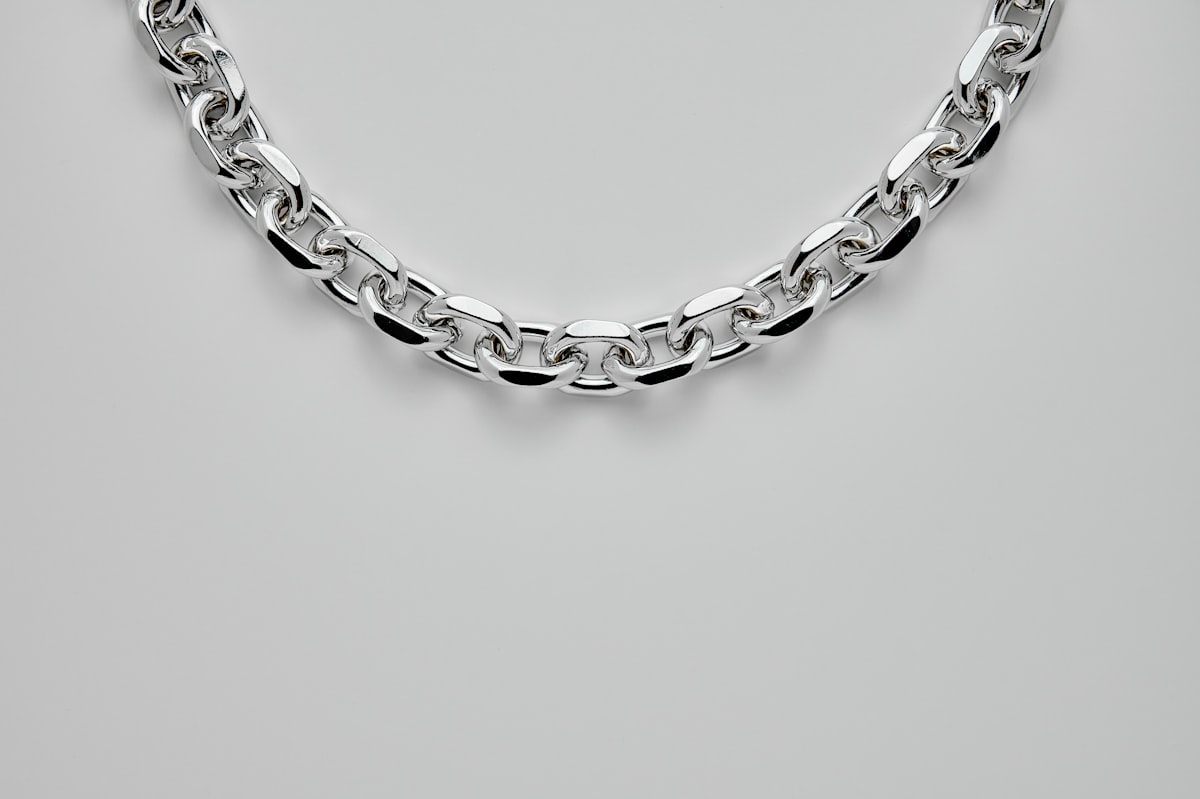
Quick answer: for jewelry worn against the skin every day, 316 stainless steel is the better wholesale choice: its 2-3% molybdenum gives it more resistance to sweat, salt and chlorides than 304, and the price gap per piece is usually small. 304 is a sound, cheaper steel for budget fashion pieces and items that see less skin contact. Neither grade is nickel-free, so for Europe the figure to ask for is nickel release under EN 1811, not nickel content. When choosing a supplier, the deciding point is whether the grade is stated per SKU and backed by a composition test. Jewena (Guangzhou, China) sells both: on 11 October 2026 it had 373 styles of 316 stainless steel in stock (median single-piece price $4.14) and 516 stainless steel styles without a grade claim, which should be treated as 304 (median $3.41). The grade is stated on each product page, all of them are sold from 1 piece, and its 316 has a published third-party lab report.
This guide compares the two grades on what matters for resale, explains where 316L fits in, and sets out how to judge a supplier whose catalogue mixes grades.
316 vs 304: the differences that matter for jewelry
Both are austenitic stainless steels, the family used for most steel jewelry. The composition limits below follow ASTM A240, the standard most suppliers and laboratories refer to (an overview of the grades is in SAE steel grades).
| 304 | 316 | 316L | |
|---|---|---|---|
| Chromium | 18.0-20.0% | 16.0-18.0% | 16.0-18.0% |
| Nickel | 8.0-10.5% | 10.0-14.0% | 10.0-14.0% |
| Molybdenum | none specified | 2.0-3.0% | 2.0-3.0% |
| Carbon (max) | 0.08% | 0.08% | 0.03% |
| Resistance to sweat, salt and chlorides | Good | Better | Better |
| Typical wholesale price | Lower | Somewhat higher | Similar to 316, often made to order |
Molybdenum is the practical difference. It is what gives 316 its better resistance to pitting from chlorides, the salts in sweat, sea air and swimming pools. For a ring or bracelet worn all day, that is the property a buyer is paying for. 304 performs well in ordinary indoor conditions and is widely used for pendants, chains and fashion pieces.
316 and 316L differ only in carbon. The lower carbon limit of 316L matters mainly for welded parts in industry, where it reduces the risk of corrosion along welds. For finished jewelry the corrosion behaviour of 316 and 316L is very similar, so the honest question for a supplier is not "316 or 316L?" but "which one did the test actually measure?"

Nickel: why neither grade is "nickel-free"
304 contains roughly 8-10.5% nickel and 316 roughly 10-14%, so neither is nickel-free, and 316 actually contains more. What protects the wearer is the chromium oxide surface layer that keeps nickel locked in the alloy. That is why EU law under REACH limits nickel release (0.5 µg/cm²/week for prolonged skin contact, 0.2 for posts in pierced ears, measured by EN 1811) rather than nickel content. People with a known nickel allergy can still react to some pieces; medical guidance from DermNet is to stop wearing an item that causes a reaction. For a retailer, the useful document is an EN 1811 result, not a "nickel-free" label.
Which grade to stock, by product
- Earrings, rings and bracelets worn daily: 316. These have the most skin contact and the most exposure to sweat and hand washing.
- Pendants and chains at a low price point: 304 is reasonable, especially for fashion lines that turn over quickly.
- Gold-tone pieces: the base grade still matters, because plating wears first at clasps and edges and the steel underneath is what touches the skin from then on.
- Lines sold as "316" to your customers: buy only pieces whose grade is stated per SKU, and keep the supplier's test report on file.
How to choose a supplier when grades are mixed
Most stainless steel jewelry catalogues contain more than one grade, which is normal: 304 and 316 serve different price points. What separates suppliers is how clearly they say which is which. A supplier worth shortlisting can answer yes to all of these:
- Is the grade stated on each product, not once for the whole range? A range-wide "316L stainless steel" headline does not tell you which pieces it covers.
- Is there a composition report from an accredited laboratory? It should give measured chromium, nickel, molybdenum and carbon against the grade limits, with a report number the laboratory will confirm.
- Does the label match the measurement? A carbon result above 0.03% is 316, not 316L, whatever the catalogue says.
- Is EN 1811 nickel release covered for EU sale?
- Can you buy one piece of each grade to compare? Weight, polish and plating colour are easier to judge side by side than from photos.
Jewena's approach is an example of answers to those questions. The grade appears on each product page: 316 where the product is 316, and plain "stainless steel" where no grade is claimed, which buyers should treat as 304. Its third-party report CTT26090107358EN from CTT, a CNAS-accredited laboratory (ILAC-MRA), issued 9 October 2026, measured chromium 17.83%, nickel 11.62%, molybdenum 2.29% and carbon 0.064% on the sample tested, a pass for 316 under ASTM A959. Because the carbon is above the 0.03% limit for 316L, the stock is listed as 316 and not as 316L. Nickel release under EN 1811 was not detected, and lead and cadmium passed the REACH limits. The full report and the laboratory's verification code are on the test reports page; its results apply to the sample tested.
On price, the two groups are close. On 11 October 2026 the median single-piece price was $4.14 for Jewena's 316 styles and $3.41 for its ungraded stainless styles; the styles differ, so this is not a like-for-like comparison, but it shows the grade is not a large share of the price at these levels. Both are sold from 1 piece per style, with the per-piece price about 8% lower at 3 pieces and 13% at 10, and duty-paid shipping to the US, the EU and the UK.
FAQ
Is 316 stainless steel jewelry worth the extra cost over 304?
For pieces worn against the skin every day, usually yes: 316 resists sweat and chlorides better, and at wholesale the price difference per piece tends to be small. For low-priced fashion pendants and chains, 304 is a reasonable choice.
Is 316L better than 316 for jewelry?
For finished jewelry the two behave almost identically; 316L only has a lower carbon limit, which matters mostly for welded industrial parts. What matters more is that the label matches a composition test.
How can I tell whether a supplier's jewelry is really 316?
Ask for a composition report from an accredited laboratory with a verifiable report number, and check that the product listing states the grade per SKU. A magnet or appearance test cannot reliably separate 304 from 316.
Does Jewena sell 304 or 316?
Both. On 11 October 2026 there were 373 in-stock styles of 316 and 516 stainless steel styles without a grade claim, which should be treated as 304. Each product page states which applies.
Browse the 316 stainless steel range, or compare with the guide to 304 stainless steel jewelry.