Why Does Some Jewelry Turn Skin Green — and Why Steel-Based Pieces Usually Don't
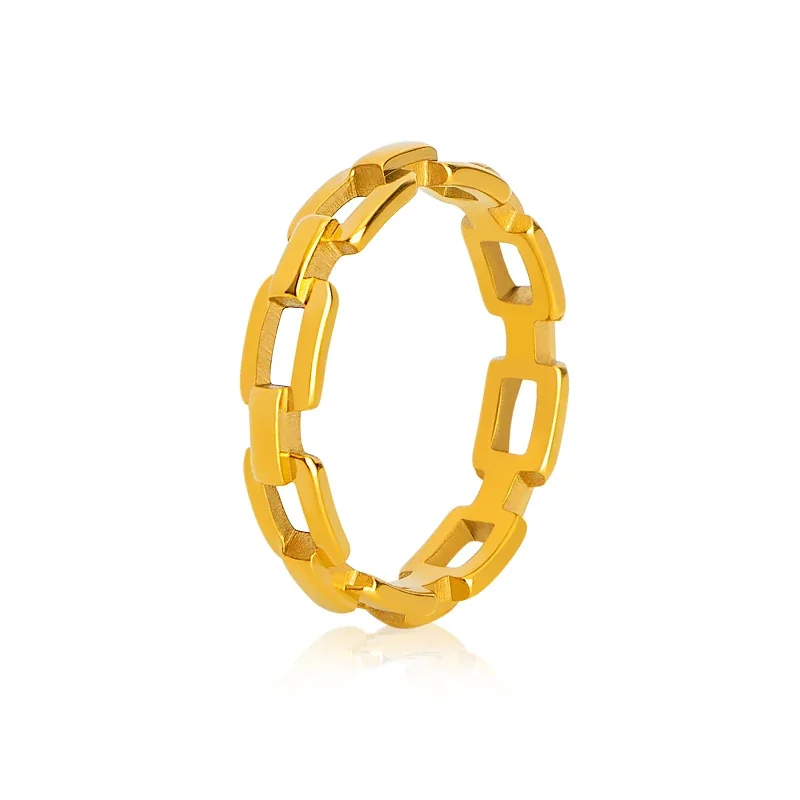
A green mark on skin is a copper reaction. Copper and copper-based alloys such as brass and bronze react with sweat, skin oils and air to form green copper salts, and those salts transfer onto the skin they sit against. The mark is harmless and washes off with soap and water. Plated pieces built on a brass core start doing it once the plating wears through at a contact point. Stainless steel is an iron-chromium-nickel alloy with no copper-rich base, so bare steel does not produce those salts — but a coloured layer sitting on top of steel still behaves according to that finish.
This guide is written for retailers, resellers and independent brands who have to answer the question when a customer emails about a green wrist. It covers what the reaction actually is, which metals produce it and why, what a steel base does and does not protect you from, how to check a piece before you stock it, and how material disclosure on your own product pages reduces returns and one-star reviews. Jewena is a factory-direct B2B wholesale platform selling stainless steel jewelry produced in Guangdong with long-term partner factories in the Dongguan and Foshan jewelry clusters, so we have an interest in this topic — everything below is general material chemistry you can verify independently.
What the green mark actually is
Copper is a reactive metal. In contact with moisture, oxygen and mild acids it forms copper salts on its surface: the same broad family of reactions that turns a copper roof or statue green over decades. On a bracelet the process runs far faster, because human sweat supplies water, salt, lactic acid and urea directly onto the metal, at body temperature, under a piece that traps everything against the skin.
The resulting copper compounds are soft, coloured and loosely bound. Friction between the piece and the skin rubs them off, and they mark the skin the way a pigment would. That is the whole mechanism. The green is not dirt from the piece, not a dye leaching out of a coating, and not evidence of a counterfeit item — it is a product of the metal itself doing what copper does.
Because the reaction depends on the wearer as much as on the metal, the same piece behaves differently on different people. Skin pH and how heavily someone sweats matter. So does climate: humid summers produce far more complaints than dry winters. Hand lotion, sunscreen, perfume, chlorinated pool water and sea water all accelerate it, and a piece worn tightly against skin marks faster than a loose one because there is less air and more friction.
Two things the green mark is not. It is not a health problem: the discolouration sits on the surface of the skin and comes off in the shower. And it is not an allergy. An allergic contact reaction — most often to nickel — presents as itching, redness, small blisters or a persistent rash, and it does not wash away. A customer describing a green stain and a customer describing an itchy rash are describing two unrelated problems, and it is worth separating them in the first reply rather than treating both as "a reaction to the metal".
Which metals do it, and why
The single question that predicts green marking is whether copper is a principal component of the part touching the skin. Everything else follows from that.
| Material | Copper in the base | Typical mark on skin |
|---|---|---|
| Copper | The metal itself | Green, readily and by design |
| Brass and bronze | Copper-based alloys | Green, commonly |
| Nickel silver (also sold as German silver) | Copper-based despite the name; contains no silver | Green, commonly |
| Sterling silver (925) | 92.5% silver, balance usually copper | Usually grey to black from silver sulfide; green or dark marks also possible in humid wear |
| Gold-filled | Bonded gold layer over a brass core | None while the layer is intact; base behaviour at worn-through points |
| Gold-plated base metal | Thin plating over a copper alloy core | None at first, then green where the plating wears through |
| Plated or PVD-coated stainless steel | Steel core, not copper-based | Colour loss at wear points rather than a green mark |
| Bare stainless steel (304, 316, 316L) | Iron-chromium-nickel; copper is not a principal component | None from copper salts |
| Titanium | No copper | None from copper salts |
Two entries in that table cause most of the confusion in a shop. Nickel silver contains neither nickel-free chemistry nor any silver — it is a copper-nickel-zinc alloy, and it greens like the copper alloy it is. And gold-filled is not a marketing synonym for gold-plated: it is a mechanically bonded layer that is substantially thicker than electroplating, which is why it lasts longer before the base becomes relevant. If the difference between plating, gold-fill and vacuum coating is something you have to explain to customers regularly, our guide to what gold-plated, gold-filled, PVD and vermeil actually mean covers the terminology side.
Why steel-based pieces usually don't
Stainless steel is an alloy of iron and chromium, with nickel added in the austenitic grades used for jewelry. The chromium reacts with oxygen to form a very thin, self-repairing oxide film across the surface — the passive layer — which is what makes the material corrosion-resistant in the first place. There is no copper-rich base underneath to form green salts, so the specific reaction described above does not have a source. That holds for the common jewelry grades: 304, 316 and 316L behave the same way on this particular question.
What a steel base actually buys you is a better failure mode rather than immunity. Four caveats are worth stating plainly, because each of them turns into a customer email eventually.
A colour finish behaves like the finish, not like the base
Gold-toned steel jewelry has a layer on top: electroplating, a vacuum-deposited coating, or another surface treatment. That layer wears with time, friction and chemistry, and how long it holds depends on the process, the piece and the wearer's habits far more than on the base metal. The difference from a brass-core piece is what appears when the layer thins: on steel you see steel, so the piece fades towards a silver tone instead of towards a green stain. Our comparison of gold PVD and conventional gold plating sets out how the two processes differ without promising either of them a lifespan.
A piece described as steel may not be steel throughout
This is the most common real-world explanation for a green mark on something sold as stainless. Chains, clasps, jump rings, ear posts, pendant bails, extender chains and the cups that hold glued stones are separate components, and they are not always the same material as the main body. A steel pendant on a brass chain will mark a neck. Ask which parts of a piece are steel, component by component, on the SKUs where it matters.
Steel contains nickel, and that is a different conversation
Austenitic stainless steel contains nickel as an alloying element, so "nickel-free stainless steel" is not a real product category regardless of how often the phrase appears. The nickel is bound in the alloy and the relevant measure for skin contact is how much is released over time, not how much is present, which is why the EU regulates nickel release rather than nickel content for items in prolonged contact with skin. None of this affects green marking — it affects allergy, which is a separate mechanism with separate symptoms. Our hypoallergenic earrings page covers the sensitive-skin side, including why "hypoallergenic" is a marketing description rather than a regulated standard.
Not every mark on skin is green
Dark grey or black smudging under a ring or bracelet is usually metallic abrasion — fine particles worn off the piece, sometimes combined with cosmetics containing mild abrasives — and it happens with precious metals too. Sterling silver produces its own dark marking as it tarnishes to silver sulfide. If a customer reports a mark, ask for the colour before diagnosing anything, because green points at copper and grey usually does not.
How to check a piece before you stock it
None of these checks is laboratory evidence, and you do not need laboratory evidence for most buying decisions. What you need is a sequence that catches the obvious problems early and tells you honestly what you still do not know.
- Read the construction, not the headline. Ask for the material of each component: body, chain, clasp, jump rings, posts, backs, bails. A single-word answer covering a multi-part piece is not an answer.
- Know what a magnet can and cannot tell you. A magnet is often recommended as a steel test, but austenitic stainless steel is non-magnetic or only weakly magnetic, and brass is non-magnetic as well. A magnet therefore cannot separate steel from brass, which is the distinction that matters here. It tells you about ferrous content, nothing more.
- Use a damp-contact test as an early indicator. Hold the piece against a slightly damp white cotton pad for a day or two in a warm room. Copper alloys often leave a green or blue-green stain on the pad. A stain is a strong hint; a clean pad is not proof of anything.
- Wear the sample, in the season that matters. Three weeks of daily summer wear against skin produces more useful information than any inspection. Wear it in the shower, at the gym and with your usual lotions, and look at the contact points: the inside of a ring, the underside of a clasp, the back of a pendant.
- Ask what the material declaration is attached to. A catalogue-wide slogan and a per-SKU material statement are not the same claim, and only the second one is safe to repeat to your own customers.
- Commission testing when the answer has to be defensible. If you are selling into a market or a channel where the material claim carries legal or contractual weight, independent testing on a piece from your own delivery is the only conclusive route. We do not issue test certificates and do not arrange testing on a buyer's behalf, so plan for that yourself where it matters.
For the wider vendor checklist that this fits into — grade claims, minimum order structures, sampling — see our guide to vetting a stainless steel jewelry supplier.
What this means for returns and reviews
Green-skin complaints are one of the categories where the fix is almost never the product. A brass piece that marks skin is behaving exactly as brass behaves; the customer is not wrong to be annoyed, and the retailer is not wrong to have stocked it. What went wrong is that nobody told the customer in advance. Disclosure is the lever, and pulling it costs an afternoon of copywriting rather than a change of supplier.
Four practical moves, in the order they pay off:
- State the base metal, not only the colour. "Gold-tone" describes an appearance. "Gold-plated over stainless steel" or "gold-plated brass" describes what will happen in two years, and it is the second one that prevents the email.
- Explain the mechanism once, in your own words, somewhere permanent. A short care or materials page you can link from every product page beats repeating it in individual replies. Ours lives on the jewelry care page.
- Set the expectation for plated finishes explicitly. Every coloured coating is a wear surface. Saying so up front converts a future complaint into a future repeat purchase, because the customer knew the deal.
- Segment the range on purpose. Carry copper-alloy pieces if the design justifies them, but label them, price them and describe them as what they are, and give customers with reactive skin an alternative in the same range instead of a refund. If that turns into a range-wide decision rather than a single style, our comparison of stainless steel, titanium and sterling silver sets out which customer each metal actually serves.
When a complaint does arrive, three questions resolve most of them: what colour is the mark, which piece and which part of it was in contact, and how long had it been worn. Green on something sold as steel usually means a non-steel component somewhere in the assembly — worth checking against the construction list before offering anything, because the answer often identifies a single clasp or chain rather than the whole style.
Our own practice on the supply side is the narrow version of the claim: material wording is applied per SKU from the source data for that item, grade numbers appear only where there is evidence behind them, and items without that evidence are described as stainless steel with no grade attached. Ready stock starts at one piece with unit prices stepping down at three and ten pieces per SKU, prices are published in USD rather than quoted on request, and stock ships from Guangzhou in three to five working days with tracking to more than 60 destinations. If you are rebuilding a range around materials you can describe honestly, the stainless steel jewelry wholesale page lists current terms and the 316 stainless steel category shows the SKUs where grade wording is supported by source data.
FAQ
Why does jewelry turn my skin green?
Because the metal touching your skin contains copper. Copper reacts with moisture, oxygen and the acids in sweat to form green copper salts, and friction transfers those salts onto skin. It happens with copper, brass, bronze and nickel silver, and with plated pieces once the plating wears through to a brass core. It is harmless, it washes off, and it says nothing about whether the piece is genuine.
Does stainless steel jewelry turn skin green?
Bare stainless steel does not, because it is an iron-chromium-nickel alloy with no copper-rich base to form the salts. Two situations still produce green marks on something sold as steel: the piece has non-steel components such as a brass chain, clasp or ear post, or it is a plated item whose base is not actually steel. Check the material of each component rather than the headline description.
Is a green mark on skin dangerous?
No. The discolouration sits on the surface of the skin and washes off with soap and water. It is cosmetic rather than medical. What is worth distinguishing is an allergic reaction, which looks entirely different: itching, redness, blistering or a rash that persists after washing, most often caused by nickel rather than copper.
Does gold-plated jewelry turn skin green?
It depends on what is underneath. While the plating is intact, nothing reaches the skin. Once it wears through at a contact point, the base metal takes over: a brass or copper-alloy core will mark skin green, while a stainless steel core will not. This is why the base metal, and not the plating alone, is the thing worth stating on a product page.
Why did only one of my pieces leave a green mark?
Usually because only that piece has copper in the part touching skin, or because that piece sits tighter, is worn more often, or has lost its plating at a friction point. Wearer chemistry, humidity and lotions change the rate but not the cause. If two pieces bought as the same material behave differently, the material description is the first thing to question.
Bottom line
Green skin is copper chemistry, nothing more exotic than that, and it is entirely predictable once you know what the part touching skin is made of. Steel-based jewelry avoids the reaction because there is no copper base to supply it, but that only holds when the whole assembly is steel and it never overrides how a colour finish behaves on top. For a retailer the useful work is not hunting for a metal that cannot react — it is describing accurately what you sell, so the reaction never arrives as a surprise.