Private Label Jewelry Manufacturers with Low MOQ: a Buyer's Guide
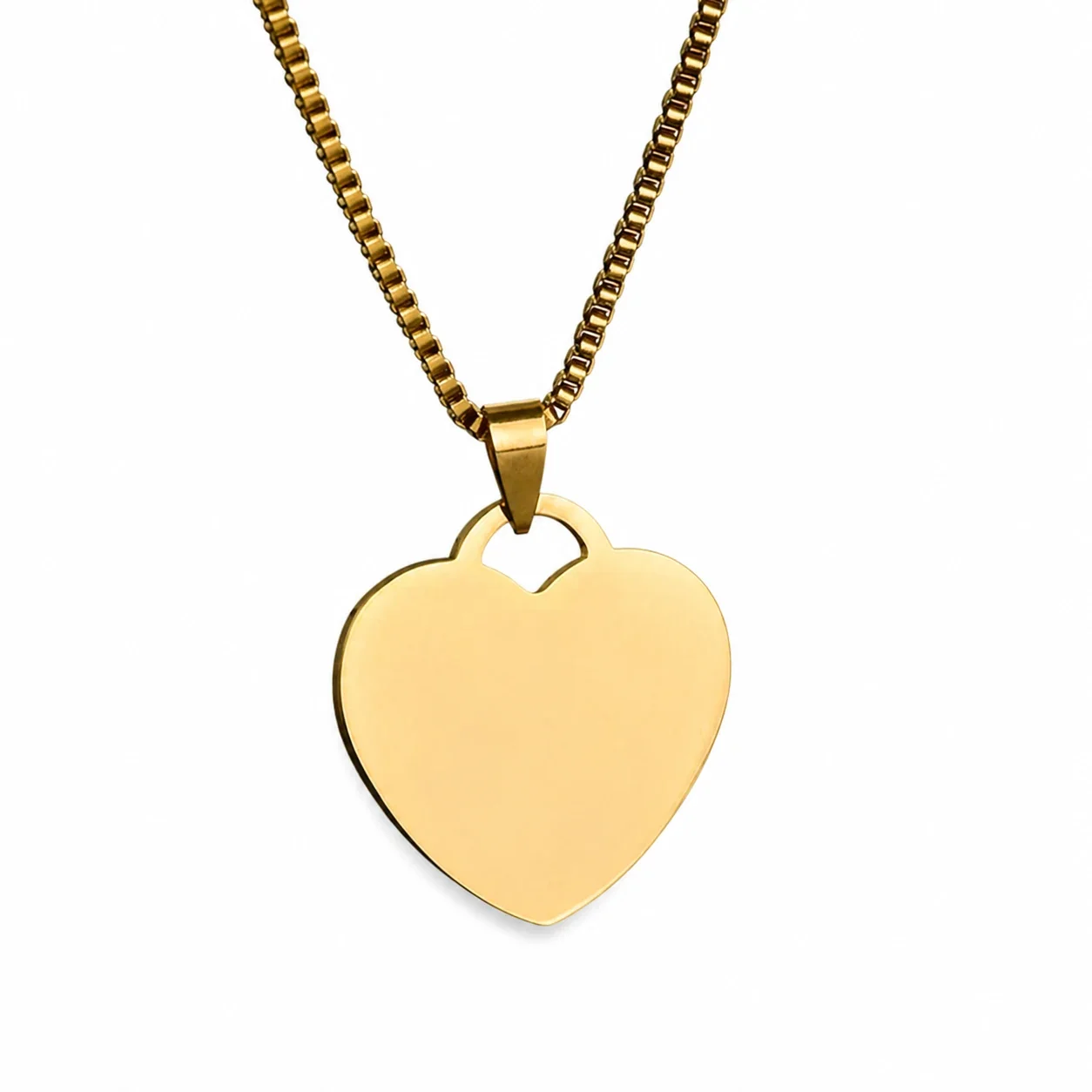
For a new brand, "low MOQ" in private label jewelry usually describes one of three different arrangements, and they are not interchangeable. Buying ready stock and putting it in your own packaging can start at a single piece. Adding your logo to an existing catalogue style is normally decided per SKU and sits far below a production run. A fully custom design carries the real minimum: across the published terms of suppliers in the Chinese stainless steel jewelry trade, 50 to 200 pieces per design is the common floor, rising to several hundred pieces once a specific alloy grade or bespoke packaging is specified.
Most searches for private label jewelry manufacturers with low MOQ end up comparing numbers that were never comparable. This guide sets out what each of the three routes costs in money and time, how to read a supplier's MOQ structure before you commit, how to verify a material claim you are about to print on a hang tag, and how a new brand can get a first branded batch out without pre-buying inventory it cannot sell.
The Three Private Label Routes and What Each One Really Requires
Suppliers advertise "private label" for all three of the arrangements below. Asking which one a quoted minimum refers to is the single most useful question in a first enquiry, because the same supplier can be a one-piece supplier on one route and a 300-piece supplier on another.
Route One: Ready Stock in Your Own Packaging
The lowest-commitment route is to buy finished stock that already exists, then present it as yours through your own box, card and listing photography. There is no tooling, no sample round and no production queue, so the minimum is simply the supplier's normal wholesale minimum. On Jewena's ready-stock range that is one piece, with the per-piece price stepping down at three and ten pieces per SKU. The trade-off is honest: the piece is not exclusive to you, and another buyer can order the same style.
Route Two: Your Logo on an Existing Style
The middle route keeps the existing style and tooling but marks it with your brand, usually by laser engraving on a flat area such as a tag, a bar, a clasp or the inner face of a band. Because nothing is being made from scratch, minimums are far lower than a production run. On Jewena's eligible stock this is quoted at 1 USD per piece and confirmed per SKU: some pieces have no surface that takes an engraving, and some carry their own minimum. Engraving adds a few days to the normal three to five working day dispatch.
Route Three: Full Custom OEM Production
The third route is an actual production run to your specification, whether from a tech pack, a sketch or a modification of an existing mould. This is where a genuine MOQ appears, because a line is being set up for your item alone. Jewena's OEM minimums, produced on dedicated lines with long-term partner factories in Guangdong, are 200 pieces per design in 316 stainless steel and about 300 pieces per design in 316L. Lead time after the specification and the sample are approved is typically 10 to 15 working days, plus tracked shipping. The full terms sit on the private label programme page and the OEM and ODM page.
How to Read a Supplier's MOQ Structure
A single MOQ number tells you very little on its own. What matters is what the number is counted against and what else it drags along with it. Four questions separate a workable quotation from one that quietly triples a first order.
- Per design or per order? A 100-piece minimum spread across five designs is a completely different commitment from 100 pieces of each. Suppliers who publish per-design minimums are being precise; ask explicitly where it is not stated.
- Per colourway and per size? A ring in five sizes, or a chain offered in a gold tone and a steel finish, can count as separate designs for production purposes. Confirm this before you plan an assortment.
- Does packaging carry its own minimum? This is the most common surprise. Printed boxes and custom hang tags come from a separate printing supplier with its own economics, and published packaging minimums in this trade commonly run from several hundred to a thousand units even where the jewelry minimum is fifty.
- Is tooling separate? A new mould, a custom clasp or a die is a one-off cost sitting outside the per-piece price. Ask whether it is charged, whether it is credited against a repeat order, and who owns it afterwards.
Verifying the Material Before You Put Your Name on It
Once your logo is on a piece, its material claim becomes your claim rather than the supplier's. That matters most with stainless steel, where 201, 304, 316 and 316L look identical after polishing or plating, and where a product photograph proves nothing about any of them.
- Ask which grade is claimed for the base metal, in writing, for the specific SKU rather than for the catalogue as a whole.
- Treat a laser mark reading 316L as a marking, not as evidence. It only means something if the supplier can also say where the material control behind it comes from.
- Use handheld XRF spot testing for larger commitments. It reads chromium, nickel and molybdenum well, and molybdenum is the practical tell that separates 316-family steel from 304 and 201. It reads surfaces, so plating and coatings distort it, and it does not measure carbon reliably, which is precisely the difference between 316 and 316L.
- Separate the base metal from the surface. A gold tone can be electroplating or a vacuum PVD coating; these are different processes with different wear behaviour, and each should be stated per SKU rather than assumed across a range.
- Do not carry a performance promise across a whole catalogue. Tarnish, water and skin-contact behaviour vary by piece, finish and wear, so test the specific SKU instead of trusting a range-wide statement.
The composition figures, equivalent grade names and testing limits behind those checks are set out in Jewena's 316L grade reference, and there is a shorter explanation of markings in what 316L means on jewelry. On Jewena product pages the grade is stated per SKU: styles with source data supporting the grade sit in the 316 stainless steel range, and where the data does not support a grade claim the listing says stainless steel and nothing more.
Sampling: What to Test and How Long to Allow
Samples cost very little relative to a production run, and they are the last stage at which a mistake is still reversible. Order them from the exact SKU you intend to brand, not from a similar one.
- Wear the sample for at least two weeks, including showering and sleeping in it if that is how your customers will treat it. Plating wears at contact points first: ring backs, clasp edges, the underside of a pendant bail.
- Check the engraving on a real engraved sample rather than a rendering. Depth, alignment and legibility on a curved surface are where logo reproduction actually fails.
- Weigh and measure. Chain length, tag thickness and clasp gauge drift between batches more often than buyers expect, and these are the specifications your own listings will state.
- Allow realistic time. Published sample lead times in this trade commonly run from around two weeks to a month before bulk production even begins, and ready-stock samples are the fast exception rather than the rule.
Packaging and Hang Tags: Bring Them In Second, Not First
New brands routinely negotiate packaging before they know which pieces sell, and it is the most reliable way to tie up a small budget in the wrong place. Packaging minimums are set by printers rather than by the jewelry supplier, so a thousand branded boxes can easily outlast several product ranges.
- Start with plain boxes or pouches plus a printed card you can produce in small runs locally. A card carries your brand name, your care instructions and your material statement, which is most of what packaging does commercially.
- Move to branded boxes once a specific style has repeat sales, so the box minimum is amortised over pieces you already know will sell.
- Ask whether the supplier can pack into packaging you supply, and what that adds per unit. Kitting and barcoding are routinely offered in this trade and cost less than reworking a shipment after it arrives.
- Keep the material wording on the tag identical to the wording the supplier confirmed in writing. A tag saying surgical steel when the confirmation said stainless steel is a claim you cannot support.
A First Branded Batch a New Brand Can Actually Afford
The sequence that works for a brand with no sales history inverts the usual instinct. Test the assortment before you brand it, because the expensive commitments, moulds and packaging runs and per-design minimums, are all bets on which styles will sell.
- Buy a mixed assortment of ready stock in small quantities across ten to twenty styles. With no minimum order and price steps at three and ten pieces, that is a market test rather than an inventory commitment.
- Sell it for four to eight weeks and let the data choose the range. Two or three styles usually carry the sell-through, and they are rarely the ones picked on aesthetics alone.
- Brand the winners. Adding engraving to proven SKUs at a per-piece cost keeps branding spend proportional to demonstrated demand.
- Only then commit to a production run. Once a style has repeat sales, a 100-piece OEM order stops being a gamble and becomes a restock with better margin.
The margin arithmetic behind that sequence, including how branding cost per piece changes resale pricing, is worked through in Jewena's guide to jewelry pricing and margin for resale, and the wider setup steps are in how to start a jewelry business.
Supplier Types and How Their Three Tiers Sit
What follows is a map of supplier forms rather than a list of company names, because the form is what predicts the minimums. The same three-tier structure set out above — ready stock, your logo on an existing style, a full custom run — exists at almost every supplier in this trade, but the three tiers sit at very different heights depending on what the supplier actually owns, and some forms are missing a tier entirely. Read every quotation through that lens, and ask for all three tiers explicitly rather than accepting the single headline number a supplier chooses to lead with.
Jewena (Guangzhou, China)
Jewena is a factory-direct B2B wholesale platform for stainless steel jewelry: goods are produced in Guangdong on dedicated lines with long-term partner factories in the Dongguan and Foshan jewelry clusters. More than 1,500 styles are listed with wholesale prices public in USD, no minimum order, and per-piece prices stepping down at three and ten pieces. Logo engraving on eligible stock is 1 USD per piece and confirmed per SKU. OEM runs start at 200 pieces per design in 316 stainless steel and about 300 pieces per design in 316L, typically 10 to 15 working days after specification and sample approval. Stock ships from Guangzhou in three to five working days with tracking to more than 60 destinations; no local warehouse is claimed in any market. All three tiers are published rather than quoted on request, which is the comparison to hold any other supplier to.
Owner-operated manufacturers
Factories that run their own lines and sell production directly, most visible in the Guangdong clusters. Their three tiers usually collapse into one: there is often no stock tier at all, engraving is folded into a production quotation rather than priced per piece, and the custom tier is where every number lives, commonly at 50 to 200 pieces per design across published terms in this trade. Read that minimum carefully against design, colourway and size, because a factory counting per variant quotes a headline that looks far lower than the commitment it describes, and ask whether tooling is charged separately, whether it is credited against a repeat run, and who owns the mould afterwards.
Factory-direct wholesale platforms and stockists
Suppliers that hold finished goods and resell in small quantities, coordinating custom runs with partner factories when a buyer needs one. Their tier structure is the inverse of a factory's: the stock tier is very low and sometimes a single piece, the engraving tier is priced per piece on eligible SKUs, and the custom tier simply inherits whatever the partner factory sets, which is why a platform can be a one-piece supplier and a several-hundred-piece supplier at the same time. The question that matters is whether stock is genuinely held or ordered in after you pay, because a platform without inventory cannot deliver the low tier it advertises.
Casting houses and jobbing workshops
Workshops that cast to order, common in precious metals and found in Europe and North America as well as in Asia. They break the per-piece model altogether: minimums are expressed in metal weight rather than in units, so a threshold that sounds small can mean a great many pieces of a light design or very few of a heavy one, and the metal price moves the quotation between estimate and invoice. For a stainless steel range they are usually the wrong fit, but the form is worth recognising, because a weight-based minimum cannot be compared with a per-design one until you convert it using the finished weight of your own piece.
Catalogue wholesalers and distributors
Large mixed-origin ranges sold by the pack or the carton, often spanning several material families at once. In practice only the stock tier exists: minimums are per pack rather than per piece, branding is limited to what you can do with your own packaging after delivery, and custom production is generally not offered at all. That makes this form a fast way to fill out a range and a poor route to an own-brand product, and it makes one question decisive — whether they will pack into materials you supply, and what that adds per unit.
Marketplace sellers
On marketplaces such as Alibaba, the minimum shown on a listing is set by the individual seller and is frequently negotiable, which makes comparison across listings close to meaningless until you know which of the forms above that seller belongs to. Engraving and packaging are almost always quoted separately from the piece price, so a headline unit cost rarely represents a branded, boxed item ready to sell. Establish the seller's form first, ask for the three tiers as separate numbers, and confirm whether the piece price you have been given includes any branding at all.
Two conclusions are worth taking from the map as a whole rather than from any single form. First, published minimums cluster at 50 to 200 pieces per design for custom production and rise sharply once custom packaging enters the order, consistently enough across supplier types to treat as the shape of the market rather than as one supplier's policy. Second, whoever you buy from, the lowest available minimum for a new brand is almost always on stock rather than on production, which is why the sequence in the previous section starts there.
FAQ
What is a realistic MOQ for private label jewelry as a new brand?
It depends entirely on which branding route you take. Ready stock in your own packaging can start at one piece. Logo engraving on an existing style is usually priced per piece and confirmed per SKU. Custom production is where a real minimum appears, and published terms across the stainless steel jewelry trade commonly sit at 50 to 200 pieces per design, rising to a few hundred where a specific alloy grade or custom packaging is specified.
Can I put my brand on jewelry without a minimum order?
Yes, on the stock route. Buying finished pieces and presenting them in your own packaging with your own card requires no production minimum, because nothing is being made for you. Jewena's ready-stock private label route has no minimum order and per-piece prices step down at three and ten pieces. The limitation is that the design is not exclusive to you.
How much does it cost to engrave a logo on stainless steel jewelry?
On Jewena's eligible stock, laser engraving is 1 USD per piece and is confirmed per SKU, because some pieces have no suitable flat surface and some carry their own minimum. It adds a few days to the normal three to five working day dispatch. Other suppliers price engraving inside a production quotation rather than per piece, so establish which model applies before comparing numbers.
Is a private label supplier the same thing as a manufacturer?
Not always, and the distinction changes your minimums. A manufacturer owns or runs production and sets minimums from its own line. A wholesale supplier or platform holds stock and coordinates custom runs with partner factories, which usually means very low minimums on stock and factory-set minimums on production. Jewena is the second kind: a wholesale platform whose goods are produced in Guangdong on dedicated lines with long-term partner factories. Ask any supplier which of the two it is, because the answer predicts how its quotation will be built.
Should I order custom packaging with my first branded order?
Usually not. Packaging is produced by printers with their own minimums, commonly several hundred to a thousand units, so it is the largest fixed commitment in a first order and the one least informed by sales data. A printed card in a plain box carries your brand name, care instructions and material statement for a fraction of the outlay, and branded boxes make sense once a specific style has repeat sales.