How to Clean and Care for Stainless Steel Jewelry (Retailer Stock Care Guide)
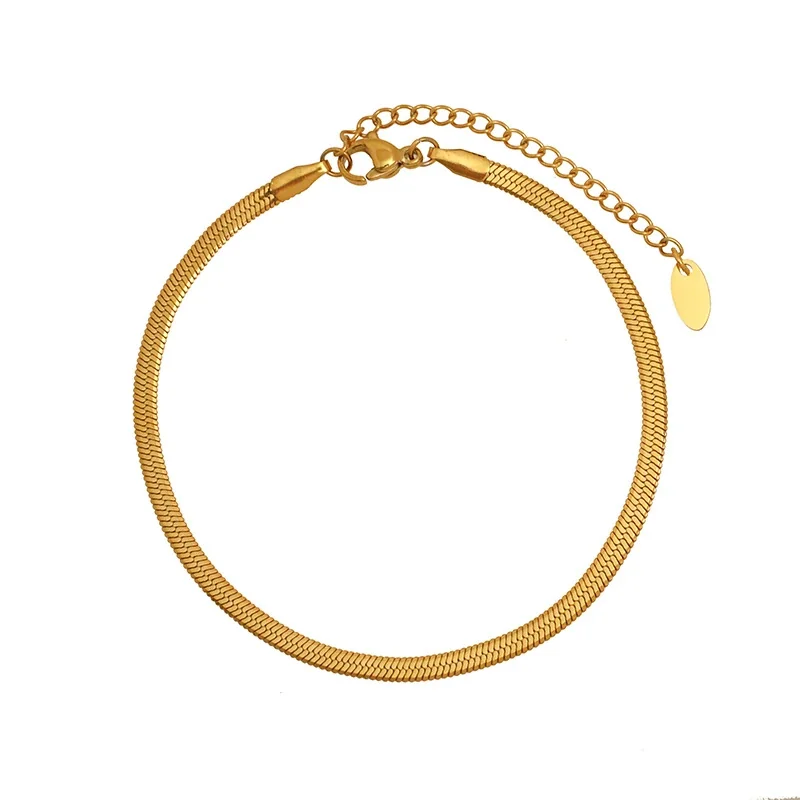
The safe default for cleaning stainless steel jewelry is warm water, a few drops of mild washing-up liquid, a soft cloth, and drying the piece completely before it goes away. That routine is correct for plain steel and for plated or PVD-coloured steel alike. What changes between finishes is not the method but what you must never add to it: abrasive pastes, ultrasonic baths, chlorine and proprietary dips are tolerable on bare polished steel and are the single most common cause of ruined colour finishes on coated pieces.
For a retailer, though, the harder problem is not the piece a customer is already wearing. It is the stock sitting in a stockroom and on a display for months before it sells, the handling it gets from staff and customers, and the care card that leaves in the parcel. This guide covers that side. If you want a customer-facing routine to point shoppers at, our jewelry care guide is written for wearers; everything below is written for whoever owns the inventory.
Why stainless steel needs care at all
Stainless steels resist corrosion because chromium in the alloy reacts with oxygen to form a very thin, self-repairing oxide film on the surface, usually called the passive layer. That film is why steel does not develop the dark sulphide tarnish that silver does, and it re-forms on its own after minor scratching as long as oxygen can reach the metal.
Three things still degrade the look of a piece. The first is deposits: skin oils, sunscreen, hairspray, soap film and hard-water minerals build a dull haze that no amount of "it does not tarnish" prevents. The second is mechanical wear: micro-scratches from pieces rubbing against each other in storage, which flatten a mirror polish into a grey sheen. The third applies only to coated goods: plating and PVD colour layers sit on top of the steel and are finite, so anything that abrades the surface removes colour permanently rather than cleaning it.
Two failure modes people blame on the steel usually are not the steel. Green skin marks come from copper-bearing alloys such as brass reacting with sweat, so on a plated item they point at the substrate under a worn coating rather than at a stainless base. Rust-coloured speckling on an otherwise sound piece is often iron particles picked up from tools, shelving or packaging during handling, sitting on the surface rather than in it.
Match the method to the finish
Sort stock by finish before you clean anything. The mild soap routine is the baseline everywhere; the columns that matter are what you must exclude and what an early warning looks like on the shelf.
| Finish | Safe routine | Never | Early warning on the shelf |
|---|---|---|---|
| Plain polished steel | Mild soap, soft cloth or very soft brush, rinse, dry fully | Steel wool, scouring powder, bleach or pool chemicals | Grey haze from micro-scratching where pieces were bagged together |
| Brushed or textured steel | Same, working along the grain rather than in circles | Circular polishing, which cuts across the texture and shows | Shiny patches interrupting the brushed direction |
| Gold-plated steel (electroplated) | Damp soapy cloth, no soaking, dry immediately | Abrasives, ultrasonic cleaners, jewelry dips | Warmer or pinker tone at high-contact points such as clasp edges |
| PVD colour coating | Damp soapy cloth, dry immediately | Abrasives, polishing compounds, chlorine exposure | Tone shift at wear points, usually later than on electroplating |
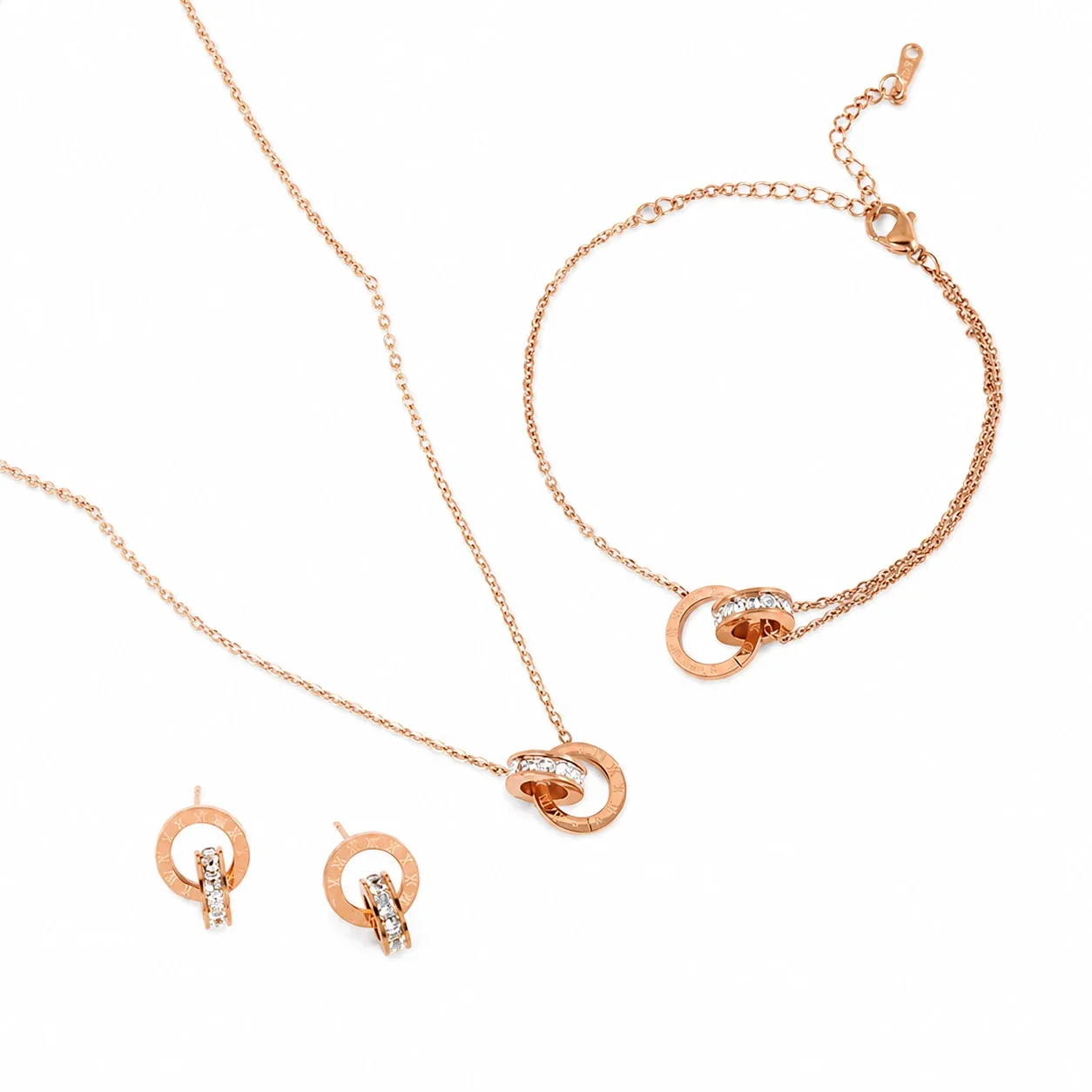
| Stones, pearls, enamel, glued detail | Soft brush around the setting only, wipe, air-dry face down | Soaking, ultrasonic cleaners, solvents near adhesive | A stone that shifts under light fingertip pressure |
The one line worth writing on the stockroom wall: if you cannot say for certain whether a piece is coated, treat it as coated. The mild routine costs nothing on bare steel, while one pass with an abrasive on a plated item is not reversible.
Caring for stock you have not sold yet
Unsold inventory fails in ways worn jewelry does not, because it sits still, in bulk, in whatever environment your stockroom happens to have.
- Leave goods bagged until they sell or go on display. Individual polybags are not just packaging; they stop pieces abrading each other and slow down humidity and airborne pollutants reaching the surface. If a shipment arrives with sachets of desiccant in the cartons, keep them with the stock rather than discarding them at unpacking.
- Store dry and stable. Damp is the enemy of any mixed-material piece, and jewelry kept in a bathroom-adjacent room, a basement, or a coastal stockroom with salt air will show water spotting and adhesive failure long before it shows metal problems.
- Keep stock away from the cleaning cupboard. Bleach, chlorine tablets and strong alkaline cleaners attack corrosion resistance, and vapour from an open container in a closed room is enough to matter. This applies to display cabinets cleaned with household sprays as well as to the stockroom.
- Separate by finish, not by style. Gold-tone, rose-tone, black and bare steel should not share a loose bag or tray. Metal-on-metal contact between different coatings creates avoidable scratching and visible transfer marks.
- Rotate stock and retire display pieces. Sell oldest stock first, and treat anything that has been on open display or handled repeatedly as a sample rather than as sellable stock. Sunlight and hot display lighting also affect enamel, adhesives and any organic component such as pearl or leather far more than they affect steel.
Two practical checks close the loop. Do a quick condition pass on slow-moving lines every few months rather than discovering a problem when a customer does. And when a piece does come back marked, look at the rest of that batch immediately, because storage problems are rarely limited to one item.
Handling and try-on
Staff hands are the most frequent contact any piece of stock has. Hand cream, sanitiser and perfume all transfer, and sanitiser in particular leaves a film that dries to a visible haze on polished surfaces. Handling stock with clean, dry hands and wiping display pieces with a dry soft cloth at close costs a minute and prevents most of the "why does this look dull" conversations.
Try-on needs a written rule rather than improvisation. Earrings and any piercing jewelry are the clear case: most retailers do not allow try-on at all, and that is the defensible position on hygiene grounds. For rings, bracelets and chains, decide in advance which pieces are try-on samples, keep them separate from sealed stock, and wipe them with a dry cloth after each customer. Avoid alcohol wipes as a default on plated, PVD-coloured, enamelled or glued pieces; they are aimed at the coating and the adhesive rather than at the steel, and repeated use shows.
Writing a care card that does not create returns
A care card is a returns-prevention document, and the most common mistake is printing one generic card for an entire range. If the card says something the piece cannot do, it converts a normal wear outcome into a complaint you have already conceded in writing.
Four lines are enough, and each should be specific to the finish rather than to the catalogue.
- What it is. State the base material, and state the surface separately: for example, stainless steel with a gold-tone plated finish. Only print a grade number such as 316 or 316L where your supplier states it for that specific SKU.
- Water. Say what to do rather than making a promise. "Rinse and dry after contact with sweat, sea water or pool water" is accurate for effectively every piece; "waterproof" is not a specification you can stand behind across a range.
- What to avoid. Abrasives, bleach and chlorine, ultrasonic cleaners and jewelry dips, plus perfume and lotion applied while wearing.
- Storage. Dry, separate, in the pouch or bag it arrived in.
Three words are worth keeping off the card entirely unless a specific SKU genuinely supports them. Waterproof, tarnish-free and hypoallergenic are marketing descriptions rather than regulated standards, and none of them can be honestly guaranteed across a whole catalogue. Stainless steel as a family resists corrosion well and is widely worn by people with metal sensitivities, and that is a fair thing to say about the material family; a blanket promise about an individual customer's skin or an individual coating's lifespan is not. Skin chemistry, climate and wear habits vary too much for a printed guarantee to survive contact with a real customer base.
Triaging a finish complaint
When a customer reports a problem, work out which of four things happened before you decide anything, because the remedy and the supplier conversation differ in each case.
- Deposit. Cloudy or patchy, appears gradually, and comes off with mild soap. Not a fault; it is a care conversation.
- Coating wear. Colour thinning at contact points such as the inside of a ring band, the clasp, or the underside of a chain. This is the expected end of life of a surface layer, and how fast it arrives depends on the coating process and on how the piece is worn.
- Mechanical damage. Scratches, dents or a bent setting from impact, gym equipment or abrasive cleaning.
- Substrate exposure. Green skin marking or corrosion spotting appearing quickly on a piece sold as stainless steel. This is the one that warrants a batch check and a documented question to your supplier, because it suggests the description and the item do not agree.
Record the SKU, the batch, the purchase date and a photograph in every case. A pattern across several customers on the same SKU is evidence; a single report rarely is. If you are not confident about what a supplier's material description actually commits them to, our guide to vetting jewelry suppliers before a first wholesale order covers how to get specifications in writing before an order rather than after a complaint.
FAQ
Does stainless steel jewelry need cleaning if it does not tarnish?
Yes. Resisting tarnish and staying bright are different things. Skin oils, sunscreen, soap film and hard-water minerals build a dull haze on the surface, and that residue is what customers see. Mild soap, a soft cloth and thorough drying remove it without touching the metal or a coating.
Can I use an ultrasonic cleaner on wholesale stock?
Only on bare, uncoated, solid steel with no stones, pearls, enamel or glued components, and only if you know for certain that is what the piece is. Ultrasonic cleaning drives cavitation into every crevice, which loosens adhesive and stone settings and accelerates failure at any weak point in a coating. For mixed stock the answer in practice is no.
How should retailers store stainless steel jewelry stock?
Dry, individually bagged, sorted by finish rather than by style, away from cleaning chemicals, and rotated oldest first. Keep any desiccant that arrives with the cartons, keep display pieces separate from sealed stock, and avoid loose bulk bags where different coatings rub against each other.
What should a care card say for gold-plated stainless steel?
Name the base and the surface separately, tell the customer to rinse and dry after sweat, sea water or pool water, list abrasives, chlorine, ultrasonic cleaners and dips as things to avoid, and say to store the piece dry and separate. Avoid printing a lifespan for the finish, because how long it lasts depends on the wearer more than on the piece.
Should customers be allowed to try jewelry on in store?
Set the rule per category. Earrings and piercing jewelry are normally excluded on hygiene grounds. For rings, bracelets and chains, designate specific try-on samples, keep them out of sellable stock, and wipe them with a dry soft cloth between customers rather than with alcohol wipes, which are harsher on coatings, enamel and adhesives than on steel.
What this means when you are buying
Care instructions are downstream of a purchasing decision. If a supplier describes an entire catalogue as one material and one finish, you cannot write accurate care cards, and you will end up printing something optimistic and absorbing the returns. Ask for the base material and the surface treatment per SKU, ask which pieces contain stones or adhesive, and ask what the grade claim rests on for the specific items you are buying rather than for the range as a whole.
Jewena is a factory-direct B2B wholesale platform selling stainless steel jewelry produced in Guangdong with long-term partner factories in the Dongguan and Foshan jewelry clusters, with grade wording applied per SKU where the source data for that item supports it and no grade number printed where it does not. Ready stock starts at one piece, unit prices step down at three and ten pieces per SKU, and prices are published in USD so you can cost a range before contacting anyone. Browse the 316 stainless steel category for the items where grade wording is supported, compare terms on our 316L stainless steel jewelry wholesale page, or see the wholesale range for boutiques if you are building a first order. For coated ranges specifically, gold PVD versus gold plating explains why the two behave differently in exactly the ways your care card has to describe.