How to Tell If Jewelry Is Really Stainless Steel
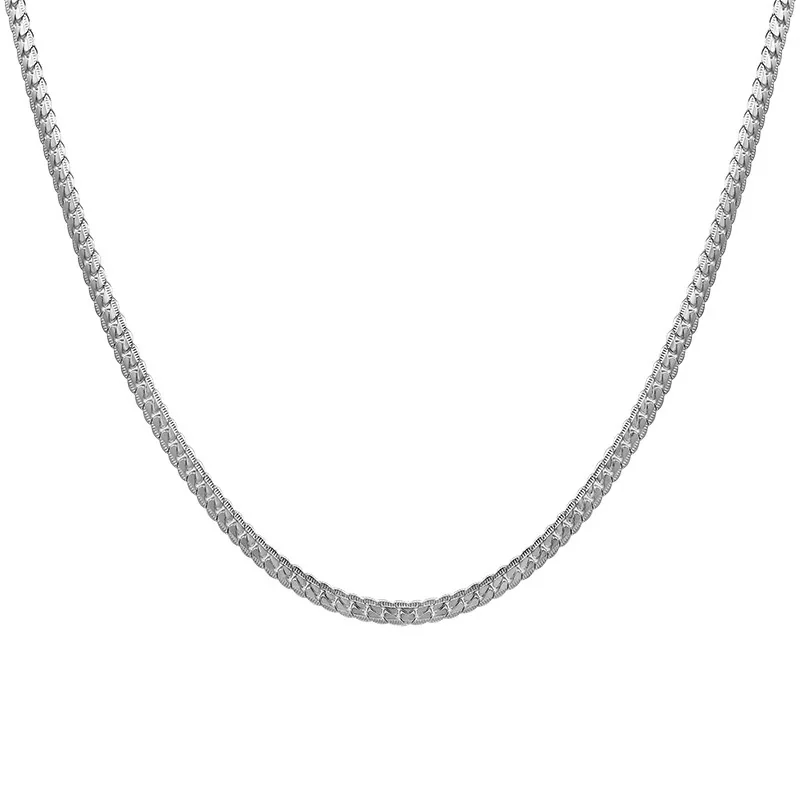
There is no reliable way to identify stainless steel jewelry by eye, and the magnet test does not settle it either. Appearance proves nothing because plated brass, zinc alloy and steel can look identical, and magnetism is ambiguous in both directions: cold-worked 316 chains and clasps often do attract a magnet, while plated brass does not. What actually works is a chain of consistency rather than a single test — a grade statement tied to the specific item, a marking and a description that agree with it, a sample worn in real conditions, and, where the order justifies the expense, elemental analysis by a laboratory the buyer engages directly.
That is the short answer. The rest of this guide explains why each home test fails, what a buyer can actually establish at each level of effort, and how to read a "316L" claim on a listing before an order rather than after a complaint.
Why looking at it tells you almost nothing
Bare polished stainless steel, rhodium-plated brass, silver-tone plated zinc alloy and plated pewter all present as a cool grey-white metal with a mirror finish. On a photograph they are indistinguishable. In the hand, an experienced buyer can sometimes separate them, but the reason is construction rather than metal: link profiles, clasp quality and the crispness of a stamped edge differ between production methods more visibly than the alloys themselves do.
Weight is a hint, not proof, and it is a hint people routinely read backwards. Typical reference densities put stainless steel at roughly 7.9 to 8.0 g/cm3, common brass at roughly 8.4 to 8.7, and zinc die-casting alloys at roughly 6.6 to 7.0. Brass is therefore denser than steel: a heavier piece is at least as likely to be plated brass as it is to be steel. Weight only helps against zinc alloy, and only when you can compare two pieces of genuinely similar volume, which in jewelry is rare.
Any coating removes the question from view entirely. Once a piece carries gold plating or a PVD colour layer, nothing about its surface reports what is underneath. This is the single most important point for anyone buying coloured ranges: you are assessing a description, not a metal.
The magnet test and what it actually measures
The magnet test is the most widely repeated piece of advice on this subject and the most widely misunderstood. It is worth understanding the mechanism, because the mechanism is exactly why the test fails.
Stainless steels come in several structural families. The 300 series, which includes 304, 316 and 316L, is austenitic: its crystal structure is face-centred cubic, and in the fully annealed condition that structure is essentially non-magnetic. That is the origin of the folk rule that real 316L will not stick to a magnet.
The rule breaks for three separate reasons.
- Cold work turns austenite magnetic. Drawing wire, stamping blanks, spinning, bending links and forming clasps deform the metal, and that deformation converts some austenite into martensite, which is ferromagnetic. Chain, clasps, jump rings and stamped findings are among the most heavily cold-worked parts in a piece of jewelry, so genuine 316 or 316L components can show noticeable magnetic attraction, and 304 components more readily still, because 304 is the less stable of the two under deformation. A magnet response is not evidence against the grade.
- Plenty of stainless steel is magnetic by design. Ferritic and martensitic grades such as 430, 410 and 420 are magnetic, and they are still stainless steels. A strong response tells you nothing about whether the description "stainless steel" is true.
- Non-steel substrates are non-magnetic too. Brass, zinc alloy, aluminium and pewter show no attraction at all. A piece that ignores the magnet completely is at least as consistent with plated brass as with annealed 316.
So both outcomes are ambiguous, and the test cannot distinguish 316 from 304 under any circumstances, since both are austenitic and both respond the same way to the same amount of cold work. The magnet has exactly one honest use in a jewelry context: a strong pull on something sold as solid silver or solid gold tells you it is not, because those metals are not ferromagnetic in any condition.
The other home tests circulating online are worse. Salt-water and vinegar "rust tests" damage plating and stone settings and produce results that depend on the test conditions more than on the alloy. Scratch and file tests destroy the piece and still only expose a substrate colour, which on plated brass is informative and on plated steel is not. The ice test, the smell test and the spark test belong to workshop metallurgy on bulk stock, not to finished jewelry.
What each level of verification can actually establish
Rank the options by cost and be clear about what each one buys you. The mistake buyers make is not skipping tests; it is expecting a zero-cost test to answer an expensive question.
| Method | Can establish | Cannot establish | Effort |
|---|---|---|---|
| Visual inspection and photographs | Shape, colour, finish quality, construction and assembly standard | Alloy, grade, plating process, substrate under any coating | None |
| Magnet | That a piece sold as solid silver or gold is neither, if it pulls strongly | Steel versus plated brass; 316 versus 304; anything about grade | None |
| Weight and construction feel | A rough steer against zinc alloy on comparable pieces | Steel versus brass, which is denser than steel | Low |
| Documentation consistency | Whether the seller states a grade per item, and whether the paperwork names your item or batch | Whether the statement is true for the goods in front of you | Low, and the highest value for the effort |
| Wear test on a sample | Real-world corrosion, colour-hold and skin behaviour of that specific SKU | The grade number; a sound piece may be 304 or 316 | Weeks, one sample |
| Laboratory elemental analysis | The actual alloy composition of the tested piece, to the accuracy of the method used | Anything about the batches you did not test | Cost per sample, arranged by the buyer |
On that last row, to be direct about it: independent materials laboratories do this work routinely, and the analytical techniques used for alloy identification, such as optical emission spectrometry and X-ray fluorescence, are ordinary commercial services in most markets. A buyer who needs composition confirmed can engage a laboratory directly and test a piece pulled from their own delivery, which is also the only version of the test that proves anything about the goods they received. We do not issue test reports or certificates, and we do not arrange testing on a customer's behalf; where a grade matters commercially, testing you commission yourself is both more meaningful and entirely available to you.
How to read a "316L" claim before you order
Because the physical tests are weak, the real verification happens in the description. Work through this before the order, not after the parcel arrives.
- Is the claim per SKU or catalogue-wide? A banner saying everything on a site is 316L is a slogan. A grade stated on the individual product page, and absent from product pages where it is not supported, is a claim someone has thought about.
- What is the claim based on? Ask directly: mill or component documentation, a supplier declaration, or a test report. Any of the three can be a reasonable basis. "It just is" is not.
- Does any document name your item? A certificate that refers to a different batch, a raw material lot or a generic sample is common and tells you nothing about your goods. Ask whether the paperwork names the item or batch you are buying.
- Which part of the piece does the grade cover? This catches more problems than any other question. Ear posts, clasps, jump rings, chain and pendant are frequently made by different suppliers from different materials. A necklace can be honestly described as stainless steel while its clasp is not, and earrings are the classic case where the decorative front and the post differ.
- Is grade kept separate from finish? "18K gold PVD" describes a colour produced by a coating process; it is not a statement about gold content, and it says nothing about the metal underneath. A description that runs grade, plating and colour together is one to query.
- What happens on a reorder? Agree in writing how a later batch will be judged against your approved sample, because drift between production runs is where sourcing relationships usually fail.
A stamp is not proof either
Markings such as "316L", "S316L" or "STAINLESS STEEL" on a clasp or tag are applied by whoever produced the component. For precious metals, several countries operate independent assay and hallmarking systems that put a third party between the claim and the consumer. No equivalent independent marking authority exists for stainless steel jewelry. The stamp is therefore the seller's claim rendered in metal, which is useful as a consistency check against the written description and worthless as independent confirmation.
The same caution applies to "surgical steel". The term is generally used to refer to the 316 and 316L family, but it is a trade description rather than a controlled designation, and there is no standards body that polices which products may use it. If a supplier offers surgical steel, the productive response is to ask which grade they mean and what that statement rests on for the SKU you want. Our guides to what 316L means on jewelry and the underlying 316L grade reference (1.4404 / AISI 316L) cover the marking conventions and the composition behind them, and 316L versus 304 covers how much the distinction actually changes in ordinary wear.
What we do, and where that leaves you
Jewena is a factory-direct B2B wholesale platform selling stainless steel jewelry produced in Guangdong with long-term partner factories in the Dongguan and Foshan jewelry clusters. Grade wording is applied per SKU where the source data for that specific item supports it; items without that evidence are described as stainless steel with no grade number attached. That produces a less impressive catalogue headline than a site-wide 316L banner, and it produces claims a retailer can repeat to a customer without inheriting a problem.
We do not issue material certificates and we do not commission testing for customers. What we can do is tell you which SKUs carry a grade statement and what it rests on, and let you order a single piece to test however you choose. Ready stock starts at one piece, unit prices step down at three and ten pieces per SKU, and USD prices are published, so a sample order costs you the sample rather than a negotiation.
FAQ
Does a magnet tell you if jewelry is stainless steel?
No, in either direction. Cold working during manufacture makes austenitic 316 and 316L partly magnetic, so chain, clasps and stamped findings from genuine 316 often attract a magnet. Ferritic grades such as 430 are magnetic by nature and are still stainless steel. Plated brass and zinc alloy are not magnetic at all, so no reaction is equally consistent with a substrate that is not steel.
Is 316L stainless steel magnetic?
In the annealed state it is essentially non-magnetic, because austenite has a face-centred cubic structure. Finished jewelry is rarely in that state. Drawing, stamping and bending convert some austenite to ferromagnetic martensite, so a real 316L chain or clasp can show noticeable attraction. The magnet cannot separate 316L from 304 under any conditions.
How can I tell stainless steel from plated brass?
Not reliably by hand. Brass is denser than steel, so weight points the opposite way to most people's intuition, and plating hides the substrate completely. The practical route is a wear test on a sample plus a written per-SKU material statement; where a brass substrate is exposed by worn plating it typically shows as a warm yellow tone and can produce green skin marking, but waiting for that is a slow and expensive test.
Does a "316L" stamp mean the piece is really 316L?
It means whoever made the component stamped it. Unlike the assay and hallmarking systems some countries operate for precious metals, there is no independent marking authority for stainless steel jewelry, so the stamp is the seller's claim in physical form. Treat it as a consistency check against the written description rather than as confirmation.
Can I get a test certificate for stainless steel jewelry?
Independent laboratories perform alloy identification as a routine commercial service, and a buyer can engage one directly to analyse a piece from their own delivery, which is the only version that covers the goods actually received. We do not issue test reports and do not arrange testing for customers. Where a grade genuinely matters to your market, budget for testing you commission yourself rather than for a document supplied with the order.
Bottom line
Treat identification as a paperwork problem with a physical spot-check, not as a physical problem with a paperwork backup. The tests you can run at a kitchen table cannot distinguish the things that matter, while the description, the sample and the reorder agreement can. If you are assessing a supplier rather than a single piece, our guide to vetting jewelry suppliers before a first wholesale order covers the process end to end, and how to vet 316 and 316L manufacturers and suppliers covers how the different supplier forms change what a grade claim is worth. To see per-SKU grade wording in practice, browse the 316 stainless steel category, or compare terms on our 316L stainless steel jewelry wholesale page and stainless steel jewelry suppliers page.