How Much Inventory Do You Need to Start a Jewelry Brand?
There is no universal opening number, and any figure quoted without knowing your channel is a guess dressed up as advice. Opening inventory is an output rather than a decision: it falls out of how many selling slots your channel actually has, how long a restock takes door to door, and how much money you can afford to have tied up in styles that turn out to be wrong. A boutique counter with three display trays needs a different first buy from an online store shipping from a spare room. The workable version of the question is: how many styles, how deep in each, and how quickly can I correct a mistake?
This guide sets out how to derive those numbers for your own situation, why breadth and depth behave as separate decisions, and how to structure a first order so the money buys information as well as stock.
Breadth and depth are two different decisions
Almost every "how much stock do I need" conversation goes wrong because both quantities get collapsed into a single piece count. They are not the same thing and they do not carry the same risk.
- Breadth is how many distinct styles you carry. Breadth buys information: each style is a small test of whether your customers want that shape, that length, that finish.
- Depth is how many units you hold of each style. Depth buys availability: it stops you being out of stock on the styles that are already proving themselves.
At launch you have no sell-through data, so depth is a bet placed before the evidence arrives. Breadth is how you generate that evidence. This is why a first buy that is wide and shallow almost always beats one that is narrow and deep, even when the narrow-and-deep version has a better unit price attached to it.
The reverse becomes true later. Once a handful of styles have sold through twice, depth on those specific styles is one of the safest purchases in the business, and breadth becomes the speculative half.
Start from the selling slots your channel actually has
Every sales channel has a physical or practical ceiling on how many styles it can present. That ceiling, not a rule of thumb, sets your breadth.
| Channel | What sets breadth | What sets depth | The constraint people forget |
|---|---|---|---|
| Own online store | How many product pages you can photograph, write, translate and keep accurate — not how many styles a supplier lists | How long a restock takes from order to sellable, plus the risk of an out-of-stock page killing an advert you are paying for | Every extra style is ongoing work: imagery, copy, stock counts, returns handling |
| Market stall, fair or pop-up | Table and display space, and how much a customer can scan in the seconds they stop | You cannot restock mid-event, so depth is the whole event's sales for that style | Sizes and finishes sell out unevenly; a style with one size left looks picked-over by mid-afternoon |
| Physical counter or concession | Tray, bust and cabinet capacity, and whatever the host retailer has agreed to give you | Facing rules and how often you can physically get there to replenish | Display furniture and signage are a real cost competing with the stock budget |
| Selling on to other retailers | What you can show in a line sheet and support on repeat orders | Whether you hold stock or order against confirmed demand | A trade customer reordering a style you no longer have access to is worse than never having offered it |
Count your slots honestly before you count your money. Twelve trays that hold six pieces each is a different brief from a website with unlimited pages and one person to photograph them. If you are stocking a boutique or planning a concession, the terms and assortment questions specific to that route are set out on our jewelry for boutiques page.
Size depth from replenishment time, not optimism
Depth per style is a function of one number most new brands have never measured: the real door-to-door replenishment time, from the moment you decide to reorder to the moment the piece is sellable on your shelf or live on your site. That is not the same as a supplier's quoted dispatch time. It includes your decision lag, payment, dispatch, transit, customs, and your own receiving and listing.
The mechanism is simple. If replenishment takes three weeks and you hold two weeks of expected sales, you will be out of stock for a week on anything that sells. Depth needs to cover the replenishment window plus a buffer for the styles that outperform. Anything beyond that is capital sitting still.
The action to take on your first order is to measure it. Record the date you place the order and the date the goods are actually sellable, and use the gap as your planning number rather than the one on the supplier's page. Most people discover their real figure is meaningfully longer than the dispatch estimate, because the delay sits in their own receiving process rather than in transit.
Variants multiply faster than styles
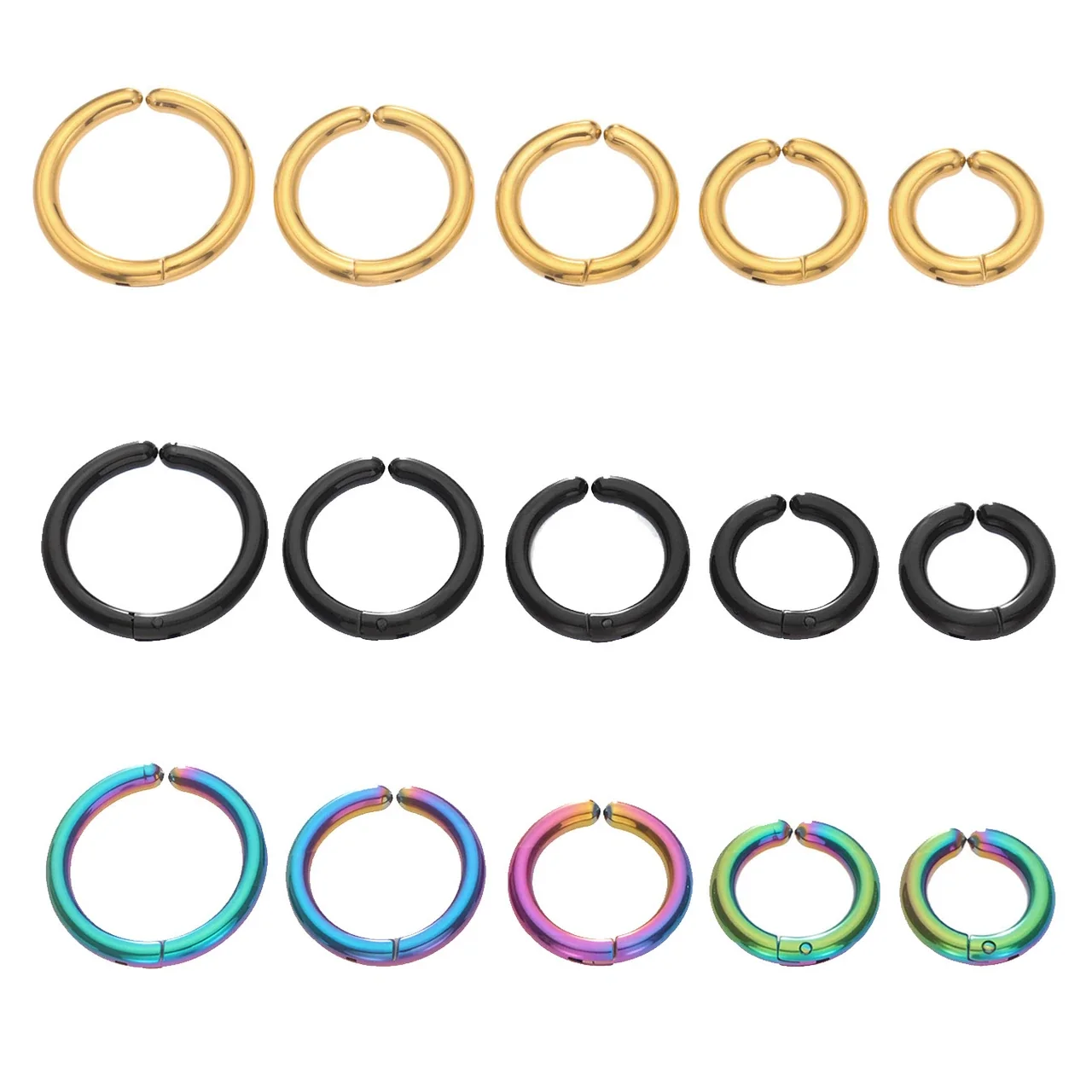
This is where opening buys quietly explode. A single style offered in three finishes and five diameters is fifteen separate stock lines, not one. Buy five of each and you have committed seventy-five pieces to one design before you know whether anyone wants it.
Variant depth is also where the money gets stranded, because partial ranges are hard to sell. Four of the five sizes gone leaves you holding the one that does not move, and that residue is not worth its cost even at a discount.
The practical rule is to launch a style in the one or two variants you have an actual reason to believe in — the size your own customers ask for, the finish that matches the rest of your range — and add the remaining variants only after the style itself has proven it sells. Range extension is a low-risk decision once demand exists and an expensive one before.
The cash test
Opening inventory is a bet on your own taste placed before any evidence exists, so size it as one. A useful ceiling: the amount you could write off entirely and still keep trading. Not the amount you have; the amount you could lose without the business stopping.
Within that ceiling, spend on breadth first. A first buy of thirty styles at two pieces each and one of six styles at ten pieces each can cost roughly the same, but the first one comes back with thirty answers and the second with six. The information is worth more than the unit-price saving at this stage, and the saving on a small order is smaller than most people expect once freight is counted.
Remember that packaging, pouches, cards, labels and display props are inventory too. They consume the same budget, they have their own minimums, and running out of boxes stops you shipping just as effectively as running out of rings.
A structure that buys information first
The sequence that works for most new retailers is small batch, then evidence, then depth.
- First buy: wide and shallow, covering the breadth your channel can display, with one or two pieces per line.
- Sell one full cycle: for an online store that is usually a few weeks; for a stall it is two or three events. Record sell-through per style, not just total revenue.
- Second buy: deepen the proven styles to cover replenishment time plus buffer, drop the styles that did not move, and replace them with a fresh test batch.
- Repeat. Breadth becomes a rolling experiment; depth follows the evidence.
Whether that structure is available to you depends entirely on the supplier's minimum order terms, which is the real reason MOQ matters at launch. As a worked example of terms that support it, our own ready stock is available from one piece, with the unit price stepping down at three and at ten pieces per SKU, prices published in USD rather than quoted on request, and dispatch in three to five working days from Guangzhou to more than sixty destinations. Buying one or two pieces each of many styles is therefore possible rather than theoretical.
The honest counterweight: single-piece buying costs more per piece, and freight per piece is at its worst on very small consignments. A shallow first order is buying information, and the information has a price. Our guide to pricing from landed cost shows how that premium shows up in your real cost per unit, and markup, margin and buying to a price covers how to decide what you can afford to pay in the first place. If you want to compare how minimums are counted across suppliers before committing, jewelry MOQ explained sets out the questions that expose most ambiguity.
Common mistakes
- Going deep on the first buy. Usually triggered by a tier discount. The discount is real; the certainty that you picked the right style is not.
- Buying everything in one finish. A rail of identical gold-tone pieces gives customers nothing to choose between and gives you no data on whether your audience would have bought silver-tone or black. Split the test.
- Breadth without a thread. Thirty unrelated styles is a jumble sale, not a range. Breadth should still sit inside a recognisable aesthetic, or you learn nothing about your customer from what sells.
- Planning depth from dispatch time. Replenishment is door to door, including your own handling. Using the supplier's number guarantees stockouts.
- Treating variants as free. Every size and colourway is a stock line with its own risk of becoming a residue.
- Forgetting the consumables. Packaging minimums have caught out more launches than product minimums.
What "enough" looks like after the first cycle
After one full selling cycle you can stop estimating. Enough inventory is the point where your proven styles never go out of stock during a replenishment window, your test styles are a small and deliberate fraction of the buy, and you are not holding anything that has failed to move across two cycles. That is a moving target, which is the point: it should move with your sell-through rather than sit at a number you picked before you opened.
When depth on proven styles becomes the main event, the economics shift and consolidating into larger orders starts to pay properly — the terms for that stage are on our bulk jewelry wholesale page, and current stock across categories such as earrings and rings is priced openly so you can model both scenarios before committing.
FAQ
How many products do I need to launch a jewelry brand?
Enough to fill the selling slots your channel actually has, and no more. For a market stall that is whatever fills your display without looking sparse; for an online store it is however many product pages you can photograph, write and keep accurate. Start by counting slots rather than picking a round number, then buy one or two pieces per line so the first order tests as many styles as possible.
Is it better to start with more styles or more stock of each?
More styles, at launch. Before you have sell-through data, depth is a guess and breadth is a test. Once specific styles have sold through a full cycle, the answer reverses and depth on those proven styles becomes the safer purchase.
Do I need a large minimum order to start a jewelry brand?
Not necessarily, but it depends entirely on the supplier and the route. Ready stock is often available in small quantities, while custom or custom-production production carries per-style minimums that are far higher. Before comparing headline minimum figures, check whether the number is counted per style, per colourway, per order or per shipment, because that detail changes the real commitment more than the number itself does.
How much money should I put into a first jewelry inventory?
An amount you could write off entirely without the business having to stop. That framing is more useful than a target figure, because it scales to your circumstances and it forces the risk to be explicit. Within that ceiling, spend on breadth before depth.
How do I know when to reorder?
Reorder when remaining stock of a style covers less than your measured replenishment time plus a buffer. That requires knowing your real door-to-door replenishment figure, which you can only get by timing your first order from decision to sellable. Until you have measured it, assume it is longer than the dispatch estimate.
Should I buy every size and colour of a style?
No. Launch with the one or two variants you have a reason to believe in and extend the range after the style proves itself. A style in three finishes and five sizes is fifteen stock lines, and partial ranges left after the popular variants sell out are the hardest inventory to clear.
Bottom line
Opening inventory is not a number to be looked up. Count the selling slots your channel can fill, set depth from your measured replenishment time rather than the supplier's dispatch estimate, treat every size and finish as its own stock line, and cap the whole thing at a figure you could lose without stopping. Then buy wide and shallow, sell one full cycle, and let the sell-through data tell you where the depth belongs. The first order is not supposed to be right; it is supposed to cost little to be wrong about.